
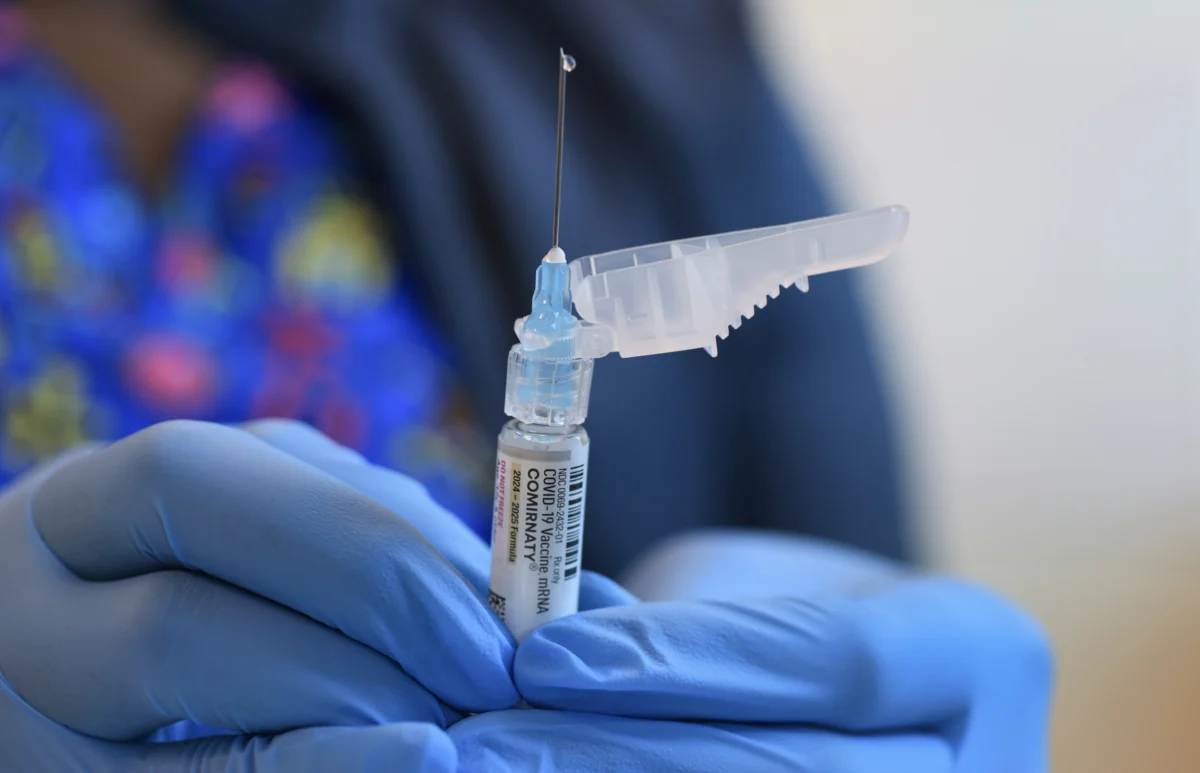
"The emergence of the NB.1.8.1 ‘Nimbus’ subvariant signals a growing summer COVID-19 wave across the U.S., with infections rising in at least 27 states. While generally mild for vaccinated individuals, its high transmissibility poses a significant risk to vulnerable populations, underscoring the continued need for vigilance and updated protection."
The United States is experiencing a noticeable uptick in COVID-19 cases, driven by a new dominant subvariant dubbed "Nimbus" (NB.1.8.1). As of mid-July 2026, federal epidemic models indicate that infections are either growing or likely to grow in at least 27 states, coinciding with an increase in emergency department visits across all age demographics. This resurgence marks a significant shift in the virus’s trajectory for the summer season, prompting renewed attention to public health strategies and individual preparedness. The variant’s rapid ascent to dominance and its observed transmission patterns globally and domestically are key indicators of the unfolding public health landscape.
The NB.1.8.1 variant, informally known as "Nimbus," has quickly become the most prevalent strain circulating in the United States. According to data from the Centers for Disease Control and Prevention (CDC) genomic surveillance, Nimbus accounted for an estimated 43% of sequenced COVID-19 cases during the two-week period concluding in late June 2026. This figure surpasses all other circulating strains, establishing it as the dominant lineage within the U.S. Nimbus is a descendant of the JN.1 Omicron lineage, which was first identified globally in early 2025 and subsequently detected in the United States through airport screening programs in March 2026. Prior to its establishment in the U.S., Nimbus was responsible for significant surges in China, Singapore, and various parts of Southeast Asia. Health officials have been closely monitoring these international trends, recognizing them as valuable leading indicators for domestic wave dynamics.
For the majority of healthy and vaccinated adults, the Nimbus variant appears to induce illness consistent with other recent Omicron descendants. Symptoms commonly reported include upper respiratory issues, sore throat, fatigue, and fever. Crucially, the World Health Organization (WHO) and the CDC have not identified evidence of vaccine escape that would lead to widespread severe illness in vaccinated populations. Current data suggests that Nimbus does not result in a higher rate of severe illness, hospitalization, or death when compared to previous Omicron strains like LP.8.1.
However, the dynamics of surge activity are primarily driven by transmissibility, not solely by severity. In Singapore, for instance, NB.1.8.1 demonstrated approximately 60% weekly growth rates before achieving dominance. A variant with a high capacity for infecting large numbers of individuals simultaneously inherently poses an elevated risk to those most vulnerable. This includes older adults, individuals with compromised immune systems, and those who have not kept their COVID-19 vaccinations up to date. The observed rise in emergency department visits across all age groups serves as a precursor to what national clinical case counts will likely reflect, mirroring the pattern seen in previous summer COVID-19 waves.
As of July 15, 2026, CDC forecasting models project that COVID-19 infections are either growing or are likely to grow in at least 27 states. This projection is based on the most recent epidemiological trend modeling, which synthesizes various data streams to anticipate future public health challenges. The national COVID-19 test positivity rate, as of July 12, 2026, stood at 4.8%, representing an increase of 1.1% from the preceding week. This upward trend is further corroborated by the CDC’s respiratory illness surveillance data, which shows a rise in emergency department visits across all age groups, indicating a broad-based increase in community transmission.
Wastewater surveillance, a critical early warning system for community-level viral spread, is also reflecting elevated COVID-19 levels. As of July 12, 2026, nine states reported moderate to very high COVID-19 viral concentrations in their sewage systems: California, Florida, Hawaii, Idaho, Louisiana, Nevada, Oregon, South Carolina, and Texas. Wastewater surveillance detects viral particles in sewage before these infections manifest in clinical test results or hospital admissions, typically providing a lead time of one to two weeks for rising community transmission. Independently, WastewaterSCAN, an organization that monitors disease trends through municipal wastewater systems, has reported national COVID-19 levels in the "high" category. This characterization is more aggressive than the CDC’s current national wastewater reading of "low," highlighting potential differences in measurement methodologies or data interpretation.
The geographic distribution of elevated wastewater activity, with a concentration in the Southern and Western United States, aligns with the CDC’s 2026 Summer Outlook. This outlook had identified these regions as most susceptible to early COVID-19 activity during the summer months, attributing this vulnerability to potentially lower recent immunity in populations that experienced limited COVID-19 exposure during the preceding winter. Among the states currently experiencing high or very high wastewater activity, California, Florida, and Texas stand out due to their significant populations, collectively exceeding 90 million people. Furthermore, states like Louisiana and South Carolina, also on the elevated list, have historically exhibited higher rates of chronic health conditions, which are known to increase the risk of severe COVID-19 outcomes.
Nimbus has been detected in genetic sequences from across multiple U.S. states, indicating a wide geographic spread has already been established. While the CDC has not yet published a detailed regional breakdown of variant proportions due to current limitations in sequencing coverage, the 27-state growth model provides a strong indication of national-level epidemiological trends. The variant’s observed capacity for rapid spread was first evident in Asia, where it fueled surges in China, Singapore, and other parts of Southeast Asia before its detection in the U.S. through airport monitoring. The pattern observed in these earlier waves—high transmissibility, widespread community dissemination, manageable severity in vaccinated individuals, but significant risk for the immunocompromised and unvaccinated—is the framework health officials are using to calibrate expectations for the current summer season.
Health officials are strongly urging individuals in high-risk categories to confirm their vaccination status and consider updating their protection before increased exposure opportunities arise with summer travel and larger indoor gatherings. The current 2025-2026 updated COVID-19 vaccines are formulated to target the LP.8.1 variant. Health authorities are actively monitoring whether an NB.1.8.1-specific update to the vaccine formulation will be necessary for the fall 2026 vaccine cycle. However, no official announcement regarding such a modification has been made as of mid-July 2026. Decisions on the fall vaccine strain typically occur in late summer, allowing time for analysis of emerging variant data and vaccine efficacy.
The Nimbus variant’s emergence has firmly placed COVID-19 as a primary public health concern for midsummer 2026. With infections on the rise in 27 states and emergency department visits increasing nationally, the situation warrants careful attention. For the majority of vaccinated and healthy adults, this wave is anticipated to cause an uncomfortable but manageable illness. However, for older adults, immunocompromised individuals, and those without updated vaccinations, the current summer presents a genuine and preventable risk. Proactive measures, including vaccination, monitoring local wastewater data, and understanding access to timely antiviral treatment for high-risk groups, are crucial.
Who Faces the Greatest Risk?
COVID-19 continues to pose a significant threat of serious illness and death, primarily affecting specific vulnerable populations. These include:
- Older Adults: Individuals aged 65 and above are at increased risk of severe outcomes due to age-related immune system decline.
- Immunocompromised Individuals: Those with weakened immune systems due to medical conditions (e.g., HIV/AIDS, cancer, autoimmune diseases) or treatments (e.g., chemotherapy, immunosuppressants) are less able to fight off infections.
- Individuals with Underlying Health Conditions: People with chronic health issues such as heart disease, lung disease (including asthma and COPD), diabetes, obesity, and kidney disease are more susceptible to severe COVID-19.
- Unvaccinated Individuals: Those who have not received recommended COVID-19 vaccinations and boosters remain at higher risk of infection, severe illness, hospitalization, and death compared to vaccinated individuals.
For younger, healthy, and vaccinated adults, current evidence suggests that the Nimbus variant causes illness that, while unpleasant, is rarely severe.
Symptoms and Warning Signs to Watch For
Nimbus appears to cause symptoms consistent with other recent Omicron subvariants. Some individuals have reported a more pronounced sore throat, described in some accounts as a "razor blade" sensation, as a notable early symptom. Other common presentations include:
- Fever or chills
- Cough
- Shortness of breath or difficulty breathing
- Fatigue
- Muscle or body aches
- Headache
- New loss of taste or smell
- Congestion or runny nose
Symptoms that warrant prompt medical attention, particularly in high-risk individuals, include:
- Difficulty breathing or shortness of breath
- Persistent pain or pressure in the chest
- New confusion
- Inability to wake or stay awake
- Pale, gray, or blue-colored skin, lips, or nail beds, depending on skin tone
What You Can Do Now
- Stay Up-to-Date with Vaccinations: Ensure you are up-to-date with the latest recommended COVID-19 vaccines and boosters. This is the most effective way to prevent severe illness, hospitalization, and death.
- Practice Good Hygiene: Continue to wash your hands frequently with soap and water for at least 20 seconds, or use an alcohol-based hand sanitizer.
- Improve Ventilation: Increase air circulation in indoor spaces by opening windows when possible.
- Consider Masking: In crowded indoor settings, or if you are at high risk, consider wearing a high-quality mask (e.g., N95, KN95).
- Get Tested if Symptomatic: If you develop symptoms, get tested for COVID-19 promptly.
- Access Antiviral Treatments: If you are in a high-risk group and test positive, consult your healthcare provider immediately about eligibility for antiviral treatments like Paxlovid, which can reduce the risk of severe illness.
Cost and Access: What Patients Should Know
Updated COVID-19 vaccines are generally available at no cost at most major pharmacy chains, including CVS, Walgreens, Rite Aid, and Walmart pharmacy, for individuals with Medicare, Medicaid, or private insurance. For uninsured patients, the CDC’s Bridge Access Program and state vaccination programs offer vaccines at no out-of-pocket cost at participating locations.
Paxlovid, the primary antiviral treatment for COVID-19, requires a prescription from a healthcare provider. It is covered by most insurance plans for eligible patients who have tested positive for COVID-19 and are at high risk of developing severe illness. Patients who are uninsured can inquire with their healthcare provider or pharmacist about the Pfizer patient assistance program for potential cost reductions.
At-home COVID-19 tests remain readily available at pharmacies and continue to be effective in detecting the Nimbus variant. While their sensitivity may be lower in the very early stages of infection, they typically become more reliable by 48 to 72 hours after symptom onset.
What Happens Next
The summer COVID-19 wave is anticipated to continue its development through July and into August, particularly in the states currently showing elevated wastewater signals. The CDC provides weekly updates to its COVID-19 epidemic trend forecasts, and significant changes in wave dynamics, vaccination guidance, or variant severity data will be reported as they emerge. Globally, the WHO and the U.S. Food and Drug Administration (FDA) are actively monitoring the evolution of the virus to determine whether the fall 2026 COVID-19 vaccine formulation should target NB.1.8.1 or a potentially newer variant. Decisions regarding the selection of the fall vaccine strain are typically made in late summer.
The Bottom Line
The Nimbus variant has firmly established COVID-19 as a central public health narrative for midsummer 2026, with infections growing in 27 states and emergency department visits on the rise nationally. For the majority of vaccinated, healthy adults, this wave is expected to result in an uncomfortable but manageable illness. However, for older adults, immunocompromised individuals, and those who have not received updated vaccinations, this summer presents a tangible and preventable risk. Proactive steps such as staying up-to-date with vaccinations, monitoring local wastewater data for community transmission trends, and understanding the pathways to access rapid antiviral treatment if in a high-risk group are essential public health practices.
