

"Residents with dementia are disproportionately likely to be assailants, yet their conditions often make it difficult for them to communicate distress, leading to aggression that facilities may miss or mishledge."
This sobering observation underscores a critical and often overlooked crisis within long-term care facilities: resident-on-resident violence. While the focus often remains on staff misconduct, a growing body of evidence reveals that individuals with cognitive impairments, particularly dementia, are frequently involved in aggressive altercations with their peers. These incidents, ranging from verbal altercations to severe physical assaults, are not isolated events but rather a systemic issue exacerbated by understaffing, inadequate training, and a failure to recognize and address the complex needs of residents with cognitive decline. The consequences can be devastating, leading to serious injury, death, and profound emotional distress for victims and their families.

The tragic case of Attilio Cecchetto, a 92-year-old retired tile installer, serves as a stark illustration of the dangers lurking within some long-term care facilities. Cecchetto, who suffered from dementia, was housed at Sunrise Post Acute, a nursing home in Banning, California. His final months were marked by repeated room changes, a desperate attempt by the facility to manage his roommate, Sam Ato Timaloa, a paroled sex offender with a history of attempted murder and dementia. Timaloa, acutely sensitive to noise, was ultimately placed in a room with Cecchetto, whose dementia caused him to frequently moan, mumble, and yell.
The escalating tension culminated on an overnight shift when a nurse aide discovered a horrific scene: blood splattered across the room. Cecchetto’s face was described as “twisted and smashed.” Timaloa, 77, admitted to punching Cecchetto twice, citing his roommate’s noise as the sole provocation. “He just kept saying that Attilio was being too loud: ‘He talks too much,’” the responding police officer recounted. Cecchetto died two days later from blunt force facial trauma, leaving his family devastated. “You get placed in a facility like this to be taken care of, not to be murdered,” stated his son, Gino Cecchetto, emphasizing the preventable nature of the tragedy. Timaloa faces charges of assault, which have since been upgraded to murder, pending a mental health evaluation to determine his competency to stand trial.
PACS Group, the owner of Sunrise Post Acute, has denied negligence, stating, “We strive to provide quality care to everyone we serve, and our hearts continue to go out to the Cecchetto family for their loss.” However, the Cecchettos and their attorney are pursuing legal action, alleging that PACS Group founders, Jason Murray and Mark Hancock, have siphoned funds from their nursing homes for personal gain and corporate expansion, potentially compromising resident care. California regulators fined Sunrise $120,000 for failing to protect Cecchetto and ignoring Timaloa’s documented aversion to noise. Medicare also issued a $62,810 fine. The Cecchettos’ lawsuit seeks to mandate stricter procedures for admissions, staff training, room changes, and the reporting of resident altercations within PACS homes.

The disturbing incident at Sunrise Post Acute is not an isolated anomaly. A KFF Health News examination of court records, police reports, and state and federal inspection reports reveals a widespread problem of resident-on-resident violence across various long-term care settings, from underfunded facilities catering to impoverished residents to luxurious assisted living complexes costing over $10,000 per month. These altercations can involve residents resorting to physical violence, using everyday objects like canes, walkers, pens, and even wheelchair footrests as weapons.
Quantifying the exact frequency of these incidents nationwide remains challenging. However, a comprehensive study by Cornell University researchers in New York state estimated that approximately 1 in 7 residents in assisted living facilities experience aggression within a month, encompassing verbal, physical, and sexual acts. A separate study of nursing homes in the same state suggested that nearly 1 in 5 residents encountered an altercation monthly. The research consistently points to a higher likelihood of individuals with dementia being the perpetrators of such aggression.
The neurobiological underpinnings of dementia contribute to this elevated risk. The diseases that cause dementia can degrade brain circuits responsible for impulse control and threat perception, thereby increasing the propensity for aggressive behavior. Residents with Alzheimer’s disease and other forms of dementia constitute a significant portion of the population in long-term care settings, with over 900,000 of the 2.2 million individuals residing in these facilities, many of whom are in specialized memory care units.
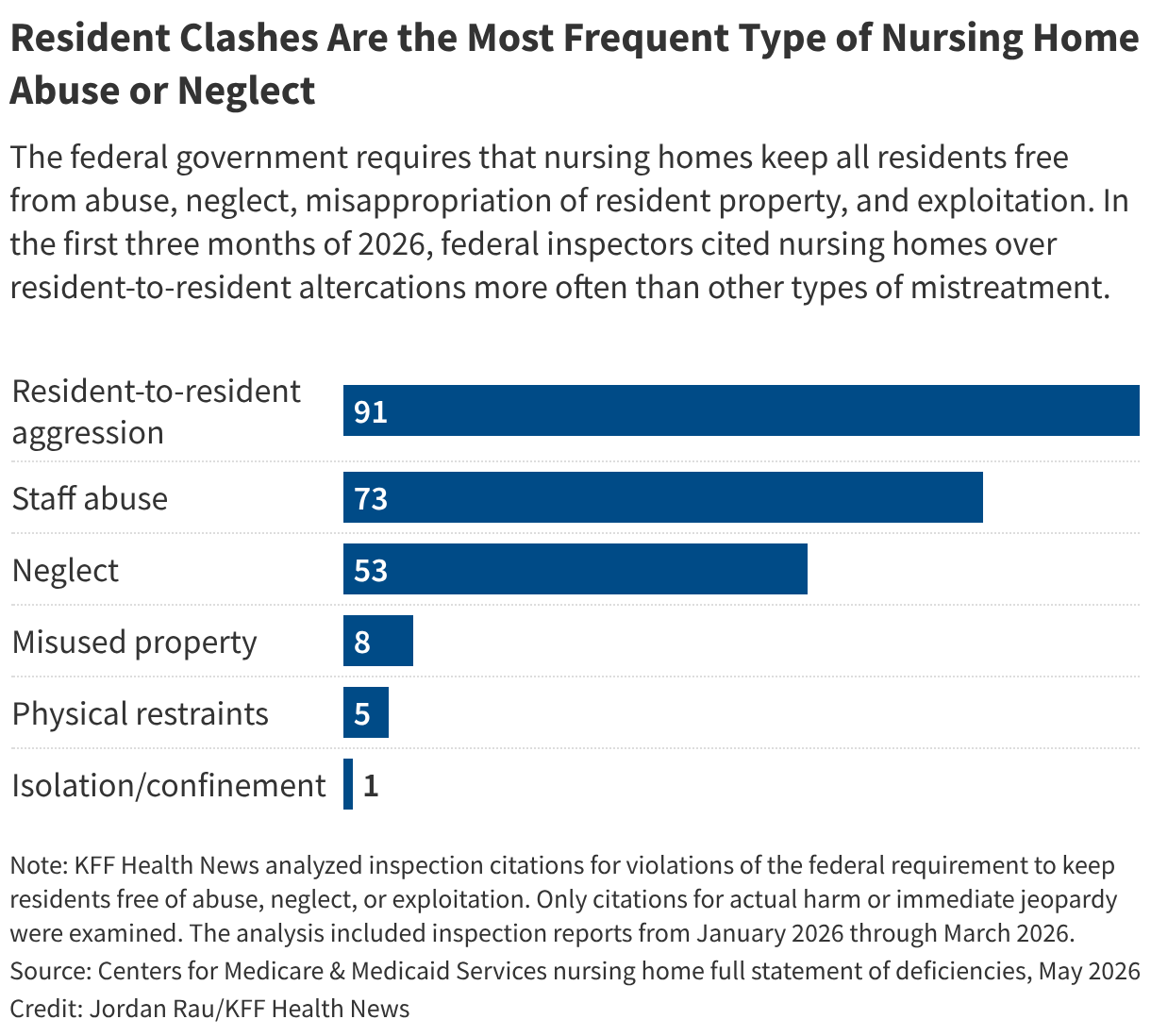
A critical factor contributing to these violent encounters is the failure of facilities to identify and effectively address danger signals. Federal Centers for Medicare & Medicaid Services (CMS) reports indicate that since the beginning of 2024, nursing homes have been cited at least 700 times for failing to protect residents from physical, sexual, or verbal abuse by other residents. In the first quarter of 2026, resident-to-resident abuse was the most frequent type of abuse, neglect, or exploitation cited by CMS, surpassing even abuse by employees.
The long-term care industry, however, asserts that preventing every clash is an insurmountable challenge. Presbyterian Homes & Services, a nonprofit organization, stated in a press release, "Caring for individuals living with advanced dementia is complex, and behaviors can change in ways that are difficult to fully predict or prevent, even with clinical interventions in place." Eilon Caspi, a dementia consultant and researcher, counters this by emphasizing that specific unmet needs typically precede altercations. "In the vast majority of incidents," Caspi stated, "there are warning signs in the months, weeks, days, hours, and sometimes minutes and seconds prior."
The psychological theories surrounding Alzheimer’s disease, the most prevalent form of dementia, offer insight into the escalating aggression. As cognitive functions decline, the brain’s networks deteriorate, disrupting the balance between the prefrontal cortex (responsible for judgment and self-control) and limbic regions like the amygdala (involved in processing fear and threat responses). This cognitive clouding impairs residents’ ability to comprehend their surroundings and articulate distress. Physical discomforts such as pain, infection, or medication side effects can be expressed through aggressive behaviors like shouting, intimidation, kicking, pushing, or punching. Moreover, the often chaotic environments of long-term care facilities, with frequent staff changes and intimate care provided by unfamiliar individuals, can become significant triggers, leading to a pervasive sense of insecurity and distress among residents.

The Cornell researchers’ studies also indicated that while verbal altercations are the most common, physical assaults occur with notable frequency. Their research suggested that approximately 4% of assisted living residents and 5% of nursing home residents experienced physical assaults within a month. Another Cornell study revealed that in Connecticut, police were summoned to nursing homes for resident-to-resident clashes more often than for allegations of staff abuse, theft, and resident wandering combined. A national analysis of CDC data indicated that nearly 8% of residents in assisted living facilities engaged in physical aggression towards other residents or staff.
Often, the perpetrators of these physical aggressions, as identified in CMS inspection reports, have diagnoses of dementia, schizophrenia, or other cognitive disorders. In some instances, both residents involved were aggressors, while in others, the assaults were one-sided, sometimes occurring between roommates. Laura Mosqueda, a geriatrician at the University of Southern California’s Keck Medicine and a senior adviser to the National Center on Elder Abuse, expressed concern: "What worries me is that we just end up blaming two people who have either cognitive impairment or severe, uncontrolled mental health issues, when they’re supposed to be in an environment where people are safe."
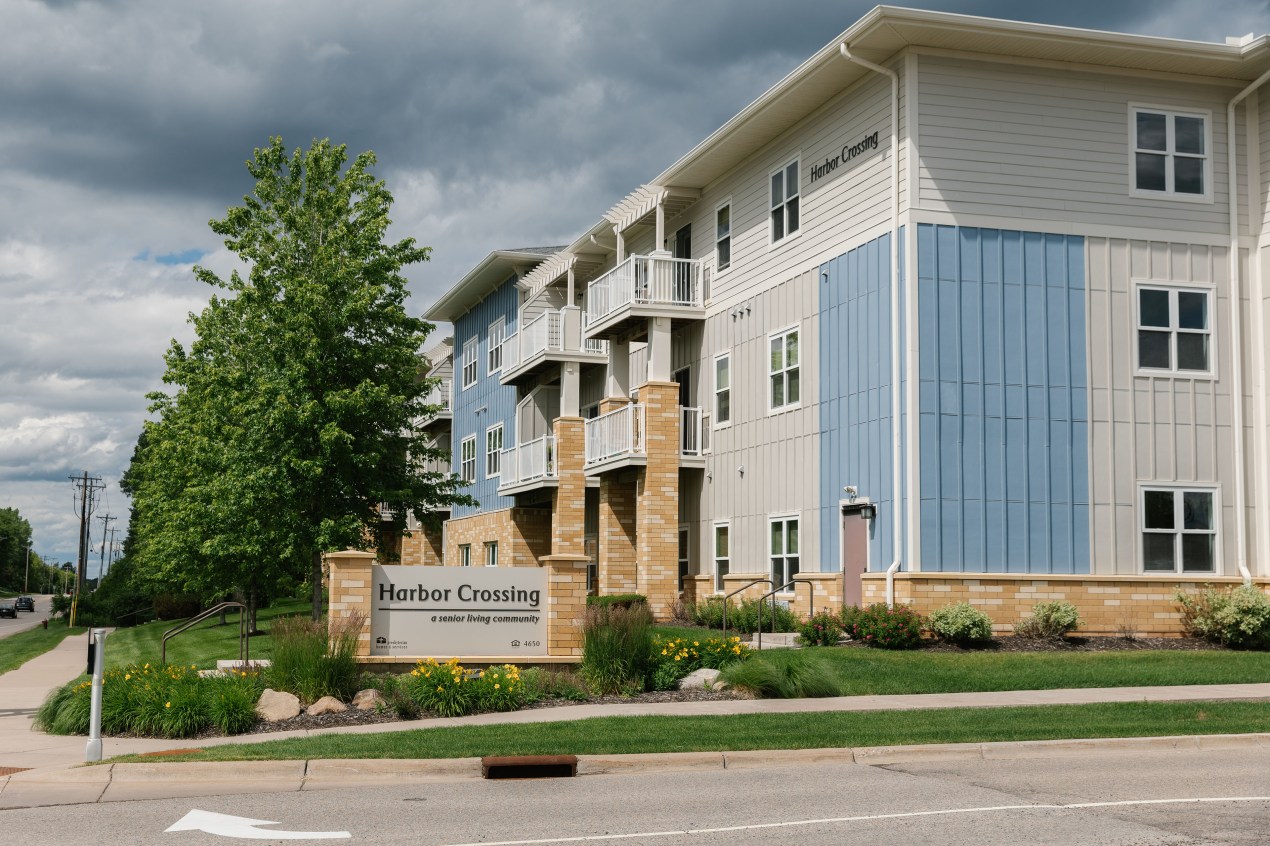
The case of Gladys Lynch, a 96-year-old retired department store accountant, further highlights the systemic failures within memory care units. After moving into Harbor Crossing in White Bear Lake, Minnesota, in September 2025, Lynch became the victim of a resident with Alzheimer’s, severe dementia, agitation, depression, and anxiety. Despite repeated concerns raised by staff about this resident’s aggressive behavior, including entering other residents’ rooms and difficulty being redirected, the facility failed to implement effective interventions. Rebecca Norton, Lynch’s daughter, had installed webcams and witnessed the other resident repeatedly entering her mother’s room, harassing her, and rummaging through her belongings. Despite her notifications to the administration, the problem persisted.

The tragic incident unfolded on the morning of October 1st, when the aggressive resident entered Lynch’s room, resisted leaving, and ultimately pushed Lynch after an altercation. Lynch fell, striking her head and suffering a brain hemorrhage and fractures to her eye socket and ribs. She died five days later, with the medical examiner ruling her death a homicide. While prosecutors declined to press charges, the Minnesota Department of Health concluded that Harbor Crossing was responsible for neglect, having been aware of the resident’s violent tendencies and failing to implement protective measures. A wrongful death lawsuit has been filed against Presbyterian Homes, the owner of Harbor Crossing.
To mitigate the risk of such altercations, geriatricians, researchers, and advocates propose several strategies. These include enhanced supervision of high-risk residents, relocating them closer to nursing stations, separating residents with a history of conflict, and carefully adjusting roommate assignments. Comprehensive care plans, staff training on recognizing resident triggers, and prompt intervention are crucial. While antipsychotic medications are sometimes prescribed, they carry significant risks, including falls, strokes, and even death. The scarcity of staff often prevents dedicated one-on-one supervision, leading some facilities to require families to hire private aides at considerable expense. In extreme cases, facilities may resort to discharging residents. Camille Russell, a former long-term care ombudsman, noted that many nurses and aides are “woefully undertrained” in dementia care, suggesting a critical need to reorient decision-making towards compassionate care rather than solely profit.
The case of Linda Twiddy, a former church secretary with vascular dementia, illustrates the severe consequences of physical altercations. After moving into The Vero at Chesapeake, a memory care unit in Virginia, in August 2024, Twiddy was violently assaulted by another resident with dementia. She was kicked in an altercation, sustaining a 10-inch by 6-inch wound on her shin, with her calf severely damaged. This incident resulted in three surgeries, including a skin graft, and a month of rehabilitation, ultimately leaving her unable to walk again. The assailant had a documented history of aggression at a previous facility. The Vero denied allegations of negligence, claiming Twiddy’s injuries were a result of her own negligence or the actions of others. Virginia regulators, however, alleged the facility failed to assume responsibility for its residents’ well-being. The lawsuit brought by Twiddy’s family was settled on confidential terms.
These incidents, while varied in their specifics, reveal a common thread: a systemic failure to adequately protect vulnerable residents within long-term care settings. The complex interplay of cognitive impairment, environmental stressors, and insufficient staffing creates a fertile ground for violence, often with tragic and irreversible outcomes. Addressing this crisis requires a multi-faceted approach, prioritizing resident safety, enhancing staff training, implementing robust oversight, and ensuring that facilities are held accountable for their duty of care. The pursuit of profit must not supersede the fundamental right of every resident to live their remaining years with dignity, safety, and peace.
