

"Instead of asking every doctor to figure out which patient will die by suicide and locking that patient up, it might be that we need to make sure there aren’t loaded guns available."
This stark statement from psychiatrist Paul Nestadt encapsulates a paradigm shift in suicide prevention. While traditional approaches focus on identifying and treating individuals at risk, Nestadt and other experts argue for a complementary strategy: making the act of suicide more difficult by restricting access to lethal means. This approach, though highly effective according to research, faces significant constitutional and political hurdles, particularly when it involves firearms, which are the most common method of suicide in the United States.
Paul Nestadt, a seasoned psychiatrist deeply involved in suicide prevention through clinical practice, extensive research, and teaching, openly admits a critical limitation in his field: the inability to accurately predict which patients are at immediate risk of dying by suicide within a specific timeframe. Decades of research corroborate this sentiment, indicating that predictive accuracy for suicidal behavior hovers only slightly above chance and has seen little improvement over the past 50 years. This inherent unpredictability, however, does not lead to despair but rather fuels a drive for interventions that bypass the need for precise risk identification.
The core of this alternative approach lies in "means restriction"—making it harder for individuals experiencing suicidal ideation to access the tools they might use to end their lives. Nestadt elaborates on this by contrasting the intensive, often impractical, effort of identifying every potentially suicidal patient with the more systemic impact of reducing the availability of lethal means. "Instead of asking every doctor to figure out which patient will die by suicide and locking that patient up," he suggests, "it might be that we need to make sure there aren’t loaded guns available."
This focus on means restriction is a central theme in an ongoing series by KFF Health News, which explores suicide prevention strategies beyond conventional therapies and medication. While these traditional interventions are undeniably vital, a growing consensus among clinicians, researchers, and those who have experienced loss due to suicide points to the necessity of broader, systemic interventions. The challenge, however, lies in the deeply entrenched and often contentious nature of firearm policy in the United States, where discussions about gun control quickly become entangled with constitutional rights and political polarization.
Despite these challenges, research consistently highlights limiting access to lethal means as one of the most promising strategies for saving lives. This can encompass a range of interventions, from erecting physical barriers on bridges and buildings to prevent jumps, to regulating the quantity of medications individuals can obtain. Crucially, it also extends to reducing access to firearms. Nestadt, who serves as the medical director at the Johns Hopkins Center for Suicide Prevention, asserts that this particular intervention holds the greatest potential for saving lives, even as he acknowledges its significant implementation difficulties.
The gravity of the issue is underscored by stark statistics. In the United States, firearms were used in over 28,000 suicides in the most recent year for which preliminary federal data is available, accounting for more than half of all suicide deaths. Even as overall suicide rates have seen a recent decline, gun suicides have reached record highs for five consecutive years. While historically concentrated among middle-aged white men and veterans, groups with persistently high suicide rates, recent trends show an alarming increase in gun suicides among women and some segments of the Black and Latino male populations. The surge in first-time gun buyers during the COVID-19 pandemic further emphasizes the urgent need for widely applicable prevention strategies.
A common counterargument to means restriction is the belief that determined individuals will simply find alternative methods. However, extensive research refutes this notion. Studies indicate that restricting access to one particular method of suicide does not typically lead to a significant increase in the use of other methods. Suicidal crises can be incredibly acute, with the period between deciding to die and acting on that impulse sometimes lasting less than an hour, or even mere minutes. Any measure that introduces a delay, such as requiring a gun safe to be unlocked, can provide crucial moments for reconsideration or for an intervention to occur.

Despite the evidence supporting means restriction, discussions surrounding firearms in the U.S. remain a political minefield, even within the seemingly bipartisan realm of suicide prevention. Proposals for background checks, waiting periods, or red flag laws often trigger deeply entrenched partisan divides. Gun owners and the firearms industry view many of these policies as infringements on Second Amendment rights, while many policymakers consider the topic politically untenable.
The Trump administration, for instance, has been a strong proponent of gun rights. During its tenure, numerous firearms regulations were rolled back, a previous Surgeon General’s advisory labeling gun violence a public health crisis was rescinded, and grants focused on community gun violence prevention were revoked. Federal staff dedicated to this issue also saw reductions. While the White House did not directly address how these actions might impact gun suicide rates, a spokesperson emphasized President Trump’s commitment to "Making America Healthy Again," pointing to initiatives such as support for psychedelic treatments for mental illness and grants for veteran suicide prevention.
The Limits of Red Flag Laws
Among the gun policies that have garnered some traction, despite opposition, is the Extreme Risk Protection Order (ERPO), commonly known as a red flag law. Adopted in some form by 22 states and the District of Columbia, these laws empower judges to temporarily remove firearms from individuals who present a demonstrable danger to themselves or others, based on presented evidence. While often enacted in response to mass shootings, research suggests their greater efficacy lies in suicide prevention.
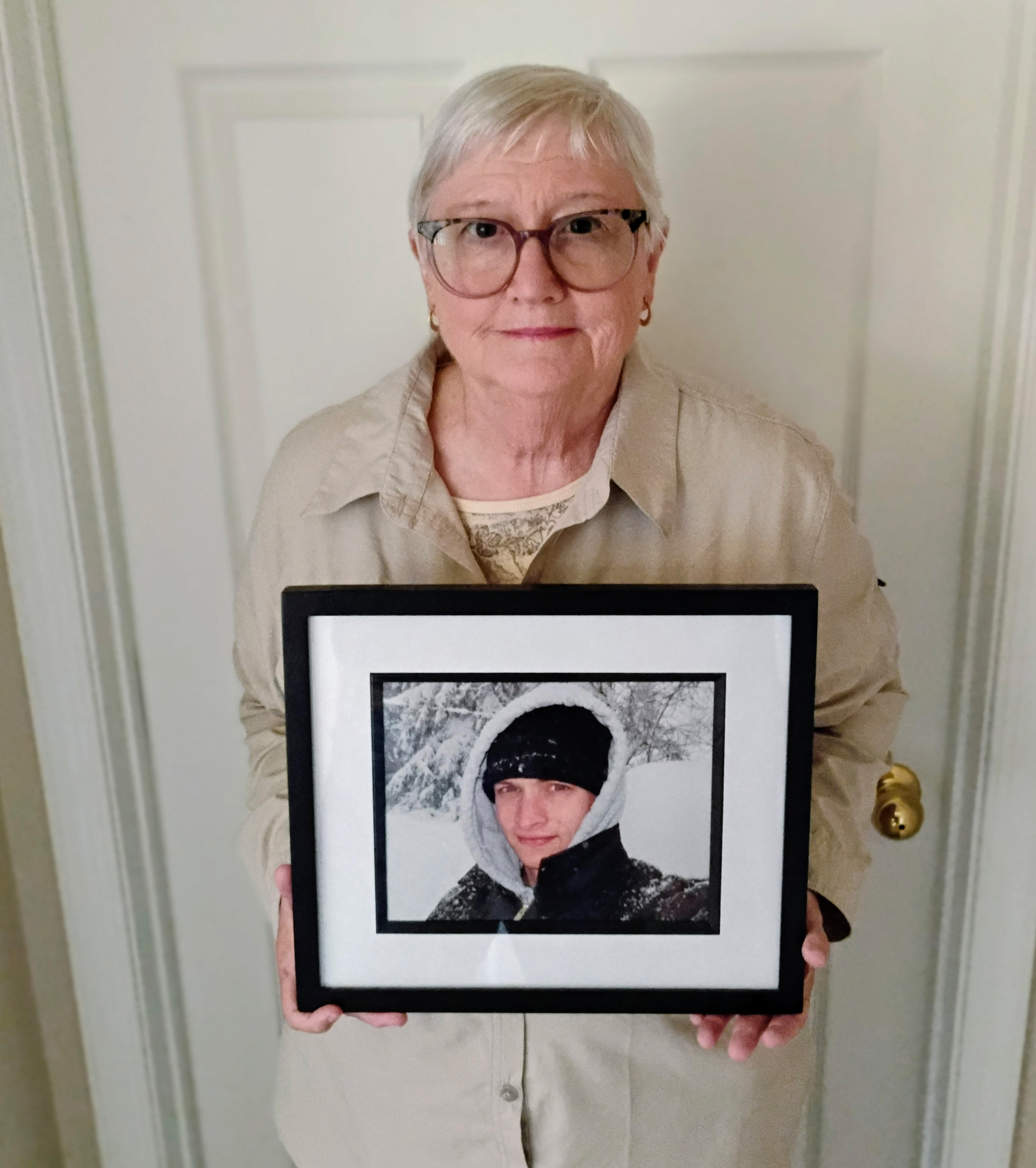
However, the effectiveness of red flag laws hinges on the ability to identify individuals at risk. Dorothy Paugh, who lost her father to suicide in 1965 and her son Peter to suicide in 2012, both by firearm, illustrates this point. Her father, facing job loss and financial distress, purchased a handgun. Paugh believes that had her mother been able to seek an extreme risk protection order, or if her father’s friend had offered to hold his gun, her father might have lived. Paugh became a fervent advocate for red flag laws in Maryland, witnessing their eventual passage.
Studies in states with red flag laws indicate that for every 10 to 20 firearms removed, one suicide is averted, a testament to their life-saving potential. Yet, Paugh also acknowledges their limitations, stating that such a law would not have saved her son, Peter. In 2012, her 25-year-old son, who appeared to be living a fulfilling life, fatally shot himself. Paugh expressed profound shock, admitting she had no inkling of his suicidal ideation. In such cases, where warning signs are not apparent to family or clinicians, even the existence of a red flag law would not have provided a pathway for intervention.
Michael Anestis, a clinical psychologist and executive director of the New Jersey Gun Violence Research Center, concurs that individuals most vulnerable to firearm suicide are often not recognized as such by their families or healthcare providers. Research indicates that individuals who die by suicide using firearms are less likely to have sought mental health care previously. Furthermore, a significant proportion of veterans and service members who die by gun suicide never communicate their suicidal thoughts in the months leading up to their death.
This reality underscores why red flag laws, while valuable, are considered only a partial solution. They target specific individuals identified as high-risk, a characteristic that contributes to their political feasibility. However, they do not address the larger population of individuals who are quietly struggling with suicidal ideation without exhibiting overt warning signs.
Lessons From Road Safety
Nestadt draws an analogy to road safety to conceptualize a more comprehensive approach to suicide prevention. He argues that the nation doesn’t focus on predicting who will be in a car accident by assessing individual risk factors like reaction time or past fender-benders. Instead, governments have implemented systemic safety measures such as speed limits, mandatory seatbelt laws, and requirements for airbags and shatter-resistant windshields. These broad interventions have led to a significant decline in traffic-related fatalities.
Applying a similar framework to suicide prevention could involve measures like requiring permits and background checks for firearm purchases, as well as implementing waiting periods before a gun can be acquired. Research supports this, with one study finding that the implementation of a permit-to-purchase law in Connecticut was associated with a substantial decrease in gun suicide rates, while the repeal of such a law in Missouri correlated with a significant increase.
Furthermore, approximately three dozen states have enacted laws requiring safe storage of firearms in homes with children, a practice proven to reduce youth suicides. This is particularly critical given the alarming rise in gun suicide rates among Black and Latino youth. Beyond suicide prevention, laws mandating permits and safe storage can also contribute to a reduction in homicides and other gun-related injuries. These forms of violence can create trauma and habituation to injury and death within communities, increasing the risk of suicide, a phenomenon Anestis terms a "double whammy."
Responsibility, Rights, and Saving Lives
Gun owners and firearm industry organizations often express opposition to universal measures, advocating instead for educational campaigns that emphasize recognizing warning signs, discussing mental health, and safe gun storage. These initiatives place the onus of responsibility on individuals. The National Shooting Sports Foundation, for example, collaborates with the American Foundation for Suicide Prevention to distribute educational materials in gun shops. Their stated purpose is to equip firearm owners with knowledge to prevent suicide and save lives.
The National Rifle Association (NRA) maintains that policies focusing on firearms overlook the deeper underlying causes of suicidal behavior, such as mental illness. An NRA spokesperson stated, "Suicide is a serious issue that deserves serious solutions focused on the underlying causes, not on political efforts to restrict the rights of law-abiding Americans." They argue that dangerous individuals should be incapacitated rather than merely deprived of a specific means of harm.
Despite these divergent viewpoints, some initiatives have fostered collaboration between seemingly disparate groups, including gun store owners, public health experts, and even libraries. These efforts aim to provide free gun locks for safe home storage, identify temporary gun storage locations for individuals in crisis, and educate people on how to avoid selling firearms to individuals exhibiting suicidal tendencies.
These collaborative efforts offer a glimmer of hope for individuals like Dorothy Paugh, who continues to advocate for improved mental healthcare, open conversations about suicide, and policies that reduce access to firearms. While acknowledging that such policies are not a panacea, she firmly believes they save lives. Having experienced the profound loss of both a parent and a child to suicide, Paugh understands the immeasurable value of even a single life saved, stating, "If you’re that one person or that person’s family, it’s all the difference in the world."
