
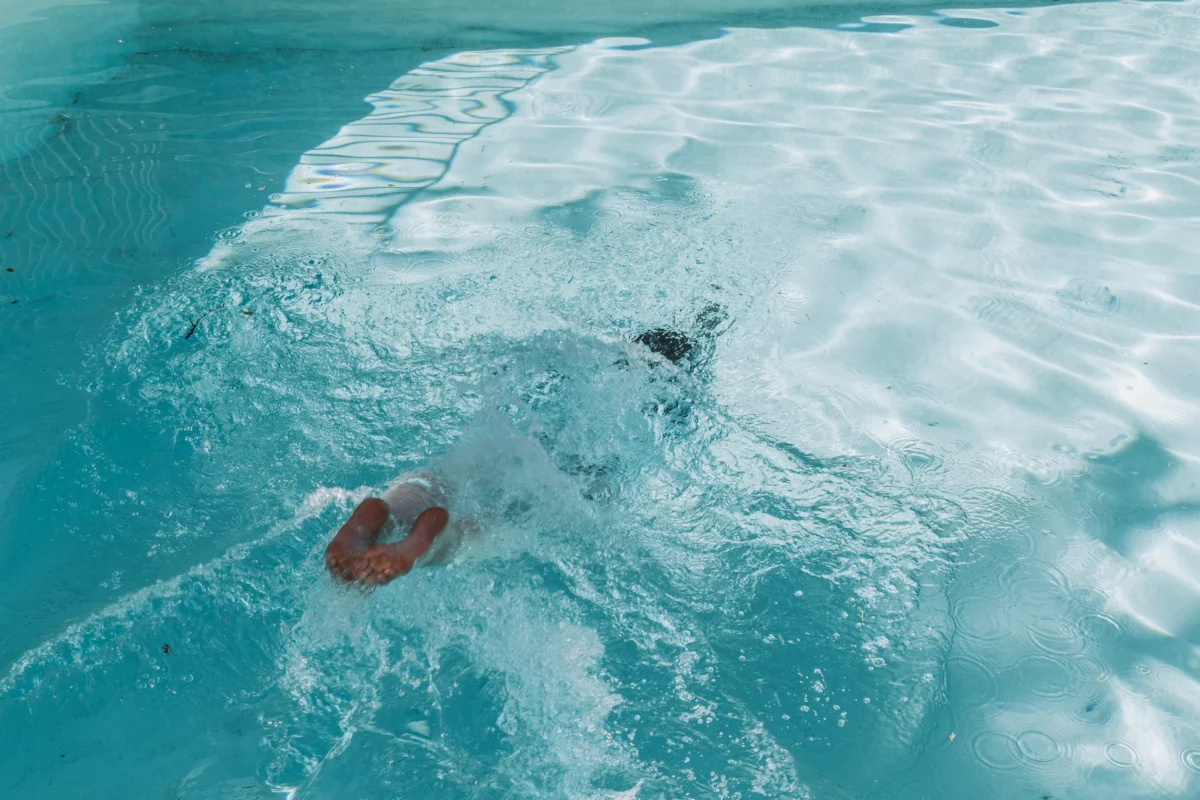
"A tragic drowning incident can trigger a cascade of severe medical complications, underscoring that survival after rescue is not always the end of the danger, as seen in the heart-wrenching case of a 2-year-old boy."
The untimely death of 2-year-old Hartley Wareham, brother of English footballer Jayden Wareham, serves as a stark and tragic reminder of the insidious dangers that can follow even a seemingly survivable drowning incident. Found unresponsive in a swimming pool during a family holiday in Spain, Hartley’s initial rescue and subsequent intensive care ultimately could not overcome the devastating medical cascade that followed. His case, confirmed by an inquest, highlights how immersion in water can lead to a chain of events, including sepsis and acute respiratory distress syndrome (ARDS), that can prove fatal days later, even with prompt medical intervention. This profound loss has not only plunged a family into deep mourning but has also reignited critical conversations about water safety and the often-underestimated long-term medical implications of near-drowning events.
An inquest into the death of Hartley Wareham has shed light on the critical medical chain of events that led to his passing. The toddler was discovered face down in a swimming pool on June 28, while his family was on vacation in Spain. Emergency responders acted swiftly, transporting Hartley to a nearby hospital where he remained in intensive care for several days. Despite the dedicated efforts of medical professionals, his condition deteriorated, and he passed away on July 3. The subsequent investigation by officials determined that Hartley’s death was a direct result of immersion in water. Contributing to this fatal outcome were sepsis, a life-threatening systemic response to infection, and acute respiratory distress syndrome (ARDS), a severe lung condition.
The tragedy has resonated deeply within the football community and beyond, prompting an outpouring of condolences and support for Jayden Wareham and his grieving family. Exeter City Football Club, alongside numerous supporters and members of the public, have offered their sympathies. Hartley’s death serves as a somber illustration of how a child can initially survive a drowning incident, receive emergency treatment, and yet still succumb to devastating medical complications that emerge in the days following the event. This underscores the critical need for continued vigilance and understanding of the complex medical pathways that can be initiated by water immersion.
The evidence presented during the inquest paints a clear picture of the sequence of events. Hartley’s discovery in the pool initiated an immediate medical response, leading to his transfer to a hospital for advanced care. The family’s holiday was tragically cut short as they faced the agonizing reality of their son’s deteriorating health. Despite the best efforts of the medical team, the damage caused by oxygen deprivation and subsequent complications proved insurmountable. The coroner’s conclusion, attributing death to immersion in water with sepsis and ARDS as contributing factors, provides a clinical explanation for the family’s immense loss. The family’s description of Hartley as a "deeply loved little boy" whose loss has created an "immeasurable void" speaks to the profound personal tragedy behind the medical facts, a sentiment echoed by the widespread sympathy from the football world and the public.
Hartley’s cause of death serves as a critical medical lesson, demonstrating how a drowning incident can trigger a dangerous and often irreversible cascade of severe health complications. When water enters the airway and lungs during submersion, it deprives the body of oxygen. This lack of oxygen can cause significant damage to the delicate lung tissues, impairing the body’s fundamental ability to exchange oxygen for carbon dioxide. Crucially, even when a victim is successfully rescued and their breathing and heartbeat are restored, the initial oxygen deprivation and the resulting lung injury can continue to worsen over the subsequent hours and days. This delayed deterioration is a critical factor that medical professionals and caregivers must understand.
The compromised state of the lungs post-drowning makes them highly susceptible to inflammation and infection. This inflammatory process can, in turn, progress to sepsis, a life-threatening condition. Sepsis occurs when the body’s immune system overreacts to an infection, leading to widespread inflammation that can damage multiple organ systems. According to leading health organizations such as the Centers for Disease Control and Prevention (CDC) and the Cleveland Clinic, sepsis is a medical emergency that can rapidly lead to dangerously low blood pressure, compromised circulation, and eventual organ failure if not treated with extreme urgency and effectiveness.
Simultaneously, the severe inflammation within the lungs can evolve into acute respiratory distress syndrome (ARDS). ARDS is characterized by the leakage of fluid into the air sacs of the lungs, creating a critical barrier that severely hinders the transfer of oxygen from the lungs into the bloodstream. Patients with ARDS often require admission to intensive care units and may need mechanical ventilation to assist their breathing, as their lungs are unable to function sufficiently on their own. In the context of drowning victims, the synergistic impact of initial oxygen deprivation, direct lung injury, subsequent infection, the development of sepsis, and ARDS can create a rapidly escalating and complex medical crisis that becomes exceedingly difficult to manage and reverse, even with the most advanced medical treatments available.
The World Health Organization (WHO) identifies drowning as a leading cause of injury-related death globally, particularly among young children. These incidents are often silent and can occur in mere seconds, emphasizing the paramount importance of constant adult supervision whenever children are in or around any body of water. This includes swimming pools, natural bodies of water like lakes and oceans, and even bathtubs. Experts strongly advocate for comprehensive safety measures. These include the installation of four-sided pool fencing with self-latching gates to prevent unsupervised access, ensuring young children are kept within arm’s reach when near water, and enrolling children in age-appropriate swimming lessons once they reach a suitable developmental stage. Furthermore, it is crucial for supervisors to remain free from distractions, such as mobile phones, to maintain undivided attention on children around water.
In the event that a child is observed to be struggling in the water, immediate and decisive action is required. Rescuers should, if it is safe to do so, remove the child from the water as quickly as possible. Simultaneously, emergency medical services must be contacted without delay. If the child is not breathing normally or has no palpable pulse, cardiopulmonary resuscitation (CPR) should be initiated immediately. It is vital to understand that even if a child appears to have recovered after a drowning incident and is breathing independently, prompt and thorough medical evaluation is absolutely critical. This is because serious complications affecting the brain and lungs can develop hours after the initial event, often without immediate outward signs.
The tragic passing of Hartley Wareham serves as a profound and deeply upsetting reminder that the consequences of drowning incidents can be devastating, even when immediate resuscitation efforts are successful and intensive hospital care is provided. His case clearly illustrates that surviving the initial immersion and rescue does not guarantee an absence of delayed, life-threatening complications. This is particularly true when severe lung injury, coupled with the development of infection, sepsis, and ARDS, occurs during the recovery phase.
For parents, caregivers, and families, Hartley’s story reinforces the non-negotiable importance of constant, vigilant supervision around water. It highlights the alarming reality that young children can drown with frightening speed and silence. The implementation of straightforward preventive measures can significantly mitigate the risk of such tragedies. These measures include ensuring secure barriers around swimming pools, maintaining close adult supervision at all times when children are near water, providing age-appropriate swimming education, and understanding the correct response protocols during a water emergency.
As Jayden Wareham’s family navigates their immense grief following the loss of Hartley, the circumstances surrounding his death serve as a powerful and necessary call to action. It underscores that unwavering vigilance around water remains one of the most effective and crucial strategies for protecting young children from preventable drowning injuries and the potentially fatal complications that can follow.
