
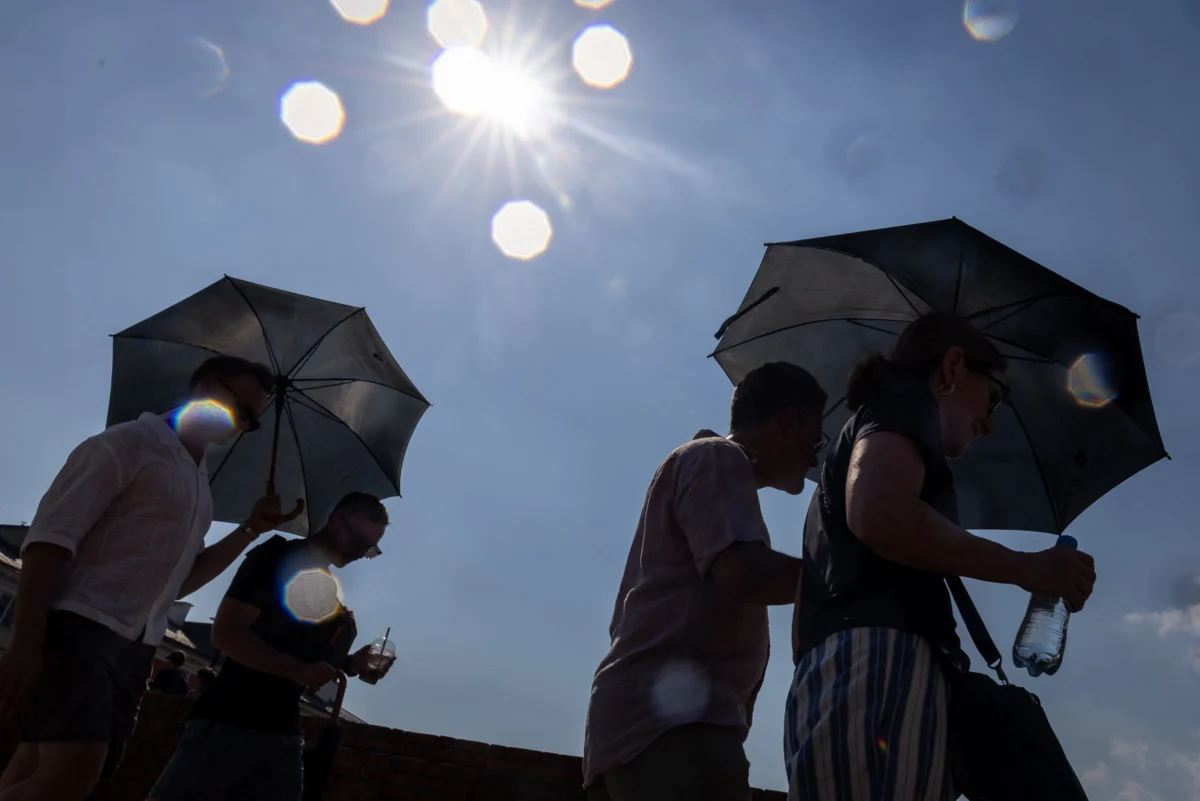
Florida is grappling with an unprecedented heatwave, with heat indices soaring to 115 degrees Fahrenheit across much of the state, shattering records and posing significant health risks, particularly for the elderly and young children.
Florida is currently experiencing an extreme heat event that has seen heat indices reach alarming levels, with the National Weather Service issuing widespread warnings. This intense heatwave has already led to record-breaking temperatures in several cities, highlighting the urgent need for residents to take precautions, especially those most vulnerable to heat-related illnesses. The state’s infrastructure and public health systems are being tested as temperatures climb, underscoring the critical importance of understanding heat risks and implementing effective coping strategies.
Widespread Alerts and Record-Breaking Temperatures Grip Florida
Much of Florida is currently under some form of heat alert, ranging from heat advisories to extreme heat warnings, as the state grapples with scorching temperatures and dangerously high heat indices. Forecasts predict these indices could reach as high as 115 degrees Fahrenheit in some areas, a level that poses a severe threat to human health. The intensity of this heatwave has already begun to etch its mark in meteorological history, with several locations reporting unprecedented temperature readings.
Tampa, for instance, recorded an actual air temperature of 100 degrees Fahrenheit on July 27, marking the hottest reading since the city began its official record-keeping in 1890. The following day, the city’s heat index, which accounts for both temperature and humidity, soared to 118 degrees Fahrenheit, a figure that ties a record previously set in August 2000. Meteorologist Stephen Shiveley of the National Weather Service Tampa Bay confirmed these alarming figures, emphasizing the severity of the current weather conditions.
In response to the escalating threat, the National Weather Service office in Tallahassee issued a stark advisory, urging residents to "take every precaution to stay cool in this high-end heat." This directive underscores the seriousness with which the heatwave is being treated by meteorological authorities and highlights the potential for widespread health impacts if immediate action is not taken. While most healthy adults can endure such conditions with common sense precautions, the elevated temperatures present a critical medical risk for specific demographic groups whose bodies are less efficient at regulating temperature and communicating distress.
Understanding the Scope and Severity of Heat Alerts
The geographical reach of these heat alerts is extensive and subject to daily shifts. Across the Panhandle, Big Bend, North and Northeast Florida, and into east-central Florida, including the Orlando metropolitan area and northward, residents are being advised of the extreme heat. South Florida, while experiencing temperatures in the 90s, has generally remained below the alert thresholds, offering a slight reprieve to its southern inhabitants.
Specific regions are experiencing particularly intense conditions. Jacksonville and Northeast Florida have seen forecast heat indices ranging from 108 to 115 degrees Fahrenheit, with warnings in effect from midday into the early evening. Tallahassee and the central Panhandle are facing highs of 96 to 100 degrees Fahrenheit, translating to heat indices between 106 and 112 degrees. The western Panhandle, including Pensacola, is reporting upper 90s with heat indices also in the 108 to 112 range. North Central Florida, around Gainesville, was under an extreme heat watch on Wednesday, with peak heat indices predicted to be between 107 and 115 degrees Fahrenheit.
While the different tiers of warnings—advisory, watch, and warning—indicate varying degrees of severity, the underlying criteria are crucial for understanding the risk. A heat advisory, for example, is typically issued when a heat index of 100 degrees Fahrenheit or higher is expected for at least two consecutive days, with overnight low temperatures failing to drop below 75 degrees Fahrenheit. This latter condition is particularly insidious, as it prevents the body from adequately recovering from the day’s heat exposure, leading to an accumulation of heat stress over multiple days.
It is also important to note a technical aspect of heat index calculations: they are generally computed under conditions of shade and light wind. In direct sunlight, the perceived temperature can increase significantly, potentially adding 15 degrees Fahrenheit or more to the effective heat index. Therefore, a forecast heat index of 110 degrees Fahrenheit may represent a considerably less severe scenario than standing in a sun-drenched Florida parking lot at 3 p.m.
Vulnerable Populations: The Elderly and Young Children
The extreme heat poses a disproportionately high risk to two specific demographic groups: older adults and young children. These groups share a common vulnerability: their bodies are less efficient at shedding heat, and they often lack the ability to reliably communicate their distress until a critical stage is reached. This physiological difference makes them acutely susceptible to heat-related illnesses, which can escalate rapidly and have severe consequences.
Older Adults: As individuals age, their bodies undergo changes that impair thermoregulation. The capacity to sweat, a primary mechanism for cooling the body, diminishes; sweat production decreases and is initiated later. The cardiovascular system’s ability to respond to heat by increasing cardiac output to move blood to the skin also becomes less efficient. Furthermore, the thirst signal weakens, meaning older adults can become significantly dehydrated without feeling thirsty, a dangerous precursor to heat-related issues. Chronic health conditions common in this age group, such as heart disease, kidney disease, and diabetes, further reduce their physiological reserve and increase their susceptibility. Many older adults also take medications that can interfere with heat tolerance by blunting thirst, impairing sweating, or limiting blood vessel dilation. Mobility issues can also prevent them from accessing cooler environments even when they recognize the need. The behavioral aspect is also a concern; some older adults, particularly those living independently, may resist using air conditioning due to utility costs or may be reluctant to relocate to a cooler place, even when their health is at risk.
Young Children: Infants and young children face a different set of challenges. They have a higher body surface area relative to their mass, which means they absorb environmental heat more rapidly. Their sweating capacity is also less developed than that of adults. Crucially, infants and toddlers are entirely dependent on caregivers for their well-being. They cannot remove their own clothing, obtain water, or articulate their discomfort. This complete reliance places a significant burden on adults to constantly monitor their condition and ensure they are kept cool and hydrated. Similar to older adults, children often do not stop playing even when they are overheating, adding a behavioral risk factor to their physiological vulnerability.
The U.S. Environmental Protection Agency (EPA) identifies similar high-risk groups in its guidance on extreme heat, including adults 65 and older, infants and children, individuals with chronic health conditions, those without access to air conditioning, and outdoor workers and athletes. The most effective intervention for isolated older adults during a heat event is not complicated but requires proactive engagement: physically checking on them in person, not just via phone. Because individuals, especially those in vulnerable groups, may not reliably recognize when they are being overwhelmed by heat, direct observation is paramount.
The Misconception of Electric Fans in Extreme Heat
A common household mistake during intense heatwaves involves the misuse of electric fans. While fans are often perceived as a reliable cooling solution, their effectiveness diminishes significantly, and can even become counterproductive, as temperatures rise. The Centers for Disease Control and Prevention (CDC) has long advised that when ambient temperatures are in the high 90s Fahrenheit, electric fans alone will not prevent heat-related illnesses.
The EPA offers more specific guidance, recommending against using electric fans for cooling when the room temperature reaches the mid-90s Fahrenheit or higher, and strongly advises against running a fan in a closed room. Ready.gov describes fans as creating "airflow and a false sense of comfort" without actually reducing body temperature. The underlying principle is that fans cool by facilitating the evaporation of sweat from the skin. However, once the surrounding air temperature exceeds skin temperature, moving that air across the body does not promote cooling; instead, it can transfer heat to the body, similar to the functioning of a convection oven.
While there is ongoing scientific discussion about the precise temperature threshold at which fans lose effectiveness, and some recent research suggests they may retain some benefit in humid conditions—a characteristic of Florida’s climate—the general household rule derived from official guidance remains sound. A fan should be considered a supplement to air conditioning or proper ventilation, not a substitute. If an indoor space is consistently in the mid-90s, the appropriate response is to relocate to a cooled environment, rather than solely relying on a fan.
Fans can still serve a useful purpose when used strategically. Positioning a fan to exhaust hot air out a window or draw cooler air into a space can help lower the overall room temperature, which is distinct from blowing hot air directly onto a person. For households without functioning air conditioning, it is crucial to identify and pre-plan access to a cooling location, such as public libraries, shopping centers, or designated county cooling centers. Information on these locations and their operating hours is typically available on county emergency management websites. Residents facing utility shutoffs during a heat event should contact their utility provider to discuss payment arrangements, and Florida has energy assistance programs available.
The Deadly Trap of Vehicles and Perennial Warnings
The danger posed by vehicles left in the sun during extreme heat is a recurring and tragic issue that warrants constant vigilance. Vehicle interiors heat up far more rapidly than most people anticipate, and the temperature inside can continue to climb well beyond the ambient outdoor temperature. Even slightly cracking a window provides negligible benefit in mitigating this rapid temperature increase.
Under these dangerous conditions, no child, pet, or vulnerable adult should ever be left in a parked car, regardless of the duration, including brief errands. The consequences can be fatal. The most effective practical countermeasure is to establish a habit that eliminates the possibility of forgetting. A widely recommended strategy is to place an essential item, such as a purse, wallet, or mobile phone, in the back seat with the child or pet. This ensures that opening the back door is a necessary action, rather than an optional one, thereby serving as a physical reminder. The majority of hot car fatalities involve caregivers who did not intend to leave a child behind, but rather a lapse in memory or a disruption in routine. Implementing a system that does not rely solely on memory is crucial for preventing such tragedies, especially on days when routine patterns change.
Recognizing and Responding to Heat Illnesses
Understanding the signs and symptoms of heat exhaustion and heat stroke is critical for timely intervention.
Heat Exhaustion: This condition typically manifests with heavy sweating, cool and clammy skin, feelings of weakness, dizziness, headache, nausea, and a rapid, weak pulse. In older adults, these symptoms might present as unusual fatigue or mild confusion. For young children, signs can include fussiness, refusing to drink fluids, or unusual sleepiness. In most cases, moving to a cool place, loosening clothing, sipping cool fluids, and applying cool, damp cloths to the skin can resolve heat exhaustion. However, if symptoms persist for more than an hour, medical attention should be sought.
Heat Stroke: This is a life-threatening medical emergency. The hallmark sign is a body temperature above 103 degrees Fahrenheit. The skin may feel hot and be either dry or damp. Other symptoms include a rapid, strong pulse, confusion, slurred speech, and loss of consciousness. In some cases, sweating may cease entirely.
The federal guidance for responding to heat stroke is to immediately call 911. While waiting for emergency services, the affected person should be moved to a cool, shaded area, and outer clothing should be removed. Cold, wet cloths or ice packs should be applied to the head, neck, armpits, and groin, or their clothing should be soaked with cool water. It is crucial not to give fluids to individuals who are confused or not fully alert, as this can pose a choking hazard.
The National Weather Service continually updates its alerts on a daily basis. The current pattern of intense heat is forecast to persist through the week, with potential for storm chances to bring some relief thereafter. Residents are strongly advised to consult their local county’s current alert status rather than relying on past information, as conditions can change rapidly.
In summary, the confirmed reality is that a significant portion of Florida is under severe heat alerts, with heat indices reaching dangerous levels of 115 degrees Fahrenheit. Record-breaking temperatures in cities like Tampa underscore the severity of this heatwave. The most vulnerable populations—adults over 65, infants and young children, and those without reliable air conditioning—face the greatest risks. Proactive measures, such as in-person welfare checks on isolated older relatives and planning for access to cooling centers, are highly recommended. The central uncertainty remains the duration of this extreme heat pattern and its cumulative impact on public health and well-being.
