
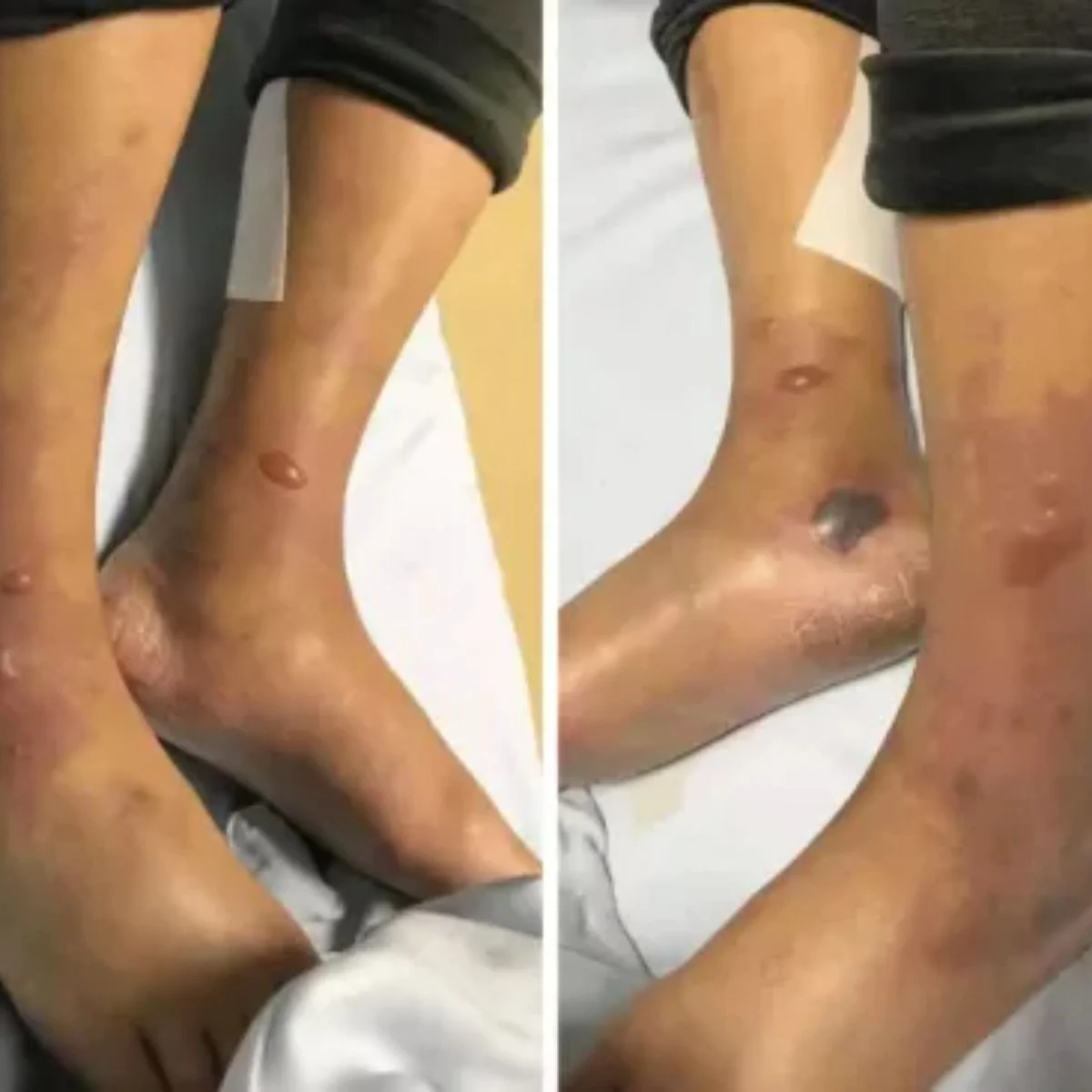
"While Florida has reported its first 2026 fatality from Vibrio vulnificus, a bacterium found in warm coastal waters, it’s crucial to understand that the organism doesn’t ‘eat’ flesh. Instead, it releases toxins that cause tissue death, a distinction vital for accurate risk perception and public health messaging."
Florida has officially recorded its first death of 2026 attributed to Vibrio vulnificus, a bacterium commonly found in warm coastal waters. This tragic event, involving a Palm Beach County resident aged 80 to 84, was reported to the state in June and publicly disclosed in the Florida Department of Health’s July 24 update. While the exact date of death remains unreleased, this disclosure highlights a newly confirmed fatality rather than a recently occurring one. Statewide, Florida has documented 11 Vibrio vulnificus cases in 2026, with a notable surge of seven cases reported since May, coinciding with the beginning of the summer recreation season. These recent infections have been identified across various counties, including Lee (two cases), and one each in Marion, Miami-Dade, Okaloosa, Palm Beach, and Polk counties. Palm Beach County, in particular, has seen two cases this year, the most recent confirmed in June.
For comparative context, the state’s 2025 data indicates a higher burden with 33 cases and five deaths. The preceding year, 2024, witnessed a significantly more severe outbreak, with 82 cases and 19 deaths. The Florida Department of Health attributed this substantial increase largely to extensive flooding caused by Hurricanes Helene and Milton. Similarly, a notable spike in cases was observed in 2022 following Hurricane Ian, underscoring the heightened risk associated with storm activity and subsequent inundation of coastal areas. Nationally, Vibrio vulnificus infections remain uncommon, with an estimated 100 to 200 cases reported annually.
The pervasive use of the "flesh-eating bacteria" moniker for Vibrio vulnificus is a significant misnomer that not only sensationalizes the pathogen but also actively harms public understanding of the risks and necessary precautions. This inaccurate labeling can lead to misdirected attention and a skewed perception of how infections occur and progress. Medically speaking, Vibrio vulnificus does not consume human tissue. Instead, it produces potent toxins that induce tissue necrosis, or cell death. This critical distinction is fundamental to understanding the clinical manifestations of infection. While these infections can indeed lead to severe skin breakdown, the formation of ulcers, and in the most dire circumstances, necrotizing infections requiring extensive surgical intervention, including amputation, the underlying mechanism is toxin-mediated destruction, not direct tissue consumption.
This terminological inaccuracy also misdirects public focus away from the more common and mundane pathways of infection. Instead of conjuring images of an aggressive external threat actively devouring flesh, the reality points to more insidious exposure routes: a minor cut or abrasion coming into contact with contaminated warm seawater, or the consumption of raw or undercooked shellfish, particularly oysters. The genuinely life-threatening form of Vibrio vulnificus infection is not the superficial wound infection, but rather the systemic bloodstream infection, known as septicemia. Data from the Florida Department of Health indicates that approximately half of all Vibrio vulnificus bloodstream infections are fatal. A comprehensive review by the Centers for Disease Control and Prevention (CDC) of Florida cases spanning from 1981 to 1992 documented 125 infections with 44 deaths. Crucially, this historical analysis revealed that 58 percent of these cases were primary septicemia, rather than wound or intestinal infections, emphasizing the systemic danger. The same CDC review identified that Vibrio vulnificus infections typically peaked during the months of May through October, a period that aligns precisely with the current summer season in Florida and other coastal regions.
Understanding the distinct routes of infection is paramount for implementing effective preventive measures. There are two primary pathways through which individuals can contract Vibrio vulnificus: ingestion of contaminated food and direct exposure of open wounds to contaminated water. The most frequent source of infection, according to Florida health officials, is the consumption of raw or undercooked shellfish, with oysters being particularly implicated due to their filter-feeding nature, which allows them to concentrate bacteria from the surrounding water. It is important to note that common culinary preparations such as adding hot sauce, lemon juice, or even alcohol to raw oysters do not render them safe from Vibrio vulnificus.
The second significant route of infection involves an open wound or break in the skin coming into contact with warm seawater or brackish water. Brackish water, a mixture of salt and fresh water, is commonly found in estuaries, inlets, and coastal marshes. It is crucial to emphasize that ordinary skin contact with seawater, without any open wounds, does not typically lead to illness. The bacteria require an entry point into the body, which can include cuts, scrapes, blisters, surgical incisions, recent tattoos or piercings, and even chronic wounds such as diabetic foot ulcers.
Environmental factors, particularly flooding, significantly elevate the risk of exposure. This correlation is evident in Florida’s historical data, where the most severe years for Vibrio vulnificus outbreaks followed major hurricane events. The Florida Department of Health strongly advises individuals to take heightened precautions following any storm event, as standing water and floodwaters can harbor elevated concentrations of the bacteria. Recent reports of Vibrio vulnificus detections in waters off Long Island, New York, and the subsequent advisories issued, serve as a stark reminder that this is not solely a concern for the Gulf Coast. As coastal waters globally continue to warm, the potential for such infections extends to a wider geographical range.
Accurate risk communication is most vital when discussing who faces the most significant danger from Vibrio vulnificus. The severe outcomes of infection are not distributed evenly across the population; rather, they are disproportionately concentrated among individuals with specific pre-existing health conditions. For most healthy individuals, infection typically results in mild illness, often characterized by gastrointestinal symptoms that resolve within a few days. However, for those with underlying vulnerabilities, the consequences can be far more severe. A study cited by the Florida Department of Health found that individuals with certain pre-existing conditions were a staggering "80 times more likely to develop Vibrio vulnificus bloodstream infections than healthy people."
The most significant single risk factor identified is chronic liver disease. Other critical conditions that substantially increase susceptibility include cancer, diabetes, HIV, and iron overload states such as hemochromatosis or thalassemia. Immunosuppression, whether due to medical treatments or underlying conditions, also plays a significant role. Furthermore, age is a contributing factor, as indicated by the recent fatality in Palm Beach County involving an individual in their late 80s.
Symptoms of a Vibrio vulnificus wound infection typically include localized redness, pain, swelling, and fluid leakage from the affected site. In contrast, a bloodstream infection can manifest with more systemic symptoms such as fever, chills, a sudden drop in blood pressure, and the development of blistering skin lesions. Infections acquired through ingestion usually present with gastrointestinal distress, including vomiting, diarrhea, and abdominal pain. The rapid progression of severe Vibrio infections underscores the critical importance of prompt medical attention. Outcomes are heavily influenced by the speed at which antibiotics are administered and, when necessary, the timely execution of surgical interventions.
The practical precautions against Vibrio vulnificus are straightforward and most relevant to individuals in high-risk groups, rather than necessitating broad public alarm. The primary recommendation for individuals with chronic liver disease, cancer, diabetes, HIV, iron overload conditions, or those undergoing immunosuppressive therapy is to avoid consuming raw oysters or other raw shellfish entirely. Thoroughly cooked shellfish, however, is considered safe. This is the single most impactful preventive measure for this vulnerable population.
For all individuals, it is crucial to avoid entering seawater or brackish water with any open wounds, including cuts, scrapes, surgical incisions, or areas with new tattoos or piercings. If there is a possibility of a wound coming into contact with coastal water, it should be meticulously covered with a waterproof bandage. Following any potential exposure, wounds should be thoroughly washed with soap and clean water as soon as possible. Additionally, individuals should exercise caution and avoid wading in floodwaters after storm events.
Prompt medical evaluation is essential for any wound that exhibits signs of infection, such as increasing redness, pain, or swelling, after exposure to coastal water. It is imperative to inform healthcare providers explicitly about the water exposure, as Vibrio is not typically the initial pathogen suspected in wound infections. Any rapidly worsening pain, spreading redness, fever, or signs of confusion warrant immediate emergency medical evaluation, rather than deferring care to a next-day appointment.
For the vast majority of healthy individuals planning to enjoy Florida’s beaches, the practical risk of severe illness remains low. The most useful precautionary measure for this group is simply to ensure any cuts or abrasions are adequately covered rather than avoiding the water altogether. The confirmed facts for 2026 thus far include one death, disclosed in July and reported in June, among 11 confirmed cases statewide. The demographic most affected consists of older adults and individuals with pre-existing conditions such as liver disease, diabetes, cancer, or compromised immune systems. Sensible actions include avoiding raw shellfish for those in high-risk groups and diligently protecting open wounds from coastal waters. A central uncertainty remains whether increased storm activity, as observed in prior years, will lead to a higher incidence of cases. The next anticipated development will be the Florida Department of Health’s subsequent surveillance update on Vibrio vulnificus activity.
Frequently Asked Questions
How many cases has Florida had in 2026?
Florida has confirmed eleven cases of Vibrio vulnificus in 2026. Seven of these have been reported since May, and one death has been recorded in a Palm Beach County resident aged 80 to 84.
When did the death occur?
The exact date of the death has not been released. The fatality was reported to the state in June and publicly disclosed in the Department of Health’s July update.
Does the bacteria really eat flesh?
No, the term "flesh-eating" is a misnomer. Vibrio vulnificus produces toxins that cause tissue to die, leading to severe infections that may require surgery, but the bacteria itself does not consume tissue.
How do people get infected?
Infection primarily occurs through two routes: eating raw or undercooked shellfish, particularly oysters, which can concentrate the bacteria, or by exposing an open wound to warm seawater or brackish water.
Who is at the highest risk?
Individuals with chronic liver disease are at the most significant risk, being 80 times more likely to develop severe infections. Other high-risk groups include people with cancer, diabetes, HIV, iron overload conditions, or those with weakened immune systems due to medication or illness. Older adults are also more susceptible.
Is it safe to swim?
For most healthy individuals, the risk of serious illness from swimming in coastal waters is low. The most important precaution is to keep fresh cuts, surgical wounds, new tattoos, and piercings out of the water.
When should someone seek care?
Prompt medical attention is crucial for any wound that becomes red, painful, or swollen after exposure to coastal water. Mentioning the water exposure to a healthcare provider is important. Rapidly worsening pain, spreading redness, fever, or confusion warrant urgent emergency evaluation.
