
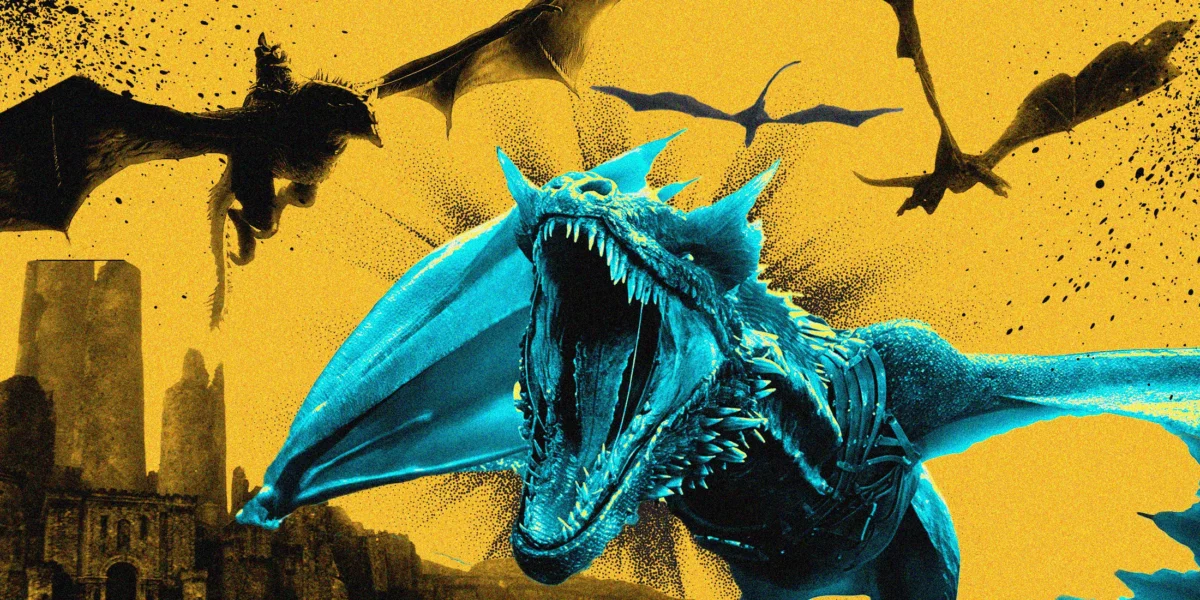
"The ultimate success of visual effects lies not in the technical perfection of a render, but in the audience’s emotional response; when viewers mourn a digital creature as they would a human lead, the boundary between artifice and reality has truly dissolved."
As House of the Dragon progresses through its third season, the series has moved beyond the mere spectacle of high-fantasy aesthetics to establish its dragons as complex, sentient protagonists. Visual Effects Supervisor Dadi Einarsson and his team have spent years refining the biological and emotional nuances of these creatures, ensuring that every flap of a wing and every roar carries the weight of a character arc rather than just a technical achievement. By blending cutting-edge digital animation with practical on-set tools and classical animation principles, the production has set a new benchmark for how mythical beasts are portrayed in modern television.

The Evolution of the Draconic Character
The prequel to Game of Thrones has always centered on the Targaryen dynasty, but the true stars of the "Dance of the Dragons" are the titular reptiles themselves. With twenty-two distinct dragons appearing over the course of the series—ranging from the ancient, battle-scarred Vhagar to the sleek, regal Syrax—the VFX department faced the monumental task of giving each beast a unique personality.
According to Einarsson, the third season represents a peak in this character-driven approach. The premiere of the season, which featured the tragic death of Vermax, served as a litmus test for the team’s success. When audiences reacted with genuine grief to the dragon’s demise, it signaled that the VFX team had succeeded in their primary goal: making the digital feel visceral. The focus has shifted from "how realistic does the water look?" to "how much do we care about the creature in the water?"
This emotional resonance is born from a meticulous "Dragon Bible," a foundational document developed alongside showrunner Ryan Condal and inspired by George R.R. Martin’s source material. This bible tracks every detail of a dragon’s life, including its age, gender, size, and specific temperament. Crucially, it also explores the symbiotic relationship between a dragon and its rider. For instance, Syrax is designed to mirror Queen Rhaenyra’s grace and regal bearing, while Caraxes acts as a physical manifestation of Daemon Targaryen’s unpredictable and volatile nature.

Sheepstealer: The "Stray" of the Skies
Season 3 introduces one of the most distinctive designs in the series to date: Sheepstealer. Unlike the dragons raised in the relative luxury of the Dragonpit or the caverns of Dragonstone, Sheepstealer is a wild creature, a "stray" that has never known the touch of a dragon-keeper.
Einarsson’s team approached Sheepstealer’s design with a "pit bull" mentality. He is gnarly, spiky, and bears the marks of a difficult life, including deformities like a pronounced underbite and skin conditions such as vitiligo. These physical imperfections serve a dual purpose: they distinguish him from the more "civilized" Velaryon dragons and provide a narrative hook for Lady Rhaena. Her attempt to bond with a creature shunned by its own kind adds a layer of pathos to the design, proving that even a beast with a "dirty and gritty" aesthetic can evoke beauty and loyalty.
Merging the Practical and the Digital
While the final result on screen is a masterpiece of CGI, the process begins with tactile, physical interactions on set. To help actors like Emma D’Arcy or Phoebe Campbell suspend their disbelief, the production employs "dragon performers." These individuals, dressed in blue suits, manipulate fiberglass dragon heads on long poles. This allows actors to have a physical point of reference for eye contact and touch, which is essential for the intimate bonding scenes that define the series.

For more complex sequences, such as Rhaena’s first encounter with Sheepstealer, the team utilized 3D printing technology. Since Sheepstealer lacks a saddle, the VFX team printed a life-sized section of the dragon’s back, complete with finished textures and sharp spikes. This "back piece" was then integrated into the set, allowing the actress to physically grip the creature’s hide. By providing the actors with the actual texture and resistance of a dragon’s skin, the production ensures that the physical performances feel grounded and authentic once the digital extensions are added in post-production.
The Physics of Flight and the "Buck"
The mechanics of dragon-riding are among the most technically demanding aspects of the show. Each flying sequence is meticulously "pre-vized" (pre-visualized) so that the actors and directors know exactly where the dragon is in space. To simulate the motion of flight, the production uses a "buck"—a high-tech gimbal that can roll, pitch, and yaw the dragon’s saddle in sync with the animated movements.
In Season 3, this technology was pushed to its limits during the Battle of the Gullet. To capture the harrowing moment when Prince Jacaerys (Jace) is pulled into the sea, the special effects team built a waterproof gimbal capable of being submerged in an outdoor tank. The actor was strapped into the saddle and physically dunked into the water, providing a level of realism that purely digital effects could never replicate. The bubbles, the resistance of the water, and the actor’s genuine struggle to unclip from the saddle were all captured in-camera, then augmented with the digital form of Vermax in post-production.

Animation Principles: From Alligators to Albatrosses
Creating a convincing dragon requires more than just high-resolution textures; it requires an understanding of biology and physics. Einarsson, whose background is in creature animation, leans heavily on the "analogous creature" method. Since dragons do not exist, the team looks to the natural world to understand how a multi-ton creature would move.
The lumbering, skittering movements of a dragon on land are modeled after alligators and large monitor lizards. However, taking flight requires a different set of references. This season, the team studied the albatross to animate Sheepstealer’s clumsy landing on a mountaintop. Like the albatross, Sheepstealer is heavy and possesses a massive wingspan, making the transition from air to land a struggle against gravity and momentum.
The team also adheres to the classical animation principles of "follow-through and overlap." When a creature of such immense weight changes direction, its body does not move as a single unit. The head leads, followed by the chest, the pelvis, and finally the tail, creating a ripple effect that conveys the sheer mass of the beast. This attention to weight and inertia is what prevents the dragons from looking like "floaty" digital assets and instead makes them feel like tangible, dangerous forces of nature.

The Legacy of Jurassic Park
In the world of creature VFX, Jurassic Park remains the definitive touchstone. Einarsson notes that the 1993 film established the "visual language" for how audiences expect prehistoric or mythical creatures to move. While technology has advanced exponentially since then, the core philosophy remains the same: ground the fantasy in reality.
By treating the dragons as biological entities with skeletal structures, muscle systems, and real-world limitations, House of the Dragon honors the legacy of the "grandfathers of digital creature animation" while pushing the medium into new, emotional territory. The dragons are no longer just weapons of war; they are the tragic, beautiful, and terrifying heart of the Targaryen story. As the season marches toward its finale, the technical mastery of Einarsson and his team ensures that every fiery breath and every heartbeat of these digital titans feels entirely, unforgettably real.
