
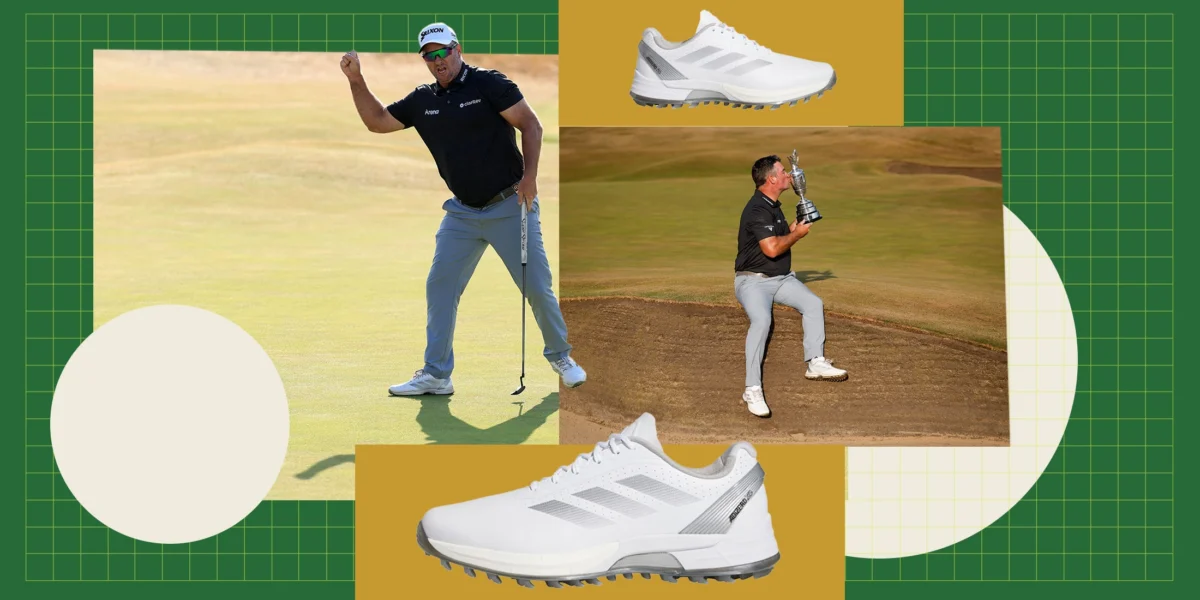
“Ryan Fox’s victory at the 2026 Open Championship marks a pivotal moment for golf equipment, proving that high-performance spikeless footwear can deliver the elite-level stability and traction required to win on the sport’s grandest stage.”
The victory of 39-year-old PGA Tour veteran Ryan Fox at the 154th Open Championship at Royal Birkdale was more than just a personal milestone; it was a significant validation of modern footwear engineering. While professional golf has long been dominated by the tradition of spiked shoes for maximum ground force, Fox’s dominant performance while wearing the Adidas Adizero ZG Spikeless Golf Shoes suggests that the technological gap between spiked and spikeless designs has effectively closed. This shift reflects a broader evolution in the sport, where athletic comfort and versatile traction systems are beginning to outweigh the rigid, traditional requirements of the past.
The Foundation of a Major Champion
In the high-stakes environment of a major tournament, professional golfers seek every conceivable advantage. At the elite level, the margin between victory and a missed cut is measured in millimeters of impact and fractions of a mile per hour in clubhead speed. Royal Birkdale, known for its punishing dunes, unpredictable winds, and firm links-style turf, demands a footwear solution that provides unwavering stability. For Ryan Fox, that solution was found not in the traditional spikes used by the vast majority of his peers, but in a spikeless model designed for athletic agility.
Fox’s performance over the weekend was a masterclass in precision. As the final major of the 2026 season, The Open Championship represents the ultimate test of a golfer’s stamina and equipment. By choosing the Adidas Adizero ZG Spikeless, Fox challenged the conventional wisdom that only metal or soft spikes can provide the necessary grip to navigate the undulating fairways and thick fescue of a British links course.
The Evolution of Golf Traction
To understand the significance of Fox’s choice, one must look at the history of golf footwear. For decades, metal spikes were the industry standard, offering deep penetration into the turf. However, because metal spikes are damaging to greens and uncomfortable on hard surfaces, they were largely phased out for the general public in the 1990s in favor of plastic "soft" spikes.
On the PGA Tour, players are still permitted to wear metal spikes, and many do, particularly in wet or hilly conditions. The logic is simple: more traction allows for more aggressive rotation and better energy transfer from the ground through the swing. Even as soft spikes became the norm, spikeless shoes—featuring molded rubber lugs similar to those found on trail running shoes—were long relegated to "street" wear or casual practice rounds. They were seen as lifestyle products rather than performance gear.

Ryan Fox, however, has been a lifelong outlier. "I’ve worn spikeless shoes for as long as I can remember," Fox noted following his victory. "I’ve never worn spikes and only dabbled in wearing soft spikes a couple of times." His commitment to spikeless technology is rare at the professional level; prior to this decade, it was nearly unheard of for a major champion to lift the Claret Jug without spikes. While Phil Mickelson famously experimented with spikeless designs during his 2021 PGA Championship run, he ultimately reverted to a soft-spike model for his final round. Fox’s win stands as a definitive proof of concept for the spikeless category.
Engineering the Adidas Adizero ZG Spikeless
The Adizero ZG (Zero Gravity) line represents Adidas’s effort to marry the lightweight feel of a running shoe with the structural integrity of a golf shoe. The specific model worn by Fox utilizes several key technologies that allow it to compete with traditional spiked alternatives.
Central to the shoe’s performance is the Lightstrike Pro midsole foam. This material is a staple in Adidas’s elite marathon racing shoes, valued for its high energy return and lightweight cushioning. In a golf context, this foam reduces foot fatigue over a four-day tournament where players walk upwards of five miles per day, often on uneven terrain. For a 39-year-old player like Fox, the reduction in physical strain is a tangible performance benefit.
The traction system, known as the Spikemore outsole, uses strategically placed undercut blades and molded lugs to mimic the grip of traditional spikes. These lugs are engineered to bite into the turf at different angles, providing multi-directional stability during the various phases of the golf swing. Furthermore, the inclusion of a 3D torsion plate provides the lateral stiffness required to prevent the foot from rolling during high-speed rotations.
Fox highlighted the personal importance of this specific build, noting his unique biomechanical needs. "I’ve got flat feet and use orthotics, and the Adizero ZG is perfect for me," he explained. The shoe’s athletic silhouette and internal volume accommodate custom orthotics more effectively than many traditional, narrow-lasted golf shoes, allowing Fox to maintain proper alignment and comfort throughout the round.
The Biomechanics of the Spikeless Swing
The primary concern for any golfer moving to a spikeless shoe is "slippage"—the fear that the lead foot will lose its connection to the ground during the downswing, leading to a loss of power or accuracy. However, modern biomechanical studies suggest that for many players, the friction provided by high-quality rubber compounds and aggressive lug patterns is more than sufficient.
In fact, some experts argue that spikeless shoes can encourage a more "connected" feel to the ground. Because the foot sits slightly lower to the turf without the elevation of a spike housing, the golfer’s center of gravity is marginally lowered, which can aid in balance. For Fox, the stability provided by the Adizero ZG was evident in his ball-striking statistics at Birkdale, where he led the field in "Strokes Gained: Tee to Green," a metric that rewards consistency and power.

Versatility and the Modern Golfer
Beyond the performance metrics, the rise of spikeless footwear like the Adizero ZG reflects a shift in golf culture toward versatility and value. Traditionally, golfers had to change their shoes in the parking lot, as metal and even some soft spikes are uncomfortable and damaging to walk in on asphalt or hardwood. Spikeless shoes eliminate this friction point, allowing a player to go from the car to the clubhouse to the first tee without a change of footwear.
At a retail price point of approximately $135, the Adizero ZG Spikeless also positions itself as an accessible high-performance option. While some premium spiked shoes can exceed $250, the spikeless category offers a blend of durability and multi-surface utility that appeals to the modern amateur who may play a quick nine holes after work or spend time on the practice range without wanting to carry a dedicated shoe bag.
A New Standard for the Major Season
Ryan Fox’s victory at Royal Birkdale will likely be remembered for his clinical execution and his breakthrough as a first-time major winner at age 39. However, within the equipment industry, it will be remembered as the moment the spikeless shoe lost its "casual" stigma.
When a player wins the oldest and most prestigious tournament in golf while wearing shoes designed for athletic comfort and spikeless traction, the rest of the tour—and the golfing public—takes notice. Fox’s reliance on the Adizero ZG underscores a broader trend in professional sports where athlete comfort is no longer viewed as a compromise to performance, but as a prerequisite for it.
As golf continues to evolve, the line between "athletic gear" and "golf gear" continues to blur. Fox has proven that you don’t need metal under your feet to find firm footing on the leaderboard. For the average golfer looking to emulate a major champion, the message is clear: the right equipment is whatever allows you to swing with confidence, regardless of whether it follows a century of tradition or a new path of innovation.
