
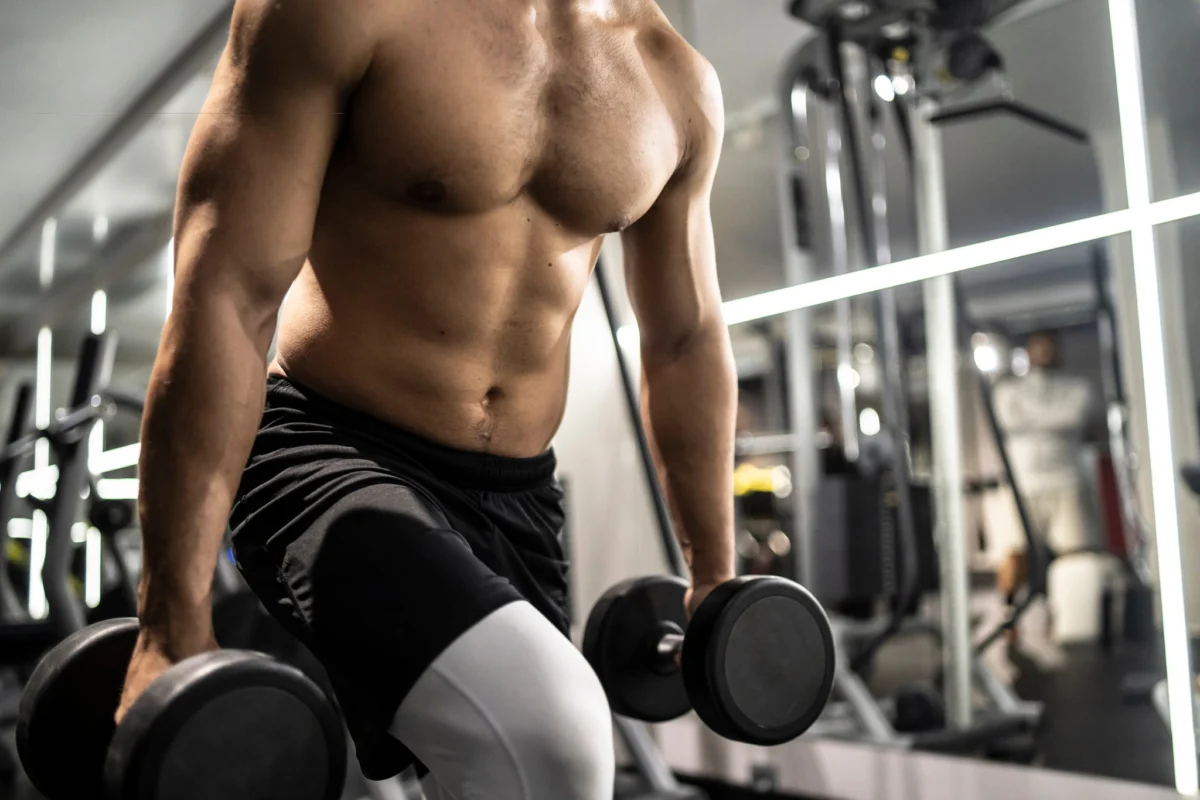
"Strengthening the musculature surrounding the knee is not just a fitness goal; it is a clinical necessity for long-term joint health and functional longevity."
While chronic knee pain often leads individuals to avoid lower-body resistance training, this avoidance frequently exacerbates the underlying issues by allowing the supporting muscles to atrophy and the joints to stiffen. By utilizing targeted preparatory movements and biomechanical modifications, such as maintaining a vertical shin angle and shifting mechanical load to the hips, athletes can continue to build strength and bone density without aggravating sensitive joint structures.

The Paradox of Knee Pain and Resistance Training
The gym mantra "never skip leg day" is often met with derision by those suffering from chronic knee discomfort. For many, the prospect of a heavy squat session is synonymous with subsequent days of inflammation and limited mobility. However, the physiological reality is that muscles, bones, and joints require progressive loading to remain resilient. When an individual stops training their lower extremities, they enter a cycle of deconditioning. Weaker glutes and hamstrings lead to poor patellar tracking and increased stress on the connective tissues of the knee, which in turn makes movement more painful.
Breaking this cycle requires a shift in perspective: training should not be viewed as a binary choice between "heavy lifting" and "total rest." Instead, it should be approached as a spectrum of mechanical stress management. By understanding how to manipulate levers and torque—specifically by biasing load toward the posterior chain (the glutes and hamstrings)—it is possible to achieve significant muscular hypertrophy and strength gains while keeping the knee in a "quiet" environment.
Clinical Foundations and Injury Management
Before embarking on a modified leg routine, it is imperative to distinguish between "training through" pain and "training around" it. If knee pain is the result of an acute injury—such as a meniscus tear, ligamentous strain, or advanced osteoarthritis—consultation with a medical professional or physical therapist is non-negotiable.

Daniel Giordano, DPT, PT, C.S.C.S., of Bespoke Physical Therapy, emphasizes that movement is medicine, but only when dosed correctly. The goal of a knee-friendly program is to apply enough stress to stimulate adaptation without crossing the threshold into further tissue damage. A useful rule of thumb is the "annoyance vs. ache" scale: if a movement causes a sharp, stabbing pain or leads to joint swelling the following day, the load or the range of motion must be adjusted.
The Knee-Friendly Prep Series: Activating the Protectors
The knee does not function in isolation; it is a hinge joint sandwiched between the hip and the ankle. Often, knee pain is a symptom of dysfunction in these adjacent joints. The following preparatory series is designed to activate the gluteus medius and other hip stabilizers, which act as the primary "protectors" of the knee by preventing internal rotation and medial collapse.
1. Lateral Band Step
Performing 8 to 12 reps per side with a resistance band placed around the ankles or just above the knees targets the gluteus medius. This muscle is responsible for hip abduction and stabilization. By "waking up" the lateral glutes, the body is better equipped to keep the knees tracking properly during more complex movements.

2. Standing Fire Hydrant
This movement further isolates the hip abductors in a unilateral (single-leg) stance. Because one leg must stabilize the body while the other moves against resistance, it challenges the neurological connection between the core and the lower extremities, ensuring the hips are ready to take the brunt of the upcoming workout’s weight.
3. Loaded Step-Up
When performing step-ups, the emphasis must remain on the heel of the planted foot. Driving through the heel engages the posterior chain and shifts the mechanical stress away from the patellar tendon and into the hip joint. This intentionality transforms a common exercise into a therapeutic strength builder.
4. Goblet Loaded Reverse Lunge
The reverse lunge is inherently friendlier to the knees than the forward lunge because it eliminates the aggressive deceleration force required to stop forward momentum. By holding a weight in the goblet position, the lifter creates a counterbalance that allows for a more upright torso or a slight forward lean that keeps the front shin vertical.

5. Heels-Elevated Goblet Squat
While it may seem counterintuitive, elevating the heels can reduce the demand on ankle dorsiflexion. For many, knee pain is caused by "running out of room" at the ankle, which forces the knee to migrate too far forward. Elevating the heels slightly (using small plates or a wedge) can decrease calf tension and allow for a deeper, more comfortable squatting pattern.
Advanced Strategies for Confident Training
Once the preparatory movements have stabilized the joint environment, the focus shifts to primary strength movements. The following four exercises are the "gold standard" for training around knee issues.
The Box Squat: Controlling Depth and Leverage
The traditional barbell back squat is often the first casualty of knee pain. The box squat offers a functional solution. By sitting back onto a box or bench, the lifter is forced to maintain a vertical shin angle. This drastically reduces the shear force on the knee.

When executing the box squat, the hip socket should ideally reach a point parallel to the knee. The lifter should "search" for the box with their glutes, leaning the torso forward to counterbalance the weight. This "hip-dominant" squat ensures that the powerful muscles of the glutes and hamstrings are doing the heavy lifting, rather than the delicate structures of the knee.
The Vertical Shin Lunge: Mastering Unilateral Load
Unilateral training is essential for correcting imbalances that often lead to injury. However, lunges are notorious for causing "knee shear." The fix is a strict adherence to the vertical shin. Whether performing a split squat or a reverse lunge, the front shin should remain perpendicular to the floor. This positioning maximizes hip recruitment. If walking lunges remain painful, stationary split squats are the preferred alternative, as they provide greater stability and control over the joint’s trajectory.
Dumbbell Romanian Deadlifts (RDLs): The Power of the Posterior Chain
Knee health is often a byproduct of hamstring and glute strength. The RDL is a pure hip-hinge movement that places almost zero stress on the knee joint while placing massive tension on the muscles that support it.

To perform the RDL correctly, the knees should remain "soft" (slightly bent) but stationary. The movement comes entirely from the hips pushing backward. By keeping the dumbbells close to the shins and focusing on the stretch in the hamstrings, the lifter builds the "brakes" of the lower body. Strong hamstrings are vital for protecting the Anterior Cruciate Ligament (ACL) and ensuring the knee doesn’t overextend or rotate awkwardly during daily activities.
Reverse Sled Drags: Concentric-Only Recovery
The reverse sled drag is perhaps the most effective "rehab" tool in a modern gym. Unlike most exercises, the sled drag is almost entirely concentric, meaning there is no "lowering" phase under tension. This reduces muscle damage and soreness while pumping nutrient-rich blood into the knee joint. Walking backward while pulling a weighted sled forces the quadriceps to fire in a way that supports the patella without the crushing forces of a heavy squat.
Programming for Longevity
To see results without regression, volume and intensity must be managed carefully. For strength-focused sessions, three to five reps are appropriate, provided the form is impeccable. For muscle growth (hypertrophy), eight to ten reps are ideal. In all cases, training should stop approximately two reps before technical failure.

In addition to exercise selection, recovery tools such as foam rolling can play a supportive role. Spending a few minutes rolling the quads and glutes can alleviate fascial tension that may be "pulling" on the knee joint, though it should be viewed as a supplement to, not a replacement for, proper movement.
By integrating these strategies—prioritizing hip dominance, maintaining vertical shins, and utilizing sled work—knee pain no longer needs to be an obstacle to lower-body development. The goal is to build a body that is not only strong but also resilient enough to handle the demands of both the gym and the aging process. With the right modifications, "leg day" can transition from a source of dread to a vital component of a pain-free lifestyle.
