
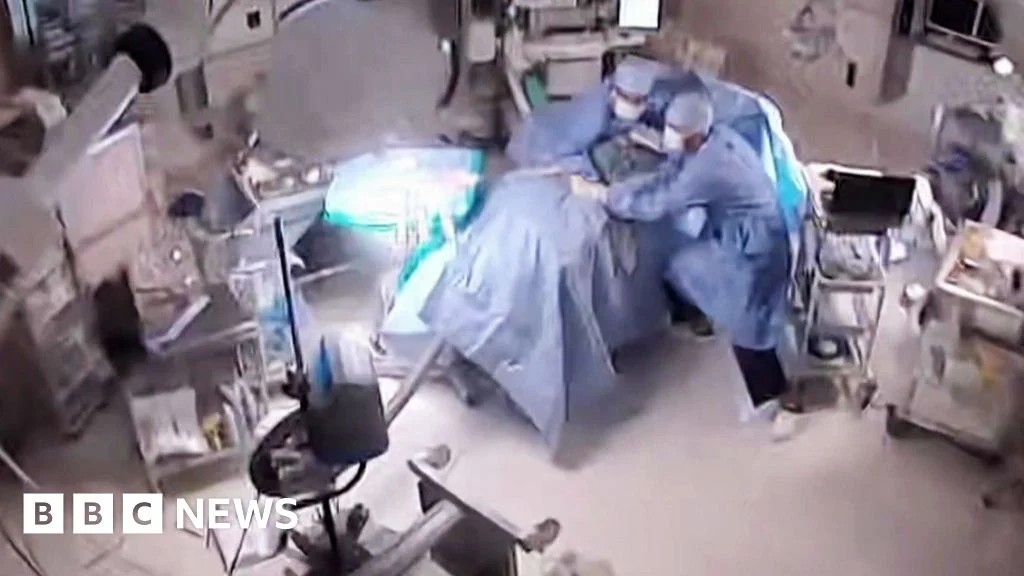
Amidst a terrifying 6.8 magnitude earthquake, the unwavering dedication of Kumamoto General Hospital staff ensured patient safety and the successful completion of critical surgeries, underscoring profound medical professionalism under extreme duress. Their immediate, selfless actions to protect vulnerable patients during a life-threatening seismic event serve as a powerful testament to the core values of healthcare.
Newly released security camera footage from Kumamoto General Hospital in Japan has brought into sharp focus the extraordinary professionalism and courage exhibited by medical personnel during last month’s magnitude 6.8 earthquake. The compelling visuals capture the exact moment the seismic shockwave rattled the facility, revealing how staff prioritized patient safety above all else, continuing their vital work under conditions of extreme peril. This incident not only highlights the inherent dangers faced by healthcare workers in disaster zones but also illuminates the remarkable resilience and unwavering commitment embedded within the medical profession.
Japan, a nation highly prone to seismic activity due to its location on the Pacific Ring of Fire, is no stranger to earthquakes. Its infrastructure, including hospitals, is often designed with advanced seismic resistance technologies. However, even the most robust structures can be subjected to violent shaking during a powerful quake, creating chaotic and life-threatening conditions, particularly within sensitive environments like operating rooms. The earthquake that struck Kumamoto on July 28, registering a magnitude of 6.8, presented just such a scenario, testing the limits of both structural engineering and human resolve.
At the epicenter of this extraordinary event was Kumamoto General Hospital, a vital healthcare institution serving the region. At the precise moment the earth began to convulse, four surgical procedures were actively underway within its operating theaters. Surgeries are, by their very nature, highly intricate and delicate operations demanding absolute precision, sterility, and an undisturbed environment. Any sudden movement or interruption poses a significant threat to patient safety, ranging from potential injury to contamination or even fatality. The sudden onset of a powerful earthquake during such critical moments presented an unprecedented challenge, demanding immediate and decisive action from every member of the surgical teams.
The most poignant and illustrative footage emanated from an operating room where an abdominal surgery was in progress. The video vividly depicts the terrifying reality of an earthquake inside a medical facility. The entire room, typically a sanctuary of control and meticulousness, was thrown into violent disarray. Overhead surgical lights, monitors, IV poles, and other essential medical equipment began to sway wildly and dangerously. The sterile field, crucial for preventing infection, was immediately compromised by the sheer force of the tremors. In such an environment, the instinct for self-preservation would be natural, yet the actions captured on camera tell a different story—one of profound dedication and selfless courage.
Without hesitation, medical staff surrounding the operating table moved to shield the patient with their own bodies. This immediate, instinctive response speaks volumes about their training and intrinsic commitment to their oath. Surgeons, anesthesiologists, and nurses, despite the terrifying instability around them, physically positioned themselves to protect the patient from potential falling equipment, sudden jolts, and to maintain, as much as possible, the integrity of the surgical site. The act of placing one’s body between a vulnerable patient and an unpredictable, violent force is a powerful demonstration of the ethical and professional duty of care, prioritizing the life and well-being of another above their own immediate safety.
Simultaneously, another crucial action unfolded. A nurse, demonstrating remarkable presence of mind amidst the chaos, moved swiftly to open a door within the operating suite. This seemingly simple act was, in fact, a critical emergency protocol. In a disaster scenario, securing an evacuation route is paramount. Doors can become jammed or blocked by debris during an earthquake, trapping individuals inside. By proactively opening the door, the nurse not only established a potential escape path but also likely assessed the immediate structural integrity of the corridor outside, ensuring that a route was viable should a full evacuation become necessary. This foresight underscores the rigorous emergency preparedness training that healthcare professionals in seismically active regions undergo.
The successful continuation and completion of these four surgeries, despite the immense challenges posed by the earthquake, represent an extraordinary feat of medical resilience. Once the initial shaking subsided, the surgical teams would have faced an immediate assessment of the situation: checking the patient’s vitals, re-establishing the sterile field, inspecting equipment for damage, and calmly resuming the intricate procedures. The fact that all four operations were successfully completed, as confirmed by the hospital, is a testament to the skill, composure, and adaptability of the medical staff involved. It highlights the robust emergency protocols in place and the sheer determination of healthcare providers to fulfill their duty even under the most extreme circumstances.
This incident offers valuable insights into hospital disaster preparedness and the critical role of human factors during crises. Modern hospitals, especially in regions like Japan, are designed with advanced seismic isolation and damping technologies to minimize structural damage during earthquakes. These engineering marvels are complemented by comprehensive disaster preparedness plans, which include regular drills, emergency power systems, robust communication protocols, and extensive training for staff on how to respond to various scenarios, including maintaining operations during a seismic event. The Kumamoto General Hospital’s experience underscores the effectiveness of such integrated approaches, where resilient infrastructure meets well-trained, dedicated personnel.
The psychological impact on medical staff who endure such events should not be underestimated. Operating under immense pressure, compounded by the personal fear for their own safety and the safety of their colleagues and families, requires extraordinary mental fortitude. Post-incident support and debriefing are crucial for helping these individuals process the trauma and reinforce their invaluable contributions. Their actions not only saved lives but also served as a profound source of inspiration and reassurance to the community.
Following the earthquake, Kumamoto General Hospital temporarily suspended its normal outpatient services. This suspension, which lasted from July 28 until August 5, was a necessary measure to ensure the safety of patients and staff, allow for thorough structural assessments, and conduct any necessary repairs or maintenance checks on equipment. Such temporary closures are standard procedure after significant seismic events, enabling hospitals to verify their operational integrity before resuming full services. The rapid resumption of normal outpatient services on August 5, just over a week after the quake, further underscores the hospital’s resilience and its commitment to quickly restoring essential healthcare to the community it serves.
The Kumamoto earthquake incident at the General Hospital serves as a powerful case study for disaster management and healthcare resilience globally. It illustrates the critical importance of:
- Robust Infrastructure: Investing in seismic-resistant building designs and technologies for critical facilities like hospitals.
- Comprehensive Emergency Preparedness: Implementing rigorous training, drills, and clear protocols for staff to follow during natural disasters.
- Human Element: Recognizing and fostering the unwavering dedication, adaptability, and ethical commitment of healthcare professionals, who are often the first and last line of defense in a crisis.
- Team Coordination: Emphasizing seamless teamwork and communication within surgical teams and across the hospital during emergencies.
The footage from Kumamoto General Hospital is more than just a recording of an event; it is a powerful narrative of heroism, professionalism, and the enduring human spirit in the face of overwhelming natural forces. It stands as a profound reminder of the extraordinary individuals who dedicate their lives to healing and safeguarding others, even when their own lives are on the line. Their actions during the Kumamoto earthquake will undoubtedly resonate as a testament to the highest ideals of medical service.
