
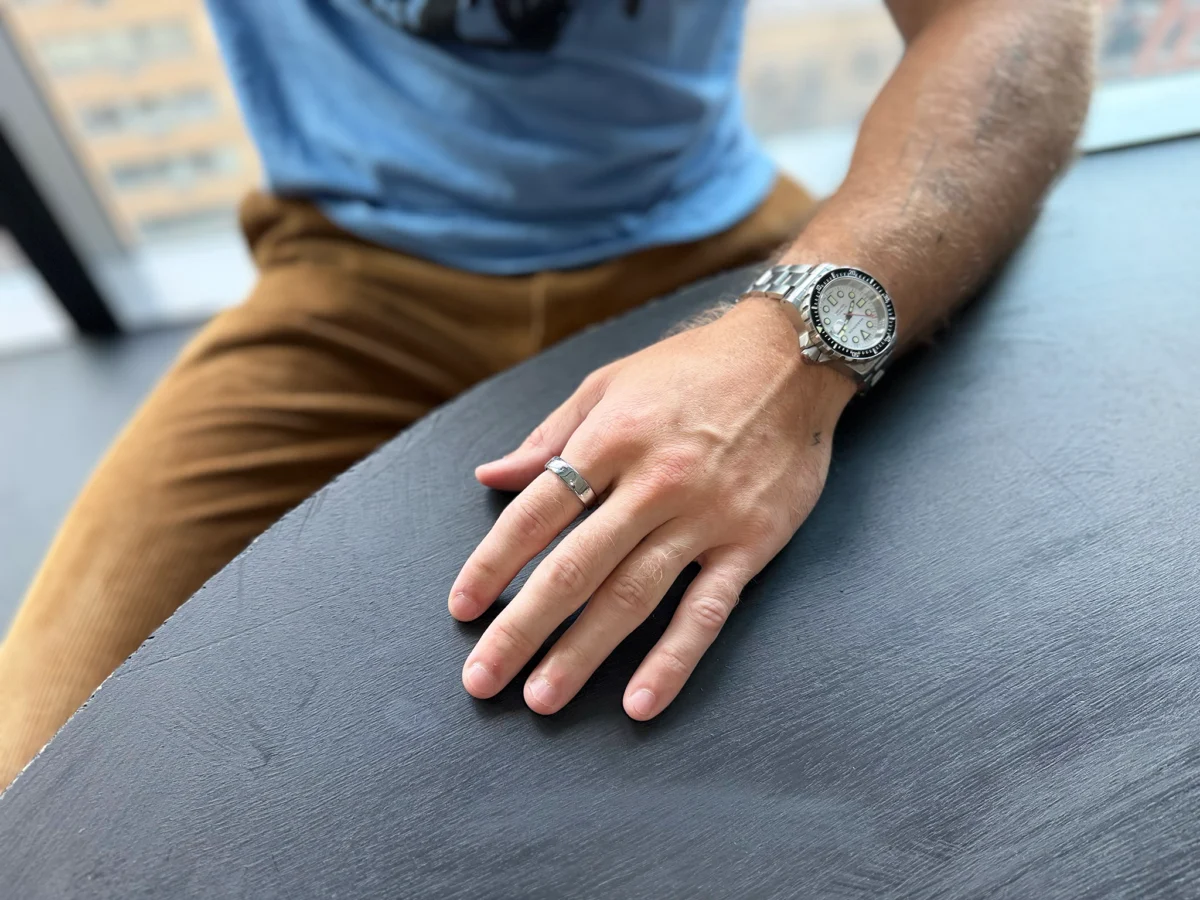
"With a 40-percent reduction in size and a leap to a nine-day battery life, the Oura Ring 5 successfully transitions the smart ring from a bulky tech novelty into a sophisticated piece of jewelry that provides professional-grade health insights without the intrusive nature of a screen."
The Oura Ring 5 represents a significant milestone in the evolution of wearable technology, moving toward a "frictionless" user experience where the device effectively disappears into the user’s daily life. While smartwatches have long dominated the fitness tracking landscape, they often bring the burden of "notification fatigue" and the physical discomfort of a bulky chassis during sleep. The Oura Ring 5 addresses these pain points by prioritizing passive data collection and long-term health trends, such as sleep architecture and recovery readiness, over the real-time, high-intensity feedback typical of wrist-worn trackers. This shift reflects a broader movement in the health-tech industry toward "invisible" monitoring—tools that provide high-fidelity data while allowing the wearer to remain present in their environment rather than tethered to a digital display.

The Engineering of Miniaturization
The most immediate advancement in the Oura Ring 5 is its physical profile. In a market where competitors are racing to shrink components without sacrificing sensor accuracy, Oura has achieved a form factor that is approximately 40 percent smaller than its predecessor, the Generation 4. This reduction in volume is not merely an aesthetic choice; it is a fundamental improvement in the wearable’s utility. For many users, particularly those who wear traditional jewelry like wedding bands, the previous iterations of smart rings felt "unwieldy" or "bulky," often interfering with daily tasks or gym movements.
The new design allows the Ring 5 to sit flush against adjacent fingers, making it nearly indistinguishable from a standard metallic band. This is particularly relevant for athletes and fitness enthusiasts. While the Oura Ring 3 often had to be removed for exercises involving high-pressure grips, such as heavy bicep curls or farmer’s carries, the slimmer profile of the 5 allows for a more consistent wear-time. Aside from ultra-heavy compound movements like deadlifts, where the risk of "ring avulsion" or metal-on-metal scratching is high, the Oura Ring 5 can remain on the hand throughout a diverse range of physical activities.
The Battery Breakthrough: Solving the Wearable Achilles’ Heel
In the realm of consumer electronics, battery life is the primary metric of freedom. Most high-performance smartwatches require a daily or bi-daily charging cadence, which often leads to "data gaps" when the device is left on a nightstand or charging brick. The Oura Ring 5 disrupts this cycle by delivering a consistent eight to nine days of battery life on a single charge.

This longevity transforms the device from an active gadget into a passive guardian. When a user can go more than a week without thinking about a power source, the data becomes more reliable because the "wear compliance" increases. This is essential for Oura’s core value proposition: trend analysis. By capturing a continuous stream of data across multiple sleep cycles and workout days, the Oura app can build a more accurate baseline of the user’s physiology, identifying subtle shifts in heart rate variability (HRV) or body temperature that might indicate the onset of illness or overtraining.
However, this upgrade comes with a change in the physical charging infrastructure. The Oura Ring 5 utilizes a square charging base—a departure from the circular docks of earlier generations. While some long-time users may find the new base slightly more cumbersome for travel compared to the older, more compact circular designs, the trade-off is a more stable charging platform that accommodates the new internal sensor architecture.
Passive vs. Active Tracking: A Philosophy of Health
The Oura Ring 5 sits at the center of a philosophical debate in health tech: passive versus active tracking. Screen-based devices, such as those from Garmin or Apple, are designed for active feedback. They provide real-time pacing, heart rate zones, and GPS maps. For the marathon runner or the competitive cyclist, this real-time data is indispensable.

Oura, conversely, excels in passive tracking. It is designed for the user who wants to understand the "why" behind their feelings of fatigue or energy without being prompted by a vibrating wrist every ten minutes. The Oura app interface reflects this, utilizing a welcoming aesthetic with cool color palettes and large, readable text. It prioritizes "Readiness," "Sleep," and "Activity" scores, which are calculated by synthesizing dozens of data points into a digestible 1-100 scale.
For many, this approach reduces the anxiety often associated with fitness tracking. Instead of focusing on the calories burned during a single session, Oura encourages users to look at their "Resilience"—a metric that measures how well the body balances physiological stress with recovery over a rolling 14-day period. However, this passive nature is also the device’s primary limitation for certain users. Engaging in "Active Heart Rate" tracking during a workout requires the user to initiate the session via their smartphone. For those accustomed to the "press and go" functionality of a smartwatch, this extra step can feel clunky and disconnected from the flow of a workout.
The Ecosystem and the Cost of Insight
To unlock the full potential of the Oura Ring 5 hardware, users must navigate the company’s subscription model. The ring itself retails for approximately $399, but the ongoing data analysis and premium features require a monthly membership fee of $5.99 (or $69.99 annually). This "Hardware as a Service" (HaaS) model is becoming standard in the industry, seen also with competitors like Whoop.

Critics argue that a subscription fee on top of a premium hardware price point is a high barrier to entry. However, Oura justifies this cost through the continuous evolution of its software. The app now includes features like "Symptom Radar," which monitors deviations in body temperature and respiratory rate to warn users before they feel physically ill, and "Circadian Alignment," which suggests optimal windows for sleep and caffeine intake based on the user’s unique chronotype.
Competitive Landscape and Final Verdict
The smart ring market is becoming increasingly crowded. The Whoop 4.0 remains a favorite for those who prefer a screenless experience but want a soft-band form factor that can be worn on the wrist, bicep, or even integrated into apparel. Meanwhile, traditional GPS powerhouses like the Garmin Fenix 8 offer a level of athletic depth that a ring-based sensor simply cannot match due to the physical limitations of its size.
Yet, for the individual who values discretion, the Oura Ring 5 is currently the gold standard. It is a device that compliments a suit or a wedding band as easily as it does gym attire. It solves the comfort issues that plagued previous generations and extends the battery life to a point where the device becomes a seamless part of the user’s biology.

The Oura Ring 5 is not a replacement for a dedicated sports watch, but it is perhaps the most advanced tool ever created for the "other" 23 hours of the day. By focusing on sleep, recovery, and long-term physiological trends, it provides a holistic view of health that is often missed by devices focused solely on the "burn." For the modern professional or the athlete looking to optimize the recovery side of the performance equation, the Oura Ring 5 is a stellar investment in self-knowledge, provided they are willing to embrace the subscription-based ecosystem.
