
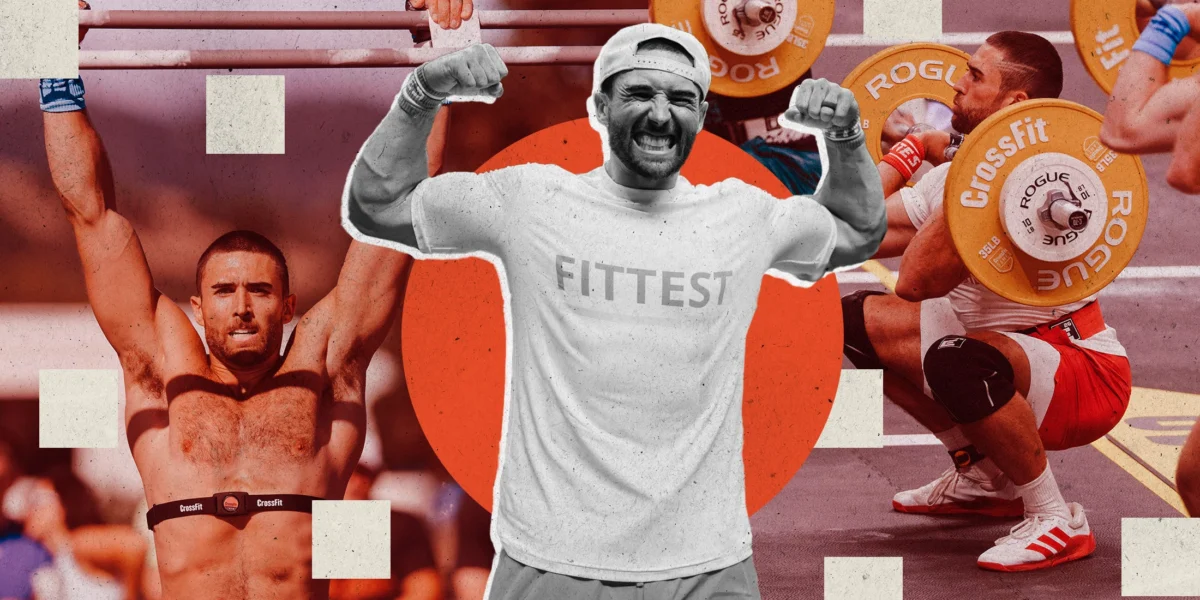
"Victory in elite fitness is defined by more than physical dominance; it is the product of relentless consistency and the mental clarity to envision success before the first rep is even performed."
The 2026 CrossFit Games in San Jose, California, served as a definitive turning point for the sport, marking its 20th anniversary while crowning a champion who embodies the bridge between CrossFit’s rugged origins and its data-driven future. James Sprague’s second "Fittest Man on Earth" title was not merely a repeat performance of his 2024 win, but a sophisticated demonstration of how the modern athlete must navigate tragedy, evolving competition landscapes, and the grueling demands of the most expansive testing volume in the history of the sport.

A Tale of Two Titles
For James Sprague, the path to becoming a two-time champion was bifurcated by two vastly different emotional landscapes. His first victory in 2024 occurred under a pall of grief following the tragic death of competitor Lazar Đukić during the opening event. While Sprague had achieved the pinnacle of his lifelong ambition at just 22 years old, the environment made celebration feel discordant. The win was a testament to his resilience, but it lacked the unencumbered joy usually reserved for the podium.
Two years later, the 2026 Games offered Sprague the opportunity for a "healthy" victory. In San Jose, the atmosphere was revitalized, characterized by a celebratory spirit that allowed Sprague to fully inhabit his achievement. This second title was earned through a marathon of endurance: 20 scored events, nearly double the volume of previous years. Sprague’s total of 1,318 points was a result of a four-day battle where he held off a relentless Dallin Pepper, eventually securing the gold by a narrow 27-point margin. This win was less about individual event domination and more about the "relentless consistency" that has become Sprague’s trademark.
The Engineering of a "Superman"
CrossFit has long marketed its athletes as the "Supermen" of the sporting world—individuals capable of sprinting, swimming, lifting, and performing high-level gymnastics with equal proficiency. However, as the sport matures, the gap between "good" and "elite" is found in the minutiae of training. Sprague, acknowledging his natural talent for monostructural cardio and gymnastics, identified a critical deficit in his profile: top-end strength.

To prepare for the 2026 season, Sprague pivoted his training to focus on hypertrophy and Olympic lifting. His regimen incorporated heavy accessory work and muscle-building protocols designed to add the mass necessary to compete with the sport’s heavier "power" athletes. Yet, he did not abandon the "unknown and unknowable" philosophy that defines the sport. Sprague took his training "outside the box," incorporating hill sprints, track work, and increased swimming volume to prepare for the unprecedented 20-event schedule. This evolution from a "cardio-first" athlete to a balanced powerhouse allowed him to maintain a high floor across every discipline, ensuring that even his worst finishes—such as his 10th-place finish in the final event—were sufficient to protect his lead.
The Mental Roadmap to the Podium
What separates the elite from the field at the CrossFit Games is often psychological rather than physiological. Sprague attributes his success to a radical level of self-belief and a cognitive technique he refers to as "roadmapping." Before stepping onto the competition floor, Sprague mentally deconstructs each workout, visualizing the optimal pacing, transition times, and potential breaking points. By the time the buzzer sounds, he has already "completed" the event in his mind, allowing him to execute with a clinical focus that ignores the distractions of the crowd or the proximity of his rivals.
This mental fortitude is rooted in a personal history that predates his professional career. Sprague discovered CrossFit at age 12 during a period of struggle with depression and weight. Training with his father provided a sense of purpose and a physical outlet that he credits with "saving his life." This deep emotional connection to the methodology provides a level of motivation that extends beyond the pursuit of trophies; for Sprague, every workout is a reaffirmation of the person he has become.

CrossFit at 20: Carrying the Torch
As the CrossFit Games celebrated two decades of competition, Sprague emerged as the face of a new generation tasked with carrying the torch lit by legends like Rich Froning and Annie Thorisdottir. This generation views the sport through a different lens than their predecessors. While the "First Era" athletes were known for "redlining"—attacking every workout until total failure—Sprague’s generation is defined by surgical precision. They analyze pacing, recovery data, and biomechanics to a degree that was previously impossible.
However, Sprague’s ascent comes at a time when the fitness landscape is more crowded than ever. The rise of Hyrox, the explosion of social run clubs, and the popularity of obstacle course racing have challenged CrossFit’s dominance in the "fitness racing" category. Sprague views these developments not as threats, but as niche evolutions of the culture CrossFit created. He argues that while Hyrox offers a specific, repeatable test, CrossFit remains the ultimate preparation for "life’s biggest challenges" due to its emphasis on the unpredictable.
The Future of the Sport: Accessibility and Consistency
Despite his success, Sprague is vocal about the challenges facing CrossFit as it enters its third decade. He identifies three key areas for growth: affiliate health, accessibility, and seasonal consistency.

- Affiliate Growth: Sprague views the local "box" as the heartbeat of the sport. For the elite level to thrive, the grassroots level must be healthy. This requires supporting affiliate owners in marketing and community building.
- Accessibility and Cost: CrossFit is often criticized for its high barrier to entry, both in terms of technical skill and membership costs. Sprague believes the sport must do a better job of highlighting the "everyday athlete"—the 85-year-old grandmother or the person simply looking to improve their quality of life—rather than just the elites. Making the methodology feel attainable and affordable is essential for impacting the masses.
- Season Structure: From a professional standpoint, Sprague advocates for a uniform season structure. The frequent changes to the qualification process—moving from Regionals to Sanctionals to the current Quarterfinal/Semifinal format—can be disruptive for athletes. A predictable, permanent path to the Games would allow for better long-term athletic development.
Looking Toward 2027
At 24 years old, James Sprague is already a veteran of the sport with two titles to his name. Yet, he remains focused on the "2027 vision." His philosophy is one of constant iteration; he plans to analyze the 2026 season to identify lingering weaknesses, treating his current championship self as merely a "shell" of the athlete he intends to become.
In a sport that prides itself on testing the limits of human performance, Sprague’s greatest strength may not be his snatch or his 5k run time, but his ability to remain a student of the game. As CrossFit continues to evolve, its youngest two-time champion stands ready to lead, proving that the "Fittest Man on Earth" is not just the one who can lift the most or run the fastest, but the one who can adapt most effectively to a world that is always changing.
