
"The new federal Medicaid work requirements, while intended to foster independence, risk pushing individuals like Tywon Pugh, who grapple with chronic health conditions and homelessness, into a precarious cycle of losing critical healthcare access and facing insurmountable barriers to employment."
The Centers for Medicare & Medicaid Services (CMS) has finalized regulations that mandate millions of Medicaid beneficiaries to demonstrate work, volunteer, or educational engagement to retain their health coverage. While states have until January to implement these checks, several, including Montana, Arkansas, and Nebraska, have already begun. The Trump administration’s framework includes exemptions for individuals with disabilities, those over 64, pregnant people, and Native Americans. However, a significant point of contention is the exclusion of homelessness as a qualifying condition for exemption, a stance that contradicts the intent of some states and raises serious concerns about the accessibility of healthcare for one of the nation’s most vulnerable populations. This policy shift is projected to significantly increase the number of uninsured Americans, creating substantial challenges for individuals like Tywon Pugh, whose health and housing stability are intrinsically linked to his Medicaid coverage.
Tywon Pugh, a 46-year-old resident of Missoula, Montana, faces a daunting reality shaped by chronic health challenges and profound personal loss. His life is significantly impacted by seizures, a condition that has made consistent employment an elusive goal. Recounting a past experience, Pugh shared how a manager at a fast-food restaurant dismissed him as a "liability to the job site" after a seizure. For ten years, his wife, who passed away last year, was his primary support system, managing their household expenses and rent while he sought employment. Her death, however, dismantled his fundamental support structure, leading to homelessness and exacerbating his struggles with alcohol, which in turn complicated the management of his seizures. "When she died, my whole base was depleted," Pugh stated, underscoring the devastating impact of losing his anchor.
Medicaid plays a crucial role in Pugh’s life, covering the prescriptions essential for managing his seizures. This government-subsidized health insurance would also facilitate his entry into an addiction treatment program, a pathway he has actively sought but is currently blocked by a waiting list. Pugh’s immediate aspiration is to regain his health sufficiently to re-enter the workforce. However, he is deeply concerned about maintaining the Medicaid coverage that is indispensable for achieving this objective.
The federal government’s finalized regulations, implemented in the spring, represent a significant departure from previous Medicaid eligibility standards. These new rules require millions of beneficiaries to prove their engagement in work, volunteering, or education to continue receiving benefits. While states have until January 2027 to fully implement these checks, Montana, Arkansas, and Nebraska have already initiated the process, placing an immediate burden on vulnerable residents. The Trump administration’s policy outlines specific exemptions, including for individuals with documented disabilities, those aged 65 and older, pregnant individuals, and Native Americans. However, for those without a clearly defined exemption, such as age or disability status, proving medical unfitness for work becomes a necessary, albeit complex, hurdle.
Crucially, the federal government has explicitly stated that homelessness is not considered a medical condition and, therefore, does not automatically qualify individuals for an exemption from work requirements. This decision diverges from the intentions of several states, including Montana, Arizona, Kentucky, and Utah, which had previously proposed including homelessness as a basis for exemption. Federal officials, in communications with KFF Health News, maintained that states must adhere to the federally mandated list of exemptions. Data from the Department of Housing and Urban Development (HUD) reveals a stark increase in homelessness across the United States, with a 27% rise from 2013 to 2025, affecting approximately 746,000 individuals in the preceding year.
While the precise number of homeless individuals enrolled in Medicaid is challenging to quantify, the significance of this coverage is undeniable. In 2023, a substantial 55% of patients receiving medical or behavioral health services through the nation’s approximately 300 Health Care for the Homeless programs were enrolled in Medicaid, according to the National Health Care for the Homeless Council.
Jennifer Tolbert, deputy director of KFF’s Program on Medicaid and the Uninsured, highlighted that the federal regulations are considerably more stringent than anticipated by many states, even those supportive of work requirements. "It took everyone by surprise," Tolbert commented. Mehmet Oz, who leads CMS, characterized these regulations as a "path to prosperity" during a press conference in June, emphasizing the administration’s commitment to encouraging workforce participation. However, this initiative has faced significant opposition. In June, 25 states, primarily led by Democratic governors, filed a lawsuit against the Trump administration, arguing that the medical frailty standard for exemptions would be exceptionally difficult for enrollees to meet and for states to administer. Projections from the Congressional Budget Office suggest that these work requirements could lead to an increase of over 5 million individuals becoming uninsured nationwide by 2034.
The implementation timeline for these new requirements varies, with most states slated to begin in January. Montana, however, plans to initiate the removal of Medicaid enrollees from coverage as early as October if they fail to demonstrate compliance with the work mandate. This accelerated timeline intensifies the urgency for individuals like Pugh. "My Medicaid is still active, but when are they gonna cut that off from me? I can’t get employed. How am I supposed to survive?" Pugh expressed, articulating the anxieties of many facing similar predicaments.
The discrepancy between state and federal exemption lists extends beyond homelessness. Montana’s legislature had also intended to exempt individuals fleeing domestic violence and those caring for hospitalized family members, categories absent from the federal list. Republican state Rep. Ed Buttrey, a proponent of Montana’s initial Medicaid work requirement bill in 2019, stated that these individuals "simply cannot meet those requirements due to a number of conditions." Federal officials have suggested that many individuals experiencing homelessness might qualify for exemptions based on medical unfitness. However, the infrastructure for automatically verifying such exemptions through existing medical records, a system that many states, including Montana, are still developing, is not yet fully operational. Montana’s health department anticipates this system to be in place by October, at which point individuals not automatically exempted would have a 30-day window to provide documentation to support their exemption claim.
Tywon Pugh may potentially qualify for an exemption based on his seizure disorder. However, accessing necessary medical appointments over the past year has proven to be a significant challenge. The recent anniversary of his wife’s death has been a difficult period. Daily, Pugh navigates the uncertainty of finding a new place to sleep outdoors. A recent incident while camping resulted in the loss of his wallet and vital documents. Furthermore, the limited availability of addiction treatment centers accepting Medicaid patients forces him to rely heavily on personal willpower to abstain from alcohol. "I’m taking it one day at a time," he shared, reflecting his commitment to managing his challenges.
In Kalispell, about two hours north of Missoula, Dustin Goss, a case manager at Samaritan House, a local homeless shelter, voiced concerns that individuals eligible for exemptions could become ensnared in bureaucratic complexities. "You can’t really worry about getting paperwork done when you don’t know where you’re eating today," Goss remarked, highlighting the immediate survival needs that often overshadow administrative processes for those experiencing homelessness.
Cassidy Kipp, director of Samaritan House, noted that while many clients find employment once they secure shelter and stabilize their lives, meeting the new Medicaid work requirements can still be problematic. She explained that clients frequently begin with temporary or informal jobs, such as assisting with storage unit cleanouts, which may not provide formal pay stubs or verifiable employment records required to meet the new mandates.
Kaitlyn Bosshardt, a social worker at Missoula’s Partnership Health Center, has observed an increasing number of individuals being priced out of their long-term rental housing due to rising housing costs that outpace wage growth. This situation is compounded by limited availability of affordable housing and rental assistance programs.
Partnership Health Center is one of approximately 1,400 federally qualified health centers nationwide that provide care on a sliding fee scale, ensuring access for patients regardless of their insurance status. However, organizations representing these centers warn that a significant loss of Medicaid coverage among their patient population could create unsustainable financial deficits. Additionally, these clinics often lack the capacity to provide specialized medical services.
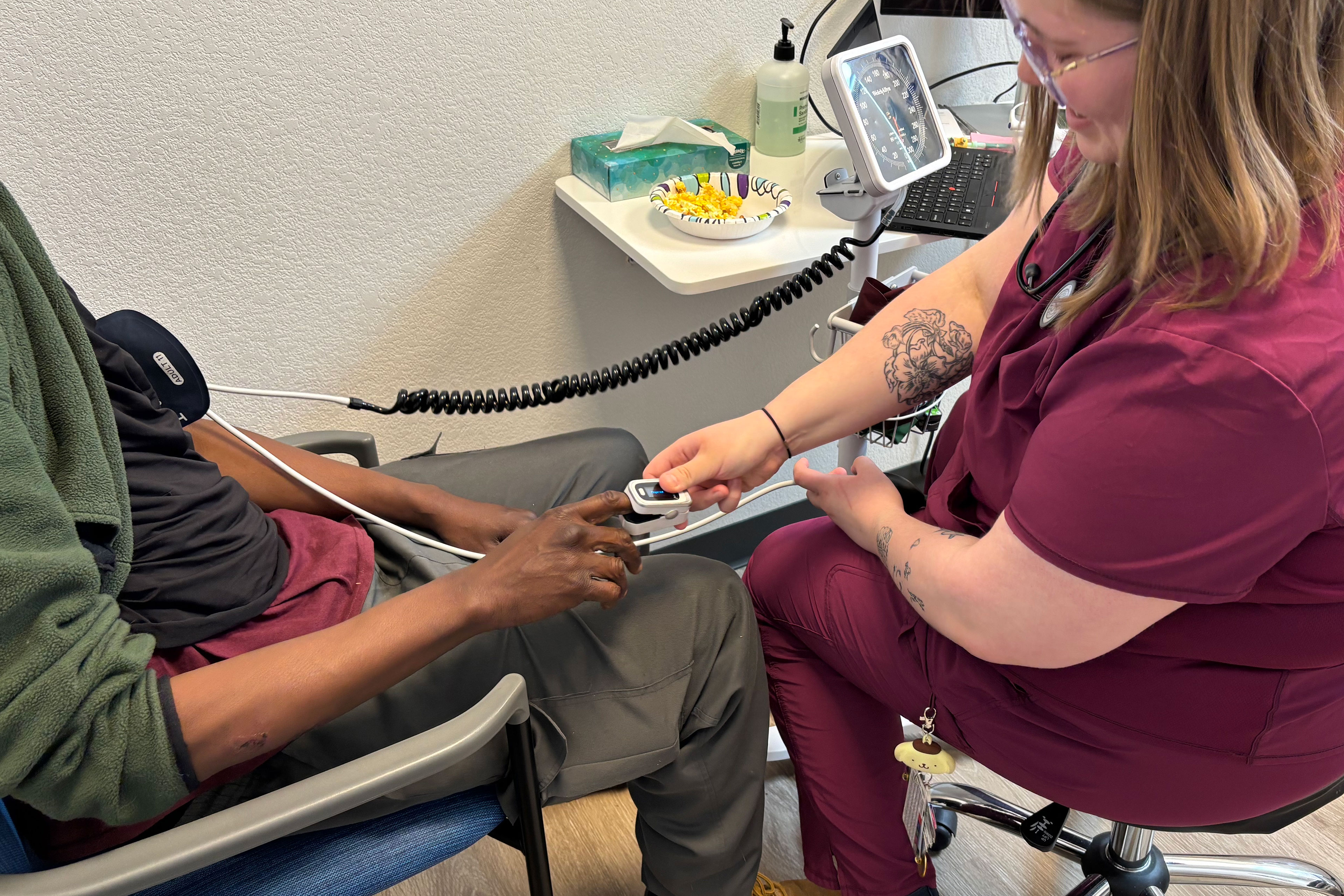
During a particularly hot June day, Pugh visited the Watershed Navigation Center, a facility operated by Partnership for individuals without stable housing, offering meals and medical consultations. His doctor, Atarah Sidey, informed Pugh that the neurology clinic managing his seizures had terminated his care due to three missed appointments. Dr. Sidey referred him to another neurologist in town and discussed potential avenues for addiction treatment. "It’s just that if I don’t make the effort at changing, it ain’t gonna happen and I’m gonna end up found on the side of the road somewhere," Pugh confided to Dr. Sidey, expressing his deep-seated fear of succumbing to his circumstances. "You got this, though, Tywon," she responded with encouragement. "You can do this."
Pugh has since connected with a social worker to assist him in maintaining his Medicaid coverage. By late July, he was awaiting an opening at a Missoula addiction treatment center and had applied for two jobs. In moments of difficulty, Pugh draws strength from the memory of his wife, imagining her urging him to remain calm and hopeful for a better future. "I just don’t wanna lose hope in the meantime," he stated, a testament to his enduring resilience.
