
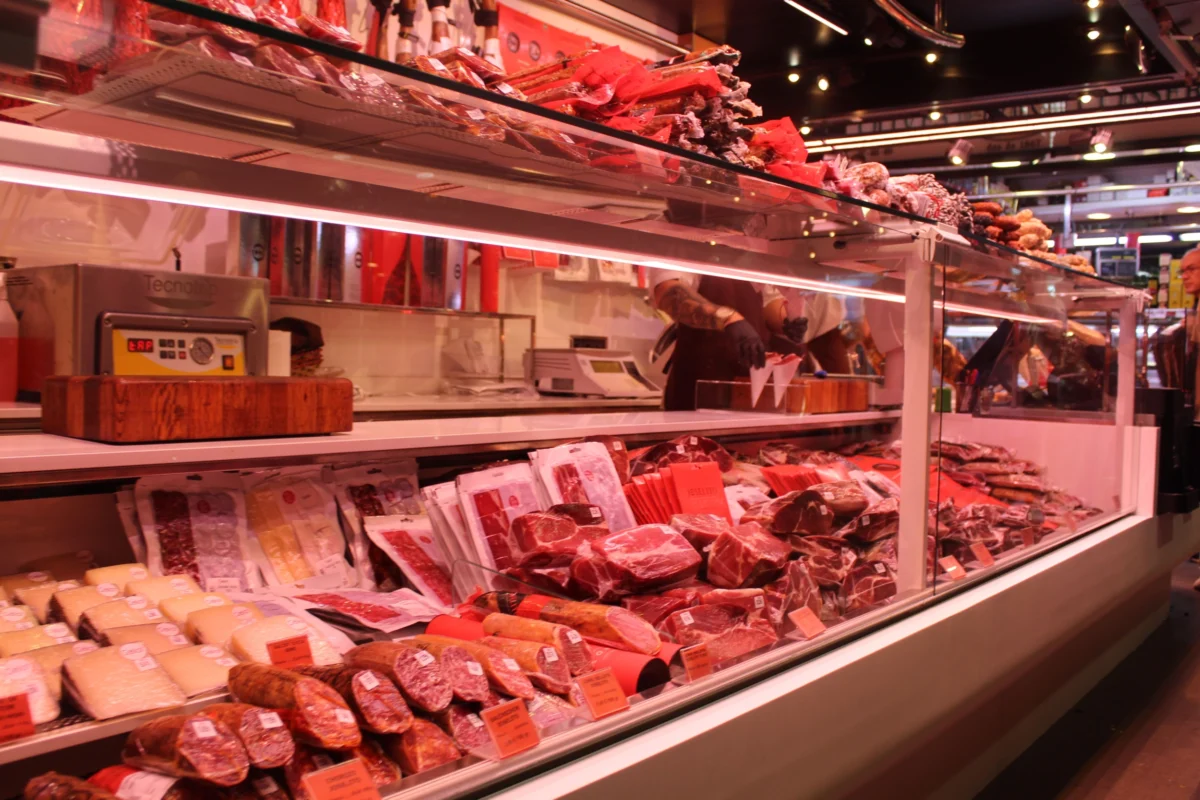
"The U.S. is poised to receive an additional 300,000 metric tons of imported lean beef trimmings, a move aimed at stabilizing ground beef prices, but one that also highlights the critical importance of robust import inspection processes following recent bypasses."
A new federal proclamation, effective September 1, 2026, will significantly increase the volume of imported lean beef trimmings entering the United States. This substantial influx of 300,000 metric tons, released in phased installments, is primarily intended to address domestic supply shortages and curb rising ground beef prices. However, the announcement arrives at a time when the integrity of the import inspection process has come under scrutiny due to several instances this past summer where shipments bypassed a crucial port-of-entry verification step. This expansion underscores the delicate balance between ensuring affordable food supply and maintaining stringent safety standards for the American consumer.
The proclamation, officially titled "Further Ensuring Affordable Beef for the American Consumer," was signed on August 26th and officially published in the Federal Register on Monday. It augments the existing calendar-year in-quota quantity by 300,000 metric tons. This additional volume will be released in three distinct tranches, each comprising 100,000 tons, distributed on a first-come, first-served basis. The initial tranche became available on September 1st and concluded on September 30th. The second tranche opened throughout October, and the third commenced on October 31st, remaining open until the quota is met or November 30th, whichever event occurs first. Crucially, this expansion is exclusively focused on lean beef trimmings, a specific component of the broader beef supply chain.
For American households, the immediate implications of this proclamation are not centered on complex tariff structures, but rather on the ultimate destination of these imported trimmings. Lean beef trimmings are a vital ingredient, typically blended with fattier domestic trimmings to produce ground beef. Therefore, this expansion is directly targeting the production of ground beef, a product that undergoes the most rigorous federal pathogen testing within the U.S. beef industry. This strategic focus on ground beef components aims to alleviate price pressures on a staple food item for many consumers.
Phased Release and Price Contingency Mark New Trade Action
The stated objective behind this significant increase in imported lean beef trimmings is to stabilize and potentially lower prices. The White House proclamation explicitly cites an insufficient supply of lean beef trimmings at reasonable price points. This action follows a previous initiative in February that introduced an additional 80,000 metric tons of Argentine trimmings, released over four quarterly installments.
The entirety of this new 300,000 metric ton volume is designated for countries or regions other than Argentina, and the proclamation clarifies that it does not alter the existing February allocation for Argentine beef. As of the publication of the proclamation, the White House has not publicly disclosed the specific countries that will be supplying these additional trimmings.
A notable and somewhat unusual condition has been attached to this trade action: a price monitoring requirement. The proclamation mandates that the Secretary of Agriculture and the U.S. Trade Representative actively monitor whether these imported trimmings are being sold at a price point at least 25 percent below the prevailing market price. The President retains the authority to terminate this import expansion if this price condition is not met, introducing a level of dynamic oversight not commonly seen in such trade measures.
The underlying issue driving this policy decision is a widely acknowledged scarcity within the U.S. domestic cattle herd. As of January 2026, the U.S. cattle herd had fallen to a historic low of 86.2 million head. The beef cow inventory, in particular, has seen a significant decline of 8.6 percent since 2020, largely attributed to prolonged drought conditions across key cattle-producing states such as Texas and Kansas. The proclamation itself highlights that the current cattle herd size is at its lowest level in 75 years. Compounding this, the U.S. Department of Agriculture forecasts a domestic beef output reduction of approximately 4 percent for the current year. This supply constraint directly impacts the availability and cost of beef products, with ground beef prices averaging $6.69 per pound in December 2025.
The scale of the imported volume, while substantial, is also framed within the context of overall consumption. The full 300,000 metric tons equates to roughly 661 million pounds, which represents approximately 2 percent of the annual domestic beef consumption, according to Department of Agriculture data. Experts suggest that while the influx will add much-needed pounds to a tight market, its impact on prices might be somewhat limited. Glynn Tonsor, an agricultural economist at Kansas State University specializing in meat pricing, commented that the impact could be "easily overstated," indicating that the additional volume, while helpful, may not drastically alter market dynamics.
The legal authority for this temporary expansion of the tariff-rate quota is derived from Section 404 of the Uruguay Round Agreements Act. This legislation empowers the President to temporarily increase import quotas. The current expansion specifically targets four statistical lines within the tariff schedule, all pertaining to lean beef trimmings, and does not represent a broader liberalization of imports for other beef cuts such as steaks or roasts.
Lean Trimmings: A Category Under Intense Food Safety Scrutiny
The heightened focus on lean beef trimmings is not arbitrary; it is rooted in fundamental biological realities that dictate different safety considerations for ground beef compared to whole cuts. Bacteria present on the surface of a steak are typically eliminated by cooking temperatures that penetrate from the exterior. However, the process of grinding meat distributes any surface contaminants throughout the entire batch. A single contaminated batch of trimmings can thus seed pathogens into thousands of pounds of ground beef, potentially placing them in the interior of the product where undercooking can leave them viable.
This biological characteristic is precisely why the Food Safety and Inspection Service (FSIS), a division of the USDA, operates a dedicated verification testing program for Shiga toxin-producing E. coli (STEC) in raw ground beef, beef trim, and other components used in ground beef production. The agency’s specific directive for raw beef products categorizes trimmings separately due to their direct downstream impact on the safety of ground beef.
It is crucial to emphasize that this increased scrutiny does not imply that imported trimmings are inherently unsafe. Countries eligible for export to the U.S. operate under an equivalence framework, meaning their food safety systems are deemed comparable to U.S. standards. Product is subjected to inspection within the exporting country prior to shipment. The current expansion, therefore, places a larger volume of product into a beef category that carries the highest risk profile if a single inspection oversight occurs.
The Overlooked Checkpoint: Recent Import Reinspection Failures
Import reinspection represents a distinct and vital verification step within the U.S. food import system. This process occurs after a shipment has cleared initial Customs and Border Protection (CBP) and animal health requirements. At designated and approved import inspection facilities, FSIS personnel conduct a thorough review. This includes verifying the foreign inspection certificate, examining each shipment for its general condition and accurate labeling, and, on a random or for-cause basis, collecting samples for testing for pathogens and chemical residues.
Product that successfully passes this reinspection process receives the official USDA mark of inspection, signifying its compliance with U.S. safety standards. When a shipment fails to reach this critical verification step, the FSIS treats the missed inspection itself as a significant hazard. In such cases, the agency issues a Class I recall, its most severe category, without waiting for a positive laboratory test result or a reported illness.
This scenario unfolded on multiple occasions this past summer. In July, the FSIS initiated recalls for over 12,000 pounds of Canadian bacon due to a missed border reinspection. Within a 24-hour period, approximately 16,300 pounds of Canadian meat and soup products were also recalled for the same reason. In August, the FSIS announced two additional recalls on a single day, encompassing 29,628 pounds of Argentine beef and 5,084 pounds of imported swai, both attributed to missed import reinspection.
It is important to distinguish the Argentine beef recall from the broader trade news. The recalled Argentine product was produced in May, distributed to Florida and Texas, and subsequently recalled on August 7th. This recall has no connection to the current import expansion, which admits no product prior to September 1st. The recalls observed this summer were identified through routine FSIS surveillance mechanisms, indicating the system’s capability to detect its own deficiencies rather than through investigations triggered by consumer illness. The agency has not yet published comprehensive data detailing the frequency of such presentation failures across the entire import stream. While FSIS does provide data on import volume and refusal rates by country, this dataset primarily accounts for shipments that were presented for inspection, not those that may have bypassed the process entirely.
Prudent Measures Amidst Supply Chain Dynamics
It is critical to note that no illnesses have been linked to any of the import reinspection recalls that occurred this summer, nor is there any evidence to suggest that the current expansion will lead to any such issues. Imported lean trimmings have been a consistent and integral component of the U.S. ground beef supply for decades, and the safety protocols in place have historically managed this supply effectively.
The fundamental steps that mitigate the risks associated with ground beef remain unchanged and are not contingent on the origin of the meat. These include thoroughly cooking ground beef to an internal temperature of 160 degrees Fahrenheit, confirmed with a food thermometer, as ground beef can brown before reaching a safe temperature. Additionally, preventing cross-contamination by keeping raw meat separate from produce and other ready-to-eat foods, along with diligent hand and surface washing after handling raw meat, are essential practices.
Certain demographic groups face a higher risk of severe illness from E. coli infections, including hemolytic uremic syndrome (HUS), a serious kidney complication. These vulnerable populations include children under five years old, adults aged 65 and older, pregnant individuals, and those with weakened immune systems. The Centers for Disease Control and Prevention (CDC) advises seeking immediate medical attention for diarrhea lasting more than three days, bloody stools, a fever exceeding 102 degrees Fahrenheit, or signs of dehydration.
Consumers seeking to stay informed about active recalls and public health alerts can directly consult the FSIS recalls page on their website.
Two key questions remain outstanding regarding this new proclamation. The White House has yet to identify the specific countries that will be supplying the increased volume of lean beef trimmings. Furthermore, the FSIS has not yet clarified whether its inspection resources at U.S. port-of-entry facilities will be augmented to accommodate the projected increase in imported product volume. Future reports will monitor supplier designations and any further developments concerning import reinspection processes.
