
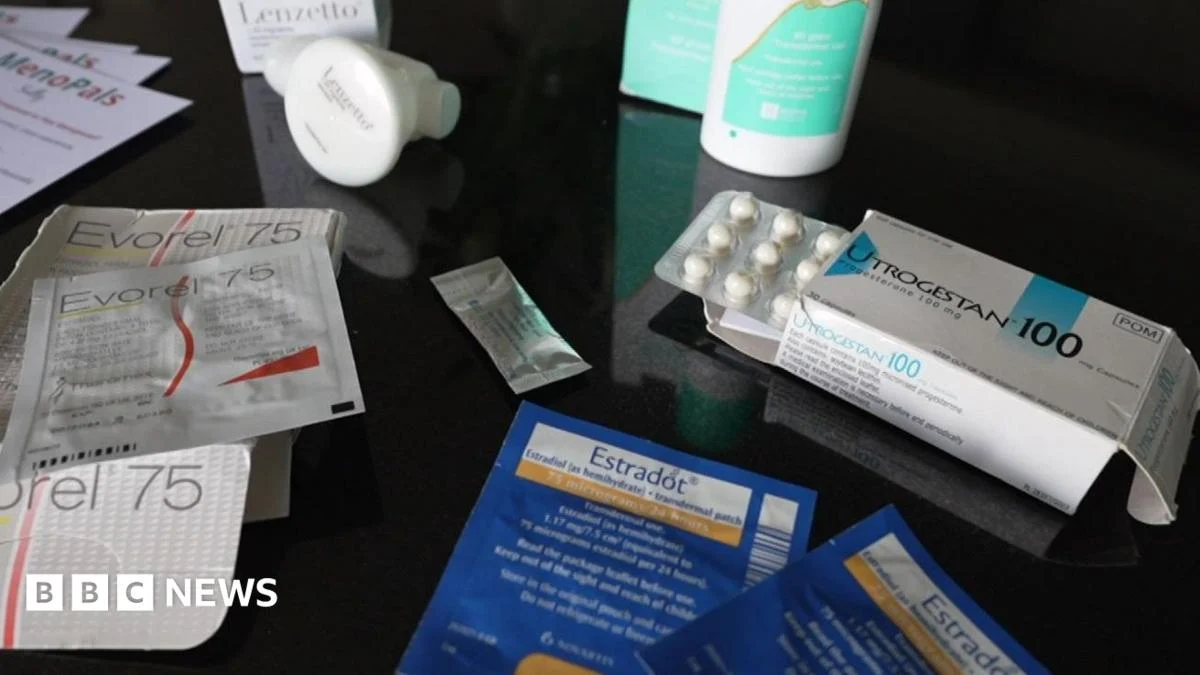
"Facing a ‘postcode lottery’ for menopausal testosterone prescriptions on the NHS, women in Wales are risking their health by posing as men to buy the hormone online. This desperate measure highlights critical inequities in care and the urgent need for a standardized, safe approach to supporting women’s health post-menopause."
A concerning trend has emerged in Wales, where women experiencing menopause are increasingly resorting to deceptive practices to obtain testosterone from online pharmacies. This desperate measure is driven by significant disparities in access to NHS prescriptions across various health boards, leading some women to assume male identities to circumvent medical gatekeeping. The practice carries substantial health risks, as unregulated online purchases can result in dangerously high hormone levels, prompting calls from medical specialists for an equitable, all-Wales approach to prescribing this crucial hormone.
The demand for testosterone among post-menopausal women has seen a "very sharp increase" in referrals to the NHS. While evidence supports its efficacy in addressing issues like diminished libido, many women also report benefits for energy levels and cognitive function. However, the path to obtaining a prescription through the NHS is fraught with inconsistency, varying significantly depending on geographical location and individual clinician discretion. This creates a challenging environment for women seeking appropriate hormonal support, pushing some towards potentially harmful self-medication.
Dr. Michelle Olver, a consultant in sexual and reproductive health and a menopause specialist, has witnessed firsthand the alarming consequences of this unregulated access. She reports seeing women with testosterone levels up to 12 times the safe physiological range for females, a direct result of purchasing the hormone from online sources without proper medical oversight. Such elevated levels carry a significant risk of permanent and undesirable side effects, including baldness, a deepening of the voice, and enlargement of the clitoris. Dr. Olver described the situation as "incredibly sad," emphasizing that women are being "denied access to something they need," yet underscoring the critical necessity for proper counselling and monitoring to ensure patient safety. The goal, she asserts, is to maintain women within a "female physiological range for testosterone," not to achieve "sky-high levels."
The struggles faced by women are deeply personal and profoundly impact their quality of life. Emma Thomas, co-founder of the menopause support group Menopals Cardiff and Vale, shared that numerous members have voiced their difficulties in accessing testosterone via the NHS. Common refrains include GPs believing there is "no need for it" or their surgery refusing to prescribe it outright. Thomas, 59, from Sully, Vale of Glamorgan, recounted her own transformative experience. At 47, she noticed a dramatic shift in her personality, transitioning from a "really sociable, happy person" to someone who felt "quite insecure, paranoid, low in mood," feeling she had "lost her joy." Hormone Replacement Therapy (HRT) brought a significant improvement within 10 days, but it was the addition of testosterone, prescribed by her GP after her initial HRT dosage was stable, that truly completed her recovery. "It was the final piece of the puzzle for me," she reflected, adding, "I feel like my old self – I’ve got a zest for life." The profound impact on women like Emma underscores the importance of access to a full spectrum of menopausal treatments.
While testosterone can be life-changing for some, specialists and women who have used it universally agree that it is not a "silver bullet" and is not appropriate for every individual. Emma Jones, 57, described a rapid increase in her energy levels within a week of taking the drug but also experienced feeling "jittery and on edge." She humorously noted, "I felt like I’d changed into the body of an 18-year-old, thinking about sex from the moment I woke up." Jones strongly advocates for women having the autonomy to access various types of HRT to discover what works best for their individual needs and bodies. This highlights the importance of individualized care, tailored to each woman’s specific symptoms and responses.
The inconsistency in access is a critical issue. BBC Wales highlighted the case of one woman who, after successfully receiving testosterone from her NHS GP, faced refusal from a new GP surgery when she moved to a neighbouring health board area. Forced to seek private consultation, prescription, and blood tests at considerable expense, she later resorted to filling out an online pharmacy questionnaire, pretending to be a man, to obtain the hormone for a fraction of the cost once her levels were stable. This anecdote vividly illustrates the systemic failures driving women to unsafe alternatives.
As one patient, Tomlinson, put it, "It’s a postcode lottery and very dependent on the practice and the clinician, but you can hit barriers along the way." This lack of uniformity is particularly frustrating when women hear of others in similar situations who have "sailed through the process" without needing secondary care. "There is no consistency across the board unfortunately," Tomlinson lamented.
Dr. Olver, who runs the menopause clinic at Aneurin Bevan’s health board, confirmed the surge in demand: "We have definitely seen a very sharp increase in testosterone referrals from primary care – for women wanting to access it." To manage this demand, her clinic has established a dedicated testosterone clinic for women considering a trial. She explained that each of the seven health boards in Wales employs a "traffic light system" for prescribing, which dictates who can prescribe the drug. Some areas are "red," meaning only specialists are permitted to prescribe. "Amber" options exist, where a GP might request specialist support or agreement, or where a hospital specialist initiates and monitors the prescription under a "shared care agreement" with the GP continuing to prescribe.
A primary reason for this disparity, Dr. Olver explained, is the absence of a licensed female-specific testosterone product on the NHS in the UK. While a female testosterone product has been available in other countries for many years and is accessible through private clinics across the UK, it has only recently achieved a license in the UK. The next hurdle is appraisal by the National Institute for Health and Care Excellence (NICE) to determine its cost-effectiveness for NHS use, followed by discussions with the pharmaceutical industry regarding its cost to the NHS. Currently, the female product, Androfeme, costs the NHS approximately £100, whereas the male product, Testogel, is significantly cheaper at £30, creating a financial disincentive for wider adoption of the appropriate formulation.
Dr. Olver emphasized the importance of managing patient expectations. "Studies show about 60% of women will find benefit in improving their libido," she stated, but cautioned, "It’s really important to manage expectations, because it’s not this wonder drug that sometimes it’s made out to be on social media." She pointed out that many factors influence intimacy and libido, some external, some anatomical, and that testosterone is not a universal solution. Comprehensive counselling is therefore essential to inform women about both the potential benefits and the limitations of testosterone use.
In response to these concerns, the Welsh government stated that "All health boards are expected to adhere to the National Institute for Health and Care Excellence’s (NICE) guidelines on identification and management of menopause including providing individualised care when prescribing HRT." They acknowledged awareness that this may include some practitioners prescribing testosterone for some women. Crucially, the government added, "We expect all health boards to conform to any recommendation made by NICE in relation to prescribing testosterone when its guidance is published." This statement places hope on future NICE guidance to standardize access, but in the interim, women continue to navigate a fragmented and often inaccessible system.
The growing awareness of menopause and its impact on women’s health has brought issues like testosterone access into sharper focus. The current "postcode lottery" not only compromises patient safety but also undermines the principle of equitable healthcare. Addressing this crisis requires a multi-faceted approach: expediting the NICE appraisal process for licensed female testosterone products, establishing clear, consistent, and evidence-based prescribing guidelines across all Welsh health boards, and ensuring adequate training and support for primary care clinicians. Only through such concerted efforts can women in Wales access the care they need safely and without resorting to desperate and risky measures.
