

"We have zero tolerance for violence of any kind," states Henry Ford Health spokesperson Dana Jay, yet striking nurses like Crystal Dhooghe counter that such assurances fall short against the "national epidemic" of workplace assaults, fueling strikes nationwide and pitting worker safety against hospital cost-cutting measures.
The stark reality for many healthcare professionals extends far beyond the expected challenges of treating illness and injury. Nurses and other frontline workers are increasingly becoming targets of physical and verbal abuse, transforming once-safe environments into volatile zones. This surge in workplace violence within the healthcare sector has become a critical issue, directly contributing to widespread labor actions, including strikes, across several states. As exemplified by the ongoing picket lines of nurses like Crystal Dhooghe at Henry Ford Genesys Hospital in Michigan, the core of these disputes often lies in a fundamental disagreement: are these strikes primarily about economic factors, as hospital administrators contend, or are they a desperate plea for enhanced safety measures necessitated by chronic understaffing and systemic neglect? The statistics paint a grim picture, with healthcare workers facing significantly higher rates of injury from violent acts compared to the general workforce, underscoring the urgent need for comprehensive solutions that address both the immediate safety concerns and the underlying causes of this escalating crisis.
Nurse Crystal Dhooghe, accustomed to the raw realities of emergency room care—the blood, the broken bones—finds herself increasingly confronting a more insidious form of trauma: violence directed at her and her colleagues. At Henry Ford Genesys Hospital in Grand Blanc, Michigan, Dhooghe has witnessed firsthand the disturbing escalation of aggression, with incidents ranging from shoves and scratches to outright bites. "The biggest one is bitten," she stated, her voice reflecting a weariness born from repeated exposure to such hostility.
This pervasive issue of workplace violence within the healthcare industry is not confined to a single institution or region. It has become a significant catalyst for labor unrest, driving strikes in states such as Louisiana, New York, Pennsylvania, Rhode Island, and, critically, Michigan. Dhooghe, along with many of her fellow nurses, has been on the picket line since Labor Day of the previous year, demanding better working conditions and, paramountly, improved safety. The question she often faces, "Why are you still working in a place if you’re treated like this?" highlights the difficult choices healthcare professionals confront. Dhooghe survives on strike benefits and by taking on extra shifts at other facilities, yet her experience reveals a disheartening truth: the problem is systemic, not isolated. "It’s the same everywhere I go," she laments, indicating a widespread failure to adequately protect healthcare workers.
In response to the growing concerns, Henry Ford Health spokesperson Dana Jay acknowledged the severity of violence against healthcare workers, characterizing it as a "national epidemic." The health system has implemented measures such as metal detectors and armed security officers trained to make misdemeanor arrests, alongside de-escalation training for staff. Jay asserted, "We have zero tolerance for violence of any kind," while simultaneously framing the ongoing strike as an "economic strike" rather than a safety-related dispute. This characterization is directly challenged by the experiences of nurses like Dhooghe, who see safety as inextricably linked to their compensation and staffing levels.
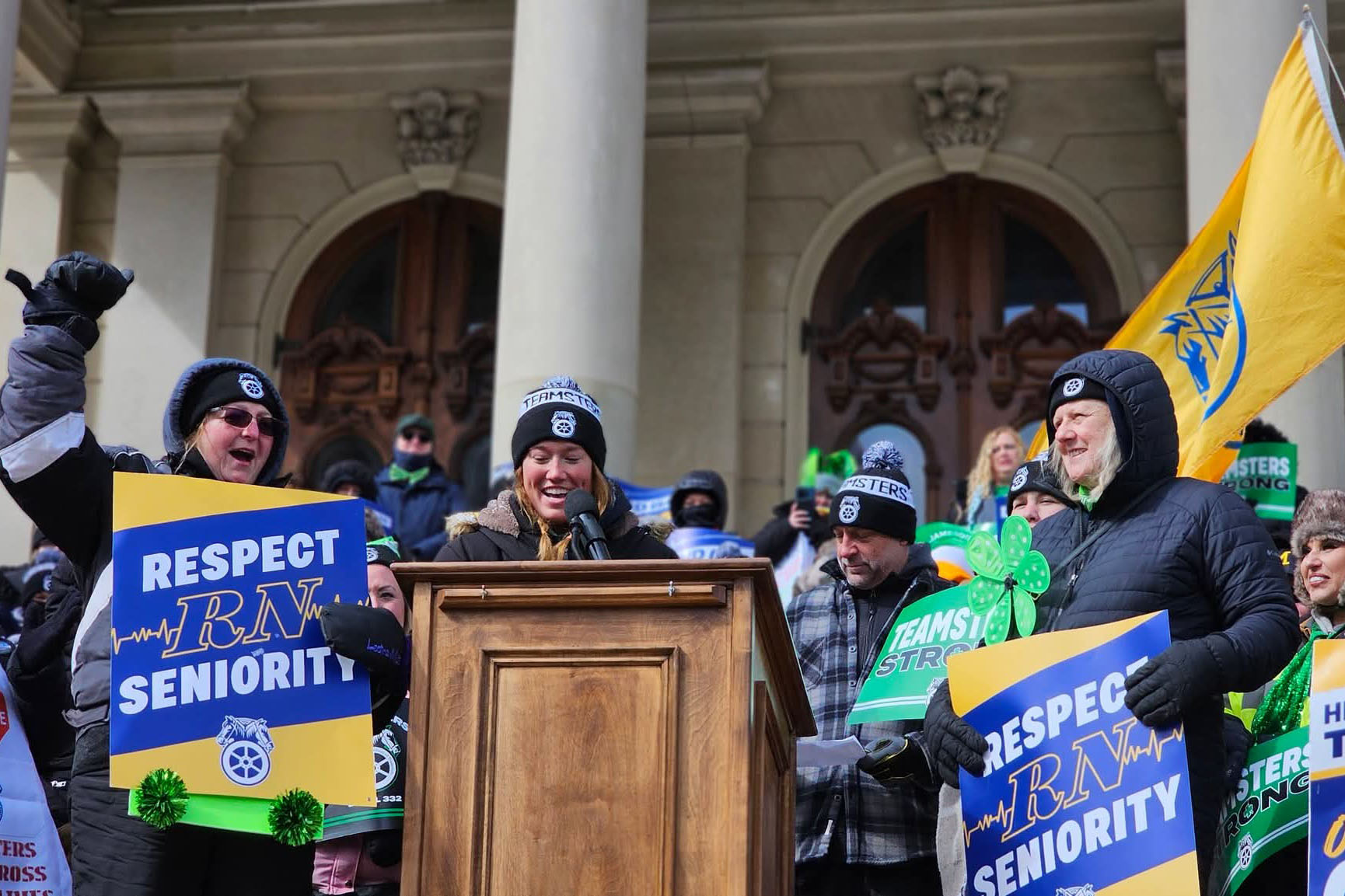
The statistical evidence powerfully underscores the peril faced by healthcare professionals. According to the most recent data from the Bureau of Labor Statistics, hospital workers are seven times more likely to be injured on the job due to violent acts than members of the general working population. This alarming disparity fuels the current outcry, creating a tense standoff between workers demanding better pay and adequate staffing, and hospital administrators grappling with financial pressures to control costs.
The normalization of violent outbursts in healthcare settings has even found its way into popular culture, dramatized in medical television series like The Pitt. Rachel Odes, an assistant professor at the University of Wisconsin-Madison School of Nursing, vividly described emergency rooms as "a powder keg" in the current climate. The term "code gray" is now commonly used within hospitals to denote a combative or violent patient, highlighting the frequent occurrence of such incidents. While spontaneous and unpredictable outbursts can be difficult to prevent, research indicates that the risk of violence escalates significantly when hospitals are understaffed, or when employees lack sufficient training and experience.
Andrew Kimball-Mirzaie, a mental health worker at Butler Hospital in Providence, Rhode Island, experienced a harrowing incident in February 2024. After only six weeks on the job, and prior to working in the emergency department, he was assigned to monitor a young male patient in a back room. While watching television, the patient suddenly became violent, punching Kimball-Mirzaie in the face, resulting in a concussion and a broken nose. The assault was meticulously documented in the hospital’s incident log. Kimball-Mirzaie, while acknowledging the inherent dangers of his profession, does not blame the severely ill patient. Instead, he points to systemic failures: "We should have had at least another staff member with us, and I should have been adequately trained on the unit."
This violent encounter galvanized Kimball-Mirzaie to join approximately 700 other unionized Butler workers in a months-long strike during the spring and summer of 2025. The strike forced the hospital to close nearly half of its beds and was ultimately declared a success by the Service Employees International Union 1199 New England. The agreement included wage increases aimed at improving staff recruitment and retention, financial support for workers injured on the job, and the joint funding of a "time bank" to compensate injured workers for extended recovery periods. However, the underlying issues persisted. Just five months later, a nurse supervisor at Butler had to call 911 after an unarmed patient in the ER assaulted staff, injuring two nurses, a security guard, and a police officer before being arrested. The patient faced multiple felony assault charges.
Mary Marran, Butler’s president and chief operating officer, stated that the hospital "recognizes the importance of being proactive in protecting those who provide care" and that leadership regularly reviews safety measures with staff. Despite these assurances, the incident underscores the persistent challenges in ensuring a safe environment for caregivers.
The American Hospital Association (AHA) has advocated for stronger punitive measures, lobbying Congress to make assaulting healthcare workers a federal crime with potential penalties of up to 10 years in prison. Currently, at least 45 states, including Michigan and Rhode Island, have enacted similar laws. However, workplace safety experts express skepticism about the effectiveness of such legislation in deterring violence, suggesting that punitive measures alone are insufficient.

The demand for "safe staffing" has emerged as a central rallying cry for striking healthcare workers nationwide, often prioritized over harsher penalties for perpetrators. This push for adequate staffing levels is gaining traction with accrediting bodies. The Joint Commission, which accredits over 80% of U.S. hospitals, introduced national performance goals in January that require hospitals to be properly staffed and ensure staff are trained "to provide safe, quality care."
Despite these developments, a significant gap remains at the federal level. There is no federal law mandating patient-to-nurse ratios across healthcare settings, even as organizations like National Nurses United have advocated for such a standard since 2018. Jane Thomason, lead industrial hygienist for National Nurses United, emphasizes that hospitals must "safely staff all units" to allow nurses to "provide the care that patients need before they get agitated or disoriented."
A few states have taken legislative action. California stands out as the only state with broad mandatory nurse staffing ratios, which research suggests are linked to lower mortality rates and improved staff retention. Oregon has also enacted a staffing law, albeit with exceptions. In Massachusetts and New Jersey, similar bills have been introduced but have yet to reach floor votes.
The AHA, however, opposes mandatory minimum nurse staffing ratios, arguing they would "remove real-time clinical judgment and flexibility," exacerbate staffing shortages, and potentially lead to the diversion of patients or delays in care. Colleen Kincaid, an AHA spokesperson, pointed to California’s new emergency nurse staffing ratios for psychiatric hospitals, which reportedly resulted in bed closures in at least four counties, forcing individuals in mental health crises into overcrowded emergency departments.
Jordan Barab, a former deputy assistant secretary of labor for OSHA during the Obama administration, suggests that alternative strategies, beyond simply increasing staffing levels, can effectively combat workplace violence. He advocates for measures such as enhanced de-escalation training for employees, the installation of metal detectors, and the presence of specially trained security guards on-site to manage incidents more effectively and reduce reliance on delayed police response.
Debbie Berkowitz, a worker safety and health policy expert at Georgetown University, expresses concern that potential budget constraints, particularly those stemming from congressional Republican proposals, could negatively impact hospital funding. She warns that in such scenarios, "protecting workers is going to be the first thing that gets cut," potentially exacerbating the existing safety crisis. The intricate interplay between economic realities, staffing levels, and the escalating violence against healthcare workers necessitates a multi-faceted approach that prioritizes both immediate safety interventions and long-term systemic reforms.
