
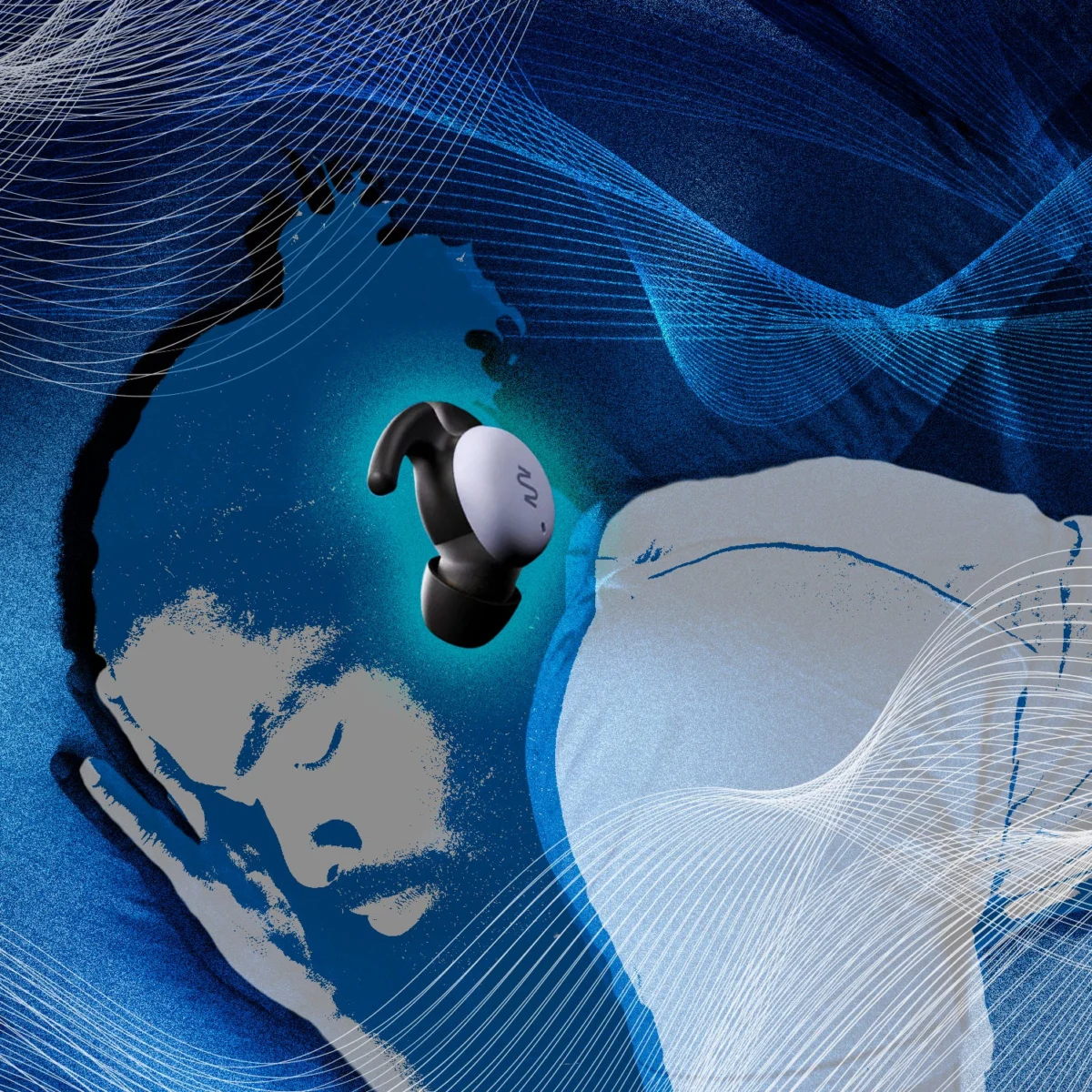
"While traditional sleep trackers merely document a poor night’s rest, new closed-loop auditory technology aims to actively intervene by using EEG sensors to synchronize sound pulses with the brain’s deep-sleep rhythms."
Sleep maintenance insomnia, characterized by waking up in the early hours and struggling to return to rest, is a hallmark of the aging process. As the brain’s ability to sustain deep, slow-wave sleep diminishes with age, consumer technology is pivoting from passive monitoring to active neurological intervention. Devices like the NextSense Smartbuds represent this shift, utilizing electroencephalogram (EEG) technology to monitor brain waves in real-time and provide auditory stimuli designed to bolster the restorative stages of sleep, moving beyond simple data collection toward actual physiological optimization.
The Biological Burden of Middle-Age Sleep
For many adults entering their 40s and 50s, the "perfect" night of sleep becomes an elusive memory. This phenomenon is not merely a byproduct of lifestyle stress—though mortgages, careers, and child-rearing certainly play a role—but is rooted in the fundamental degradation of sleep architecture. As we age, the percentage of time spent in Stage 3 (N3) non-rapid eye movement (NREM) sleep, also known as slow-wave sleep (SWS), begins to decline.
Slow-wave sleep is often referred to as the "janitorial shift" of the human body. During this stage, the glymphatic system—the brain’s waste clearance pathway—becomes highly active, flushing out metabolic byproducts such as beta-amyloid, which is associated with neurodegenerative diseases. Furthermore, SWS is critical for memory consolidation, immune function, and the regulation of glucose metabolism. When this stage is truncated or fragmented, as is common in middle age, the result is "sleep maintenance insomnia": the ability to fall asleep easily, but the inability to stay asleep past the 2:00 a.m. or 3:00 a.m. mark.
In the absence of restorative deep sleep, many individuals turn to "sleep hygiene" rituals or "bio-hacks." These range from the conventional—supplements like magnesium and melatonin or prescription hypnotics—to the fringe, such as mouth-taping to encourage nasal breathing or wearing weighted eye masks. However, these solutions often fail to address the underlying neurological trigger of early-morning wakefulness: the brain’s increasing sensitivity to internal and external stimuli as it transitions into lighter sleep stages.
From Passive Tracking to Active Intervention
The last decade has seen an explosion in the sleep-tech market, dominated by wearables like the Oura Ring, Fitbit, and Apple Watch. While these devices have become highly sophisticated at using heart rate variability (HRV) and accelerometers to estimate sleep stages, they remain inherently passive. They provide a post-mortem of the previous night’s failures, often leading to a condition known as "orthosomnia"—an unhealthy obsession with achieving "perfect" sleep data that ironically increases the anxiety preventing rest.

The NextSense Smartbuds represent a departure from this paradigm. Instead of relying on peripheral signals like pulse or movement, these earbuds utilize clinical-grade EEG sensors integrated into a consumer form factor. By measuring the electrical activity of the brain directly through the ear canal, the device can identify the exact onset of slow-wave sleep.
Once the user enters these deep stages, the Smartbuds employ "closed-loop auditory stimulation." This involves the delivery of precisely timed, low-frequency sound pulses—often described as subtle beeps or taps—that are synchronized with the upward phase of the brain’s slow-wave oscillations. The goal is to "entrain" the brain, reinforcing the amplitude and duration of these waves to keep the sleeper in a deep state for longer periods.
The Science of Sound and Slow Waves
The premise of using sound to manipulate brain waves is supported by a growing body of peer-reviewed research. Studies conducted at institutions such as Northwestern University have demonstrated that acoustic stimulation, when timed correctly with a person’s unique brain rhythms, can significantly enhance the power of slow-wave activity.
Unlike white noise or "pink noise," which provide a constant auditory floor to mask external sounds, closed-loop stimulation is reactive. It does not play continuously; rather, it "listens" to the brain and intervenes only when the neurological conditions are met. This prevents the brain from becoming habituated to the sound, maintaining the effectiveness of the stimulus throughout the night.
For the user, the experience is often surreal. Because the auditory system remains partially active even during sleep, these pulses can occasionally bleed into the subconscious. Users have reported hearing faint, rhythmic tones that integrate into their dream architecture—a phenomenon reminiscent of "the kick" in the film Inception, where music is used to signal a transition between levels of consciousness. However, unlike a jarring alarm, these tones are designed to be "sub-threshold," meaning they are loud enough for the brain to process but soft enough to avoid triggering a full arousal.
The Hardware Challenge: Comfort vs. Capability
One of the primary hurdles for EEG-integrated sleep tech has been the form factor. Traditional EEG setups require a cap with conductive gel and dozens of wires, which is impractical for home use. Previous consumer attempts at "sleep headbands" were often bulky, prone to slipping, and uncomfortable for side sleepers.
The Smartbuds address this through miniaturization. The sensors are tucked into "rubber hooks" that nestle into the concha of the ear, allowing for a secure fit that remains stable even as a sleeper tosses and turns. For those who find traditional earbuds painful after extended wear, the soft, low-profile design of these devices is a necessary innovation. They are designed to be "invisible" technology—working in the background without requiring the user to change their natural sleeping position.

Upon activation, the device typically begins with a layer of white noise to facilitate the initial "fall asleep" phase. Once the EEG sensors detect that the user has transitioned into sleep, the white noise fades out, and the "janitorial" work of the auditory pulses begins.
The Limits of Technological Optimization
Despite the sophistication of EEG-based intervention, it is not a panacea for the modern "sleep crisis." Sleep is a complex biological process influenced by an array of factors that technology cannot always override. Chronic stress, high cortisol levels, and the "cognitive load" of modern life—the mental checklist of mortgages, professional responsibilities, and family obligations—can create a state of hyper-arousal that even the most precisely timed sound pulse may struggle to break.
Furthermore, there is the question of subjective versus objective recovery. While a device may successfully keep a user in a "shallow" sleep state instead of allowing them to wake up fully at 3:00 a.m., the quality of that sleep remains a variable. If a user is no longer staring at the ceiling for two hours but is instead drifting in a medicated or tech-induced haze, do they feel more rested?
For many, the answer is a qualified yes. The psychological toll of "lying awake" is often as damaging as the physiological toll of lost sleep. By eliminating the period of conscious wakefulness and the "boredom therapy" of reading or screen use in the middle of the night, these devices offer a form of relief that is as much about mental peace as it is about delta waves.
The Future of the "Optimized" Sleeper
The move toward "active" sleep technology signals a broader trend in the wellness industry: the shift from monitoring to management. As EEG sensors become cheaper and more integrated into everyday hardware, the boundary between a "consumer gadget" and a "medical device" continues to blur.
At a price point typically ranging between $249 and $299, the NextSense Smartbuds are positioned as a premium tool for the "optimized man" or woman—individuals who view sleep not as an idle state, but as a performance metric that can be engineered. While they may not be able to resolve the existential anxieties of middle age, they represent a significant step forward in the quest to reclaim the "lost hours" of the night.
In the end, the value of such technology may lie in its ability to return us to a more natural state. If "tiny robots" singing to our brain waves can counteract the sleep fragmentation of the modern world, then the trade-off between natural rest and technological intervention becomes a small price to pay for a full night’s sleep. As we continue to age in an increasingly loud and stressful world, the most profound luxury may simply be the ability to remain unconscious until the sun rises.
