
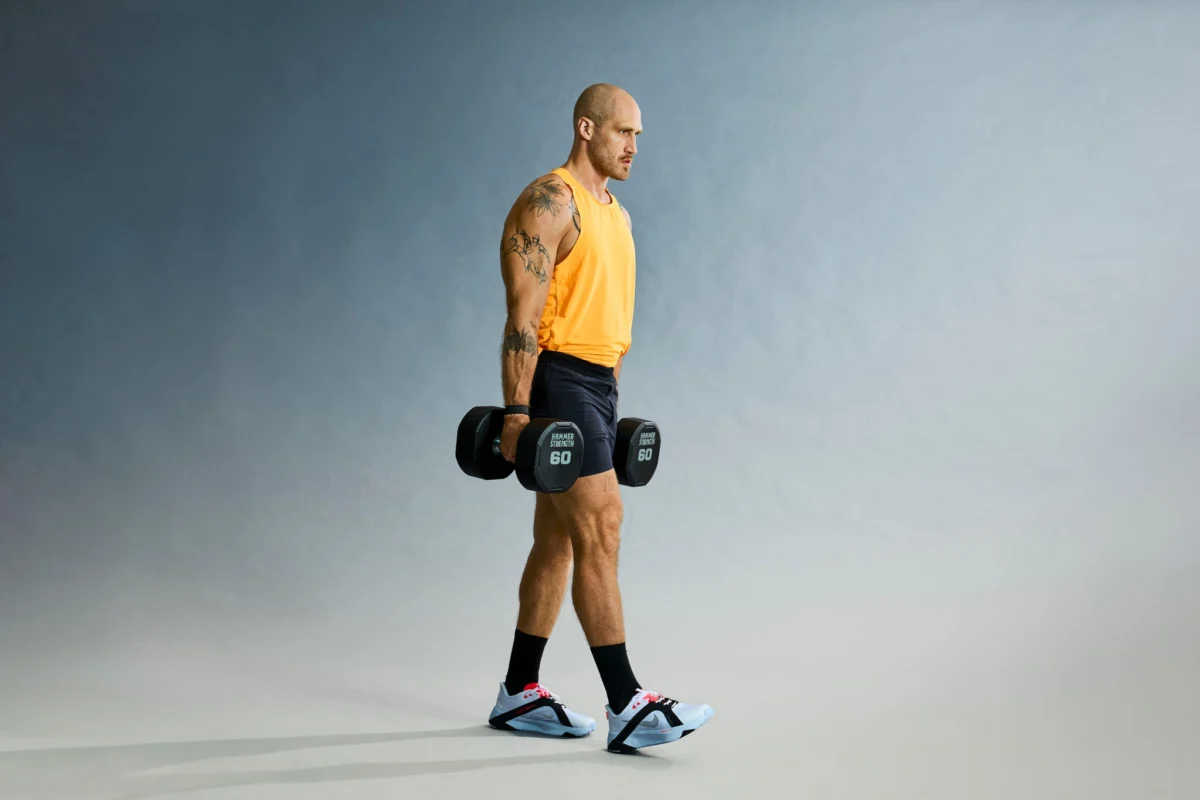
"The farmer’s walk is the ultimate bridge between gym-built muscle and real-world utility, turning a simple stroll into a full-body crucible for grip strength, core stability, and postural integrity."
While often overlooked due to its apparent simplicity, the farmer’s walk—or loaded carry—stands as one of the most foundational movements in human physical development. By requiring an individual to move a heavy load over a set distance or time, the exercise taxes the kinetic chain from the fingertips to the feet, forcing the body to maintain structural rigidity under duress. Far from being a mere "grip builder," the farmer’s walk serves as a comprehensive tool for metabolic conditioning, injury prevention, and the cultivation of "functional" strength that translates directly from the weight room to the demands of daily life.
The Philosophy of the Loaded Carry
At its core, the farmer’s walk is a test of "organized" movement. In a modern fitness landscape often dominated by complex machinery and isolated movements, the loaded carry returns to the basics of human labor. It is the exercise of the laborer, the porter, and the athlete alike. Whether you are hauling groceries from the car, lugging a suitcase through an airport, or competing in a high-stakes fitness race like Hyrox, you are performing a variation of the farmer’s walk.
However, the transition from "carrying things" to "training the carry" requires a shift in intentionality. As Ebenezer Samuel, C.S.C.S., fitness director at Men’s Health, notes, the exercise only yields its full spectrum of benefits when the athlete moves with precision. Without proper form, the move becomes a sloppy trudge; with it, it becomes a masterclass in total-body tension.
The Mechanics of the Move: A Step-by-Step Breakdown
To perform the farmer’s walk effectively, one must move beyond the "pick it up and go" mentality. The exercise begins long before the first step is taken.

1. Organizing the Torso
The primary objective of a loaded carry is to maintain a "neutral" spine while the weight attempts to pull the body out of alignment. Before moving, you must organize your torso through a three-step checklist:
- Glute Engagement: Squeeze your glutes to shift your pelvis into a neutral position. This prevents the lower back from over-arching (anterior pelvic tilt) under the weight.
- Abdominal Bracing: Tighten your core as if preparing for a blow to the stomach. This creates intra-abdominal pressure, shielding the spine.
- Scapular Retraction: Pull your shoulder blades back and down. Imagine trying to put your shoulder blades into your back pockets. This prevents the heavy weights from rounding your shoulders forward.
2. The Grip
Grip strength is often the limiting factor in the farmer’s walk, but it is also the exercise’s greatest gift. When holding dumbbells or kettlebells, do not merely "hold" them—crush them. A maximal grip sends a signal to the rest of the nervous system to stay tight (a phenomenon known as irradiation). Ensure the weights remain perfectly level; allowing them to tilt forward or backward diminishes the work required by the forearms and reduces the stability of the wrist.
3. The Walk
Once tension is established, begin to walk using short, choppy steps. Large strides create unnecessary oscillation in the hips and can lead to a loss of core control. Keep your gaze fixed forward, not at your feet, to maintain a neutral cervical spine.
The Physiological Benefits
The farmer’s walk is a "high-yield" exercise, meaning it provides a massive return on investment for the time spent performing it.
Grip Strength and Longevity
Medical research has frequently cited grip strength as a key biomarker for overall health and longevity. A weak grip is often correlated with increased cardiovascular risk and accelerated aging. By forcing the hand and forearm muscles to maintain a crushing grip for extended durations, the farmer’s walk builds the kind of "old man strength" that serves as a foundation for all other pulling movements, such as deadlifts and pull-ups.
Postural Correction
In an era of "tech neck" and sedentary office work, the farmer’s walk acts as a corrective antidote. It reinforces the "shoulders back, chest up" posture. By carrying heavy loads, the upper traps, rhomboids, and levator scapulae are forced into isometric contractions that strengthen the muscles responsible for upright posture.

Core and Spinal Stability
The core’s primary job is not to flex the spine (like a crunch) but to resist movement (anti-extension, anti-rotation, and anti-lateral flexion). As you walk, the weights bounce and shift, forcing the obliques and transverse abdominis to fire rapidly to keep the spine still. This "dynamic stability" is far more applicable to sports and daily life than static planks.
Variations and Implements
While the traditional farmer’s walk uses two dumbbells at the sides, the "loaded carry" family is diverse:
- The Suitcase Carry: Holding a weight in only one hand. This creates a massive challenge for the opposite-side obliques, which must work overtime to prevent the torso from leaning toward the weight.
- The Rack Carry: Holding kettlebells in the "front rack" position (at shoulder height). This shifts the center of gravity forward, taxing the erector spinae and making breathing more difficult, which improves ribcage stability.
- The Trap Bar Carry: Using a hexagonal trap bar allows for significantly heavier loads than dumbbells, as the weight is centered perfectly with the athlete’s center of gravity. This is the preferred method for pure strength development.
Programming the Farmer’s Walk
The versatility of the farmer’s walk allows it to be placed almost anywhere in a training session, depending on the goal.
As a Warmup
Use a moderate weight to "wake up" the nervous system. Walking for 30 seconds followed by 30 seconds of rest for three minutes primes the core and shoulders for heavy lifting. It establishes the mind-muscle connection required for spinal bracing.
As a Strength Movement
If the goal is hypertrophy or raw power, treat the carry like a primary lift. Use the heaviest weights you can manage for short distances (20 to 40 meters). Focus on maintaining "perfect" posture despite the crushing load. Perform 4 to 5 sets with ample rest in between.
As a Finisher
To build mental toughness and metabolic conditioning, use the farmer’s walk at the end of a workout. A common protocol is the "EMOM" (Every Minute on the Minute) or a timed interval, such as 40 seconds of work followed by 20 seconds of rest for four to six rounds. This pushes the heart rate into high zones while testing the athlete’s ability to maintain form under extreme fatigue.
Avoiding the "Fatigue Trap"
The most common error in the farmer’s walk occurs when the athlete prioritizes distance over form. As fatigue sets in, the shoulder blades typically begin to protract (slump forward) and the lower back begins to arch. This shifts the load from the muscles to the joints and ligaments, increasing the risk of injury.
Ebenezer Samuel suggests a constant internal monologue during the movement: "Shoulders back, abs tight, glutes squeezed." If you find you can no longer maintain these three pillars of tension, the set is over—regardless of how much distance remains.
Conclusion
The farmer’s walk is a deceptive exercise. It looks like a stroll, but it is a battle for structural integrity. By incorporating loaded carries into a regular routine, athletes can develop a level of "total-body armor" that protects the spine, enhances grip, and improves nearly every other lift in the gym. Whether you are an elite competitor preparing for a fitness race or a fitness enthusiast looking to move better in daily life, the prescription remains the same: pick up something heavy, organize your body, and start walking.
