
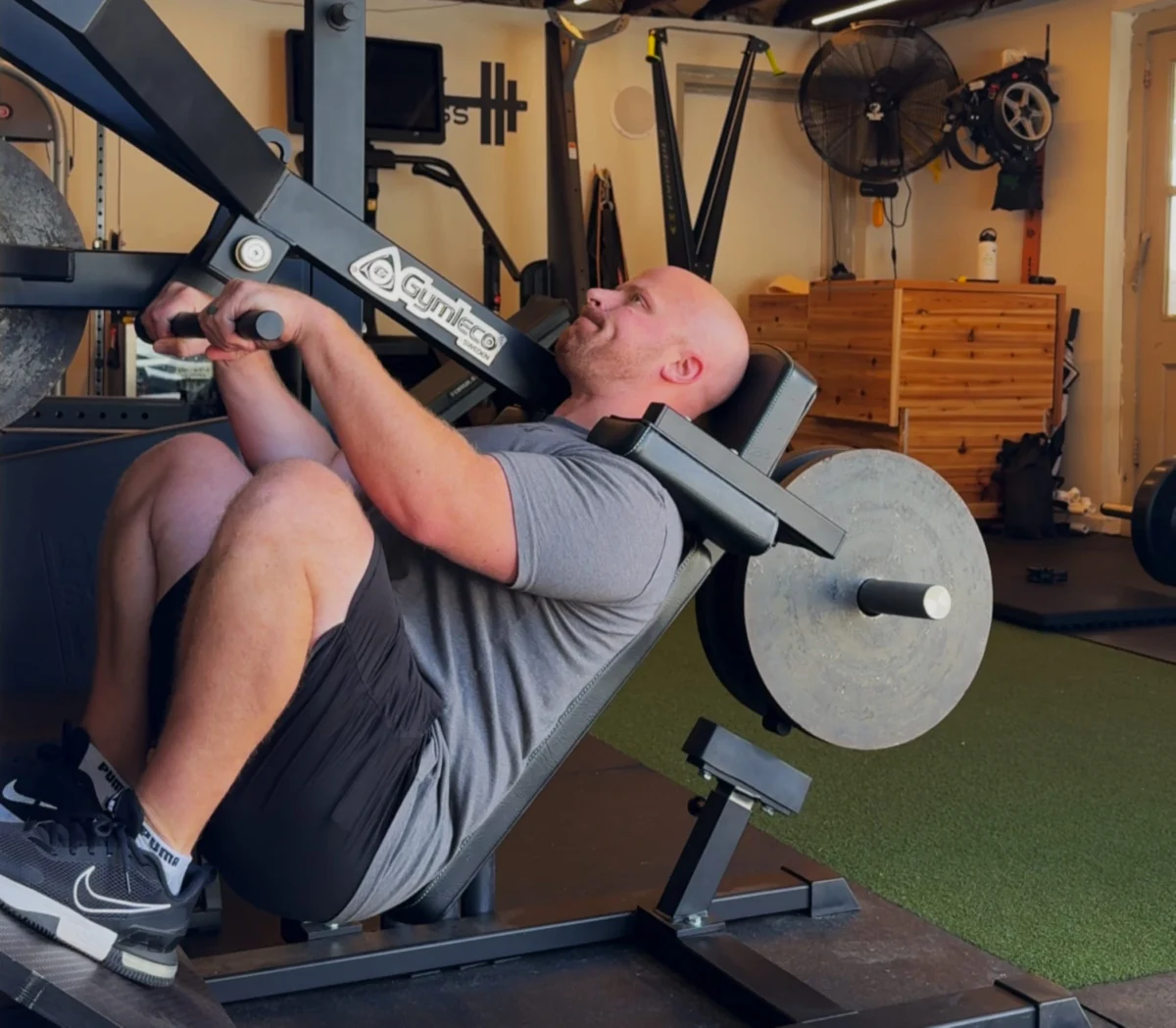
"The pendulum squat bridges the gap between the mechanical stability of a leg press and the functional intensity of a barbell squat, offering a high-tension movement that maximizes quad hypertrophy while significantly reducing lumbar stress."
As fitness technology continues to evolve, the industry has seen a pivot from merely digitizing cardio equipment to re-engineering the fundamental mechanics of strength training. While smart rowers and connected cycles dominate the home-use headlines, professional-grade strength manufacturers like the Swedish firm Gymleco are refining traditional movements to optimize biomechanical efficiency. The pendulum squat, a specialized machine that has transitioned from niche bodybuilding circles to high-end performance centers, represents a significant leap in lower-body training, offering a unique arcing resistance profile that traditional squats cannot replicate.

The Evolution of Lower-Body Training
For decades, the barbell back squat has been heralded as the "king of exercises." However, the king comes with a heavy price: significant axial loading on the spine and a high technical barrier to entry. For many lifters, especially those with pre-existing lower back issues or long femurs, the traditional squat becomes a limiting factor in leg development because the lower back often fails before the legs do. This discrepancy led to the rise of the leg press and the hack squat, but both have their drawbacks, including potential shearing forces on the knees or restricted natural movement patterns.
Enter the pendulum squat. This machine is designed to provide a "humbling" experience by using a pivoting arm that creates a fixed, arcing path of motion. Unlike a standard vertical or 45-degree hack squat, the pendulum squat moves the lifter through a curve. This mimics the natural shift in center of gravity that occurs during a free-weight squat but adds a level of stability that allows the trainee to push their quadriceps to absolute failure without the risk of tipping over or losing spinal integrity.
The Gymleco Philosophy: Swedish Engineering and Simplicity
Gymleco, a prominent name in European strength circles, has developed a version of the pendulum squat that stands out for its minimalist yet robust construction. In an era where many manufacturers add unnecessary pins, levers, and electronic displays, Gymleco adheres to a "less is more" philosophy. Their unit is built to withstand the rigors of a hardcore commercial gym while maintaining a footprint small enough for a high-end home setup.

The hallmark of the Gymleco Pendulum Squat is its accessibility. The machine features a wide, open entry point, allowing lifters of all sizes to step in comfortably. The foot platform is oversized and fixed at an optimal angle, providing ample room for various foot widths and placements. What sets the Gymleco apart is the lack of complex adjustments. There are no pins to pull or seat heights to calibrate; the machine relies on the user’s body positioning and a simple safety arm to dictate the range of motion. This "step-in-and-go" design is a testament to superior industrial design, ensuring that the focus remains on the training rather than the equipment setup.
Biomechanics and the "Humbling" Resistance Profile
The most striking feature of the pendulum squat is the resistance curve. Because of the pivoting arm, the weight feels heavier as you descend into the hole—the bottom of the squat. This is where the quadriceps are at their most stretched position, and the mechanical disadvantage created by the pendulum arm ensures maximum tension where it matters most.
Expert coaches, including David Otey, C.S.C.S., note that the pendulum squat is notoriously difficult compared to traditional leg presses. Lifters often find they only need a fraction of the weight they would typically use on a leg press to achieve the same, if not greater, level of muscle fiber recruitment. This "humbling" nature is actually a safety feature: by requiring less external load to reach high intensity, the lifter puts less total stress on their joints and connective tissues while still achieving the stimulus needed for hypertrophy (muscle growth).

Step-by-Step: Mastering the Movement
To utilize the Gymleco Pendulum Squat effectively, one must understand the nuances of the setup. The lifter begins by standing inside the machine, fixing their shoulders under the heavily padded rests and ensuring their back is flush against the vertical support pad. This back pad is crucial; it provides a tactile reference point that prevents the "butt wink" (pelvic tilt) often seen in poor-form barbell squats.
Once the shoulders and back are set, the lifter positions their feet on the platform. A common coaching tip for the Gymleco unit is to place the toes just shy of the bolt imprints on the platform, though this can be adjusted based on the lifter’s height and femur length. To initiate the lift, the user performs a slight calf raise to lift the weight off the safety catch, then pulls the safety arm forward to disengage the lock.
The descent should be controlled, allowing the pendulum to swing the body into a deep squat. Because the machine supports the torso, lifters can often achieve a much greater range of motion (knee flexion) than they could with a barbell. At the bottom of the movement, the lifter drives through the midfoot and heel, pushing against the platform until they return to the starting position. The constant tension provided by the arcing path means there is no "resting point" at the top or bottom, making every rep count.

Addressing the Lower Back Dilemma
One of the primary reasons the pendulum squat has gained traction in rehabilitation and professional sports facilities is its ability to spare the lower back. In a traditional squat, the erector spinae muscles must work overtime to keep the torso upright. If the lifter’s core fatigues, the weight can pull the spine into flexion, leading to potential disc issues.
In the Gymleco Pendulum Squat, the spine is supported by a thick, ergonomic pad throughout the entire range of motion. This eliminates the sheer force on the lumbar vertebrae, making it an ideal choice for athletes recovering from back injuries or for older lifters who want to maintain leg mass without aggravating chronic back pain. By removing the "stability requirement" from the lower back, the machine allows the brain to send a stronger neural signal to the quadriceps, leading to better mind-muscle connection and more efficient training.
Integration into Commercial and Home Gyms
While Gymleco is traditionally a commercial manufacturer found in elite performance centers and hardcore bodybuilding "meccas" worldwide, the Pendulum Squat has become a coveted piece for the serious home gym enthusiast. However, adding such a piece requires a commitment. With a price point hovering around $3,800 (and occasionally higher depending on shipping and regional distributors), it is an investment in long-term physical health and performance.

The logistics of acquiring Gymleco equipment are also unique. Unlike many home gym brands that ship "flat-pack" boxes requiring hours of assembly, Gymleco typically ships its machines fully built on pallets. This ensures that the factory-grade structural integrity is maintained and that the user doesn’t have to worry about improper assembly affecting the safety or feel of the machine. For a home gym owner, this means having the necessary space (and perhaps a few friends) to move the unit into its final position.
Complementary Tools for Squat Development
For those who may not yet have the space or budget for a full pendulum squat, other tools can help bridge the gap. Suspension trainers, such as the TRX system, allow for "assisted squats" where the user can lean back and use the straps for stability, mimicking some of the arcing feel of a pendulum. Additionally, kettlebells can be used for goblet squats, which shift the weight to the front of the body, naturally encouraging a more upright torso and reducing back strain. However, while these tools are excellent for general fitness, they cannot match the sheer loading capacity and isolated tension provided by the Gymleco machine.
Final Verdict: A Game Changer for Leg Development
The Gymleco Pendulum Squat is more than just another leg machine; it is a specialized tool designed for those who are serious about their physical development. Its ability to provide a deep, smooth, and safe squatting motion makes it a standout in a crowded market of fitness equipment. Whether it is used in a rehab setting to help a patient regain leg strength without taxing their spine, or in a professional athlete’s program to build explosive power, the machine delivers consistent results.

As David Otey notes, the machine often becomes the "most requested" piece in a facility once clients experience the unique pump and localized fatigue it provides. It transforms the most dreaded day of the training week—leg day—into a session of precision engineering, allowing lifters to push past their previous plateaus with confidence and safety. For the serious lifter looking to build formidable legs while preserving their longevity, the Gymleco Pendulum Squat is arguably the best investment on the market today.
