
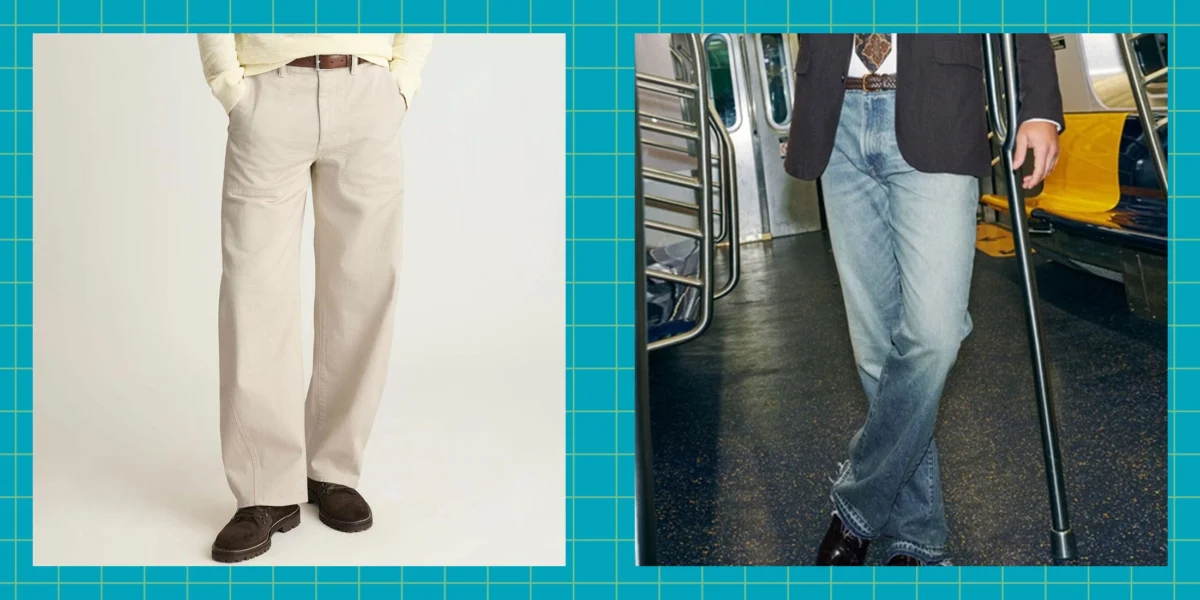
“The relaxed straight-leg pant serves as the essential stylistic bridge between the restrictive skinny fits of the past and the oversized trends of the present, offering a timeless silhouette that prioritizes both proportion and versatility.”

As menswear moves away from the polarizing extremes of the last two decades, the relaxed straight-leg pant has emerged as the definitive baseline for the modern wardrobe. This shift represents a maturation of style, moving beyond the "bigger is better" mantra of recent streetwear-influenced years toward a silhouette that respects the natural lines of the body while maintaining a comfortable, effortless ease. By balancing the roominess of contemporary trends with the structured discipline of classic tailoring, this fit provides a versatile foundation that accommodates everything from heritage workwear to elevated office attire.
For the better part of the last five years, the narrative of men’s fashion has been dominated by a singular directive: increase the volume. The industry saw a rapid departure from the ultra-slim, razor-thin silhouettes that defined the 2010s, replaced by a surge of baggy denim, oversized cargo pants, and wide-leg trousers that pooled aggressively around the ankles. While this "puddling" effect and the abundance of fabric offered a much-needed rebellion against the restrictive "skinny" era, fashion’s pendulum has reached its apex. The result is a return to a more nuanced middle ground.

The relaxed straight-leg pant is not a new invention, but rather a reclamation of a classic standard. It is a fit defined by its consistency; it offers ample room through the seat and thigh to ensure comfort and mobility, yet it maintains a straight drop from the hip to the hem. Unlike tapered fits that narrow at the ankle or flared fits that expand, the straight leg creates a continuous, clean line. This geometric simplicity is aesthetically pleasing because it elongates the lower half of the body without the distorting proportions that come with extreme width or extreme tightness.
Historically, this silhouette draws inspiration from the golden eras of American casual wear. One can look to the 1990s—not the rave-inspired JNCO extremes, but the sophisticated casualness of figures like JFK Jr. or the early catalogs of brands like Gap and Ralph Lauren. These were clothes designed for movement and longevity, often captured in grainy paparazzi photos that remain style touchstones today. The appeal lies in the "clean" nature of the garment; it looks intentional rather than accidental.

One of the primary advantages of the relaxed straight-leg pant is its unparalleled synergy with footwear. In the era of ultra-baggy pants, the shoe often becomes a secondary thought, frequently buried under inches of denim or heavy cotton. The relaxed straight leg, however, allows the shape of the footwear to remain visible. Whether one is wearing a slim leather loafer, a rugged Chelsea boot, or a classic court sneaker, the pant leg interacts with the shoe in a way that highlights the entire outfit’s architecture. The hem can be styled in multiple ways: cuffed for a vintage workwear look, stacked slightly for a modern edge, or tailored to a clean break for a more formal presentation.
The current market offers a wide spectrum of interpretations of this fit, catering to various price points and stylistic preferences. The Levi’s 559 Relaxed Straight Jeans, for instance, represent the quintessential entry point. As a brand that pioneered the straight-leg aesthetic, Levi’s understands the importance of a fit that feels broken-in from the first wear without sacrificing the structural integrity of the denim. On the more technical and affordable side, Uniqlo’s Pleated Relaxed Wide Pants utilize pleats to add volume at the waist while maintaining a controlled silhouette through the leg, proving that even "wide" interpretations can feel tailored and sharp.

For those seeking a bridge between casual and professional, the chino remains the gold standard. Banana Republic’s Relaxed Lived-In Chino and the Bonobos Vintage Twill Chino offer a softer hand-feel and a more draped appearance than traditional denim. These options are particularly effective for the "quiet luxury" aesthetic, where the focus is on fabric quality and the grace of the cut rather than overt branding. Similarly, the COS Cotton-Twill Relaxed-Fit Straight-Leg Trousers provide a minimalist, European take on the silhouette, utilizing a heavier weight fabric that holds its shape throughout the day.
The utility-inspired side of the trend is best represented by the Madewell 1991 Loose Straight Carpenter Pant. This style leans into the heritage of workwear, featuring functional details like hammer loops and tool pockets, but it updates the fit to ensure it doesn’t feel like a costume. It is a nod to the "stolen from an older brother in 1997" vibe that remains popular, yet it is refined enough for contemporary urban environments. Meanwhile, brands like NN07 and Polo Ralph Lauren continue to refine the "Big Chino" concept, using organic cotton blends and premium twills to ensure that "relaxed" never translates to "sloppy."

Beyond individual garments, the resurgence of the relaxed straight leg has significant implications for the "rule of thirds" in styling. Fashion often relies on balancing proportions—pairing a tight top with loose bottoms or vice versa. The beauty of the relaxed straight leg is that it functions as a stylistic neutral. It has enough volume to balance a boxy, oversized T-shirt or a heavy, chunky-knit sweater, yet it is streamlined enough to be paired with a tucked-in button-down or a slim-fitting polo. It removes the "competition" between the upper and lower halves of the body, allowing for a more harmonious overall look.
Furthermore, the transition to this silhouette reflects a broader cultural shift toward "wardrobe longevity." While ultra-baggy pants are a distinct "look" that may eventually feel dated as trends evolve, the relaxed straight leg is remarkably future-proof. It is a silhouette that has existed in some form for nearly a century, proving its resilience against the whims of the fast-fashion cycle. For the modern consumer who is increasingly conscious of sustainability and the value of a curated, "capsule" wardrobe, investing in this fit is a pragmatic choice.

As fall approaches, the practical benefits of the relaxed straight-leg pant become even more apparent. The additional room allows for layering—such as wearing thermal leggings underneath during colder months—without the fabric pulling or bunching. The heavier fabrics typical of fall, such as corduroy and heavyweight denim, perform best in straight-leg cuts, as they have the weight necessary to hang correctly from the hip.
In conclusion, while the baggy pants of the early 2020s provided a necessary correction to the era of the skinny jean, the relaxed straight-leg pant represents the arrival of a more balanced, sophisticated era of menswear. It is a fit that offers the comfort of the oversized movement with the aesthetic discipline of classic tailoring. By serving as a versatile foundation for any footwear and any upper-body proportion, it simplifies the act of getting dressed while elevating the wearer’s silhouette. For the man looking to update his wardrobe this season, the relaxed straight-leg is not just a trend to consider; it is the new standard from which all other style choices should flow.
