
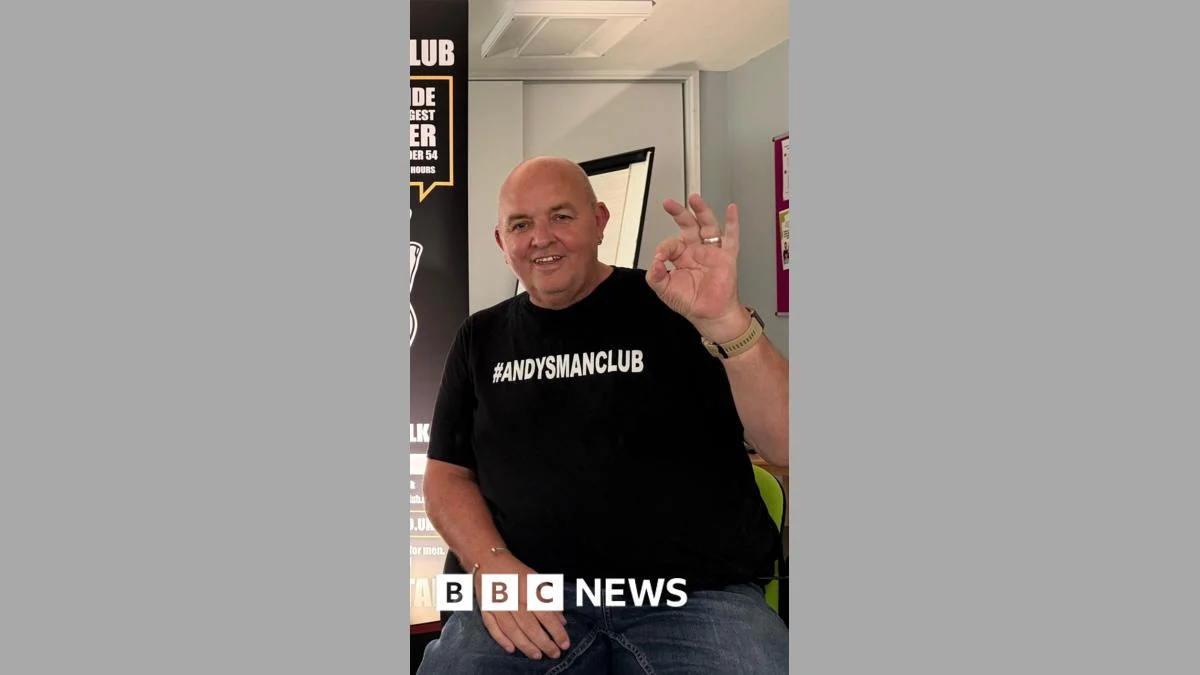
"In a society where men are often conditioned to suppress emotion, Andy’s Man Club provides a crucial lifeline, creating judgment-free spaces where vulnerability is not just accepted but encouraged. Its decade of dedicated service underscores the profound need for community-led initiatives in addressing the silent crisis of men’s mental health and suicide prevention."
A pivotal charity dedicated to men’s mental health and suicide prevention, Andy’s Man Club, is celebrating its tenth anniversary with significant further expansion across Devon. Founded on the principle that "it’s okay to talk," the organisation has become a beacon of hope for countless men grappling with mental health challenges, offering a unique peer-support model that directly confronts the societal barriers often preventing men from seeking help. This strategic growth in Devon reflects a deepening commitment to reach more individuals in need, building on a foundation of impactful community engagement and a decade of fostering open dialogue around emotional well-being.
The journey of Andy’s Man Club began in 2016 in Halifax, West Yorkshire, born from the tragic loss of Andy Roberts, who took his own life at the tender age of 23. This profound personal tragedy ignited a powerful resolve in his family and friends to create a legacy of support, transforming their grief into a proactive force for change. The charity was thus named in his honour, serving as a constant reminder of the urgent need for intervention and prevention in male suicide, a public health crisis that continues to disproportionately affect men across the United Kingdom.
Globally, suicide remains a leading cause of death, and in many countries, including the UK, men are significantly more likely to die by suicide than women. This stark reality is often attributed to a complex interplay of factors, including societal expectations of masculinity, which frequently discourage emotional expression, the internalisation of problems, and a reluctance to seek professional help. Men are often taught to be strong, stoic, and self-reliant, leading to a profound isolation when mental health struggles emerge. The traditional "man up" mentality, while perhaps intended to foster resilience, inadvertently erects formidable barriers to vulnerability and genuine connection, exacerbating feelings of loneliness and despair.
Andy’s Man Club was conceived as a direct counterpoint to these societal pressures. It describes itself not merely as a support group, but as a "safe space where men can talk about their emotions without being judged." This ethos is fundamental to its success. Unlike conventional therapeutic settings, the clubs are facilitated by volunteers, many of whom are men who have themselves benefited from attending sessions. This peer-led model fosters an immediate sense of camaraderie and understanding, as participants share common ground and lived experiences. The absence of professional therapists in the room, while perhaps unconventional, is precisely what many men find disarming and conducive to openness. It removes the perceived power dynamic and clinical formality, allowing for more authentic, uninhibited conversations.
The structure of an Andy’s Man Club session is carefully designed to encourage participation and build trust. Typically, men arrive, are offered a hot drink, and then sit in a circle. The session begins with a series of simple but profound questions, such as "What’s been good for you this week?" and "What’s been challenging?" These prompts provide a gentle entry point for sharing, allowing men to choose their level of disclosure. Crucially, there is no pressure to speak, but an inherent understanding that everyone present is there to listen and offer support. The rules are few but vital: what’s said in the club stays in the club, and everyone is treated with respect. This creates an environment of psychological safety, allowing men to unburden themselves of worries, anxieties, and traumas that they may have felt unable to share elsewhere. The simple act of verbalising these struggles in a non-judgmental space can be profoundly therapeutic, validating experiences and reducing feelings of isolation.
The expansion into Devon exemplifies the charity’s strategic vision to make its vital services accessible to more men, particularly in regions where mental health resources might be more dispersed or harder to access. Andy’s Man Club first established its presence in Devon in 2018 with the opening of a club in Newton Abbot. This initial foray proved highly successful, demonstrating a significant need and appetite for such a service within the county. Since then, the growth has been exponential, a testament to the effectiveness of their model and the dedication of local volunteers. The county now boasts 14 clubs, a remarkable achievement that underscores the growing recognition of the importance of community-based mental health support. Each new club represents an additional hub where men can find solace, build connections, and embark on a path to improved mental well-being.
The latest milestone in this expansion is the launch of a new club in Ivybridge, scheduled for Monday. This opening is particularly significant as it extends the charity’s reach into smaller towns and more rural communities. While major urban centres often have a broader range of support services, men in more isolated areas can face additional challenges, including limited access to public transport, reduced anonymity, and fewer local resources. By establishing a club in Ivybridge, Andy’s Man Club is directly addressing these geographical disparities, ensuring that men in this community and its surrounding areas have convenient access to a vital support network. This localised approach is crucial for embedding mental health support within the fabric of communities, making it a visible and accessible option rather than a distant or intimidating one.
The profound impact of Andy’s Man Club is perhaps best articulated through the testimonies of those who have experienced its benefits firsthand. Roger Bond, from Plymouth, shared his powerful journey, stating that he went to his first session about three years ago when he was "in a very dark place." His decision to attend, often the hardest step for many men, marked a turning point. He unequivocally declared that he has "never looked back" since. Roger’s experience is not unique; it echoes the stories of thousands of men who have found a renewed sense of purpose, community, and emotional resilience through the clubs. The "dark place" he describes could encompass a myriad of struggles: debilitating depression, overwhelming anxiety, the aftermath of trauma, relationship breakdowns, job loss, or profound grief. For many men, reaching this point often signifies the culmination of years of suppressed emotions and unmet needs.
The transformation Roger experienced, and that of countless others, highlights the therapeutic power of shared vulnerability. In a society that often tells men to "suck it up," Andy’s Man Club provides a space where it’s not only acceptable but actively encouraged to articulate pain, fear, and sadness. This collective processing of emotion, facilitated by peers, helps men to realise they are not alone in their struggles. It fosters empathy, reduces shame, and equips them with coping strategies gleaned from the lived experiences of others. The "never looked back" sentiment reflects a fundamental shift in perspective, a newfound ability to navigate life’s challenges with greater self-awareness, emotional tools, and the unwavering support of a brotherhood.
The success of Andy’s Man Club is a powerful demonstration of the efficacy of community-led, peer-support models in addressing complex public health issues. While professional mental health services, such as therapy and medication, remain indispensable, organisations like AMC provide a complementary layer of support that is often more accessible, less formal, and uniquely tailored to the specific needs of men. They bridge gaps in traditional healthcare provisions, offering an immediate, non-referral-based point of contact for men in crisis or those simply seeking a space to talk.
As Andy’s Man Club enters its second decade, its mission remains as critical as ever. The continued expansion, particularly in regions like Devon, signifies a dynamic and responsive approach to the evolving landscape of men’s mental health. By fostering environments where honesty and vulnerability are celebrated rather than judged, the charity is not only saving lives but also contributing to a broader cultural shift, gradually dismantling the damaging stereotypes surrounding male emotional expression. The ripple effect of each new club and every shared story extends far beyond the meeting room, empowering men to live fuller, healthier lives and encouraging a future where "it’s okay to talk" becomes an ingrained societal norm for everyone.
