
"True health is not found in the superficial ‘hacks’ of the longevity circus, but in the rigorous application of biological protocols that transform scientific curiosity into consistent human performance."

Dr. Andrew Huberman has transitioned from the sequestered halls of Stanford University to the forefront of a global wellness movement, leveraging a unique blend of neurobiological expertise and high-intensity physical culture. By deconstructing the complex mechanisms of the human brain into actionable "protocols," Huberman has filled a void in a fractured public health landscape, offering a sense of agency to millions seeking to optimize their sleep, stress, and physical vitality through science-based behavioral change.
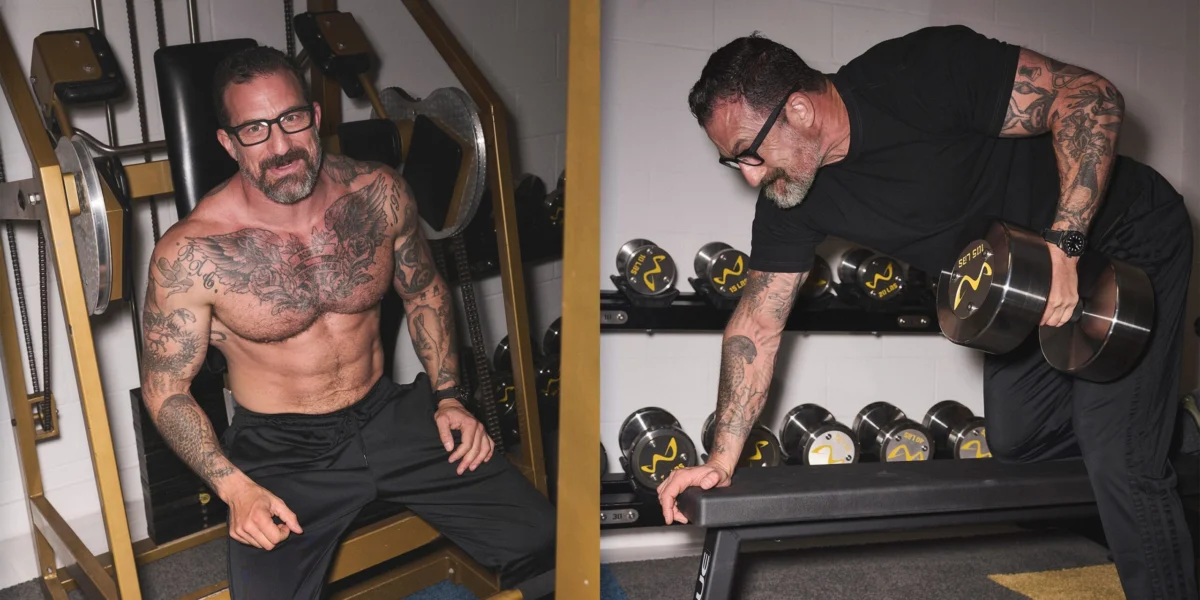
Inside a sun-drenched gym in Venice Beach, California, Andrew Huberman, 51, moves with the deliberate posture of a man who has spent decades studying the mechanics of both the mind and the muscle. Clad in his signature black attire—the uniform of a modern-day secular monk of science—he navigates a "mad-scientist’s playground" filled with specialized equipment. He settles into a vintage Nautilus One pullover machine, one of only two in existence. As he engages the lever, the weights rise with a mechanical whir, and Huberman begins to narrate the physiological nuances of the movement with the same gravelly, authoritative tone that has propelled his podcast, Huberman Lab, to the top of the global charts.

The pullover, he explains, was the brainchild of Arthur Jones, the 1970s fitness pioneer who revolutionized high-intensity training. For Huberman, this machine is more than a piece of iron; it is a bridge between his past and his present. As a 150-pound teenager grappling with the fallout of his parents’ divorce, strength training provided the stability his internal world lacked. Today, after training with bodybuilding legends like Dorian Yates, Huberman’s engagement with these machines represents a "full-circle" integration of his identity: the inquisitive skater, the rigorous academic, and the public-facing avatar of self-optimization.
Since its launch in January 2021, Huberman Lab has evolved into a cultural juggernaut, approaching 500 episodes and amassing nearly eight million YouTube subscribers. The podcast’s success is rooted in a specific formula: the host, nearly always in a black button-down, engages with top-tier experts to explain the "why" behind human behavior. Huberman argues that people do not fail at health because they lack information; they fail because they lack "buy-in." By explaining the underlying mechanisms—how light hits the retina to trigger cortisol, or how dopamine receptors respond to cold exposure—he provides the intellectual scaffolding necessary for long-term behavioral change.

This mission has culminated in his new 688-page volume, Protocols: An Operating Manual for the Human Body. The book is a dense, granular consolidation of years of research into sleep, fitness, stress, and personal growth. Notably, Huberman avoids the word "hack," a term he views as a shortcut that fails to provide long-term solutions. Instead, he focuses on "protocols"—established formulas designed to help individuals overcome biological obstacles and achieve specific performance goals.
However, Huberman’s rise has not been without friction. He occupies a turbulent space in health culture, emerging at a time when the "Make America Healthy Again" (MAHA) movement, skepticism toward the FDA and CDC, and the politicization of vaccine science have created a vacuum of trust. While his supporters view him as a "neuroplasticity overlord" fighting for scientific literacy, critics like Timothy Caulfield, a professor of health science policy, point to "scienceploitation." This term describes the use of technical language and "sciencey" framing to lend legitimacy to wellness products and supplements that may lack robust clinical evidence.

The debate often centers on Huberman’s sponsorships. Brands like AG1, Whoop, and various supplement companies fund the podcast, creating what some see as a conflict of interest. Huberman is transparent about these partnerships, noting that he only works with products he personally uses and believes in. He defends his use of AG1, which he has taken since 2012, as a foundational tool for his own nutrition. Yet, for critics, the line between an objective educator and a commercial influencer remains blurred, particularly when preliminary animal studies are presented alongside established human clinical data.
Huberman himself appears most frustrated by the "longevity circus" that has overtaken the wellness industry. He expresses a visceral distaste for the term "longevity," lumping it in with "looksmaxxing" as a trend that has deviated from true science. While he acknowledges the work of serious researchers in the field, he remains wary of the "crazy" claims that dominate social media. For Huberman, the goal is not a rigid, obsessive pursuit of immortality, but a flexible "optimization" that allows for reality—one that prioritizes "the little things that cost nothing" but yield outsized results for the "big things" like sleep and movement.

This public persona of discipline was tested in March 2024, when a New York Magazine cover story delved into his private life, alleging a history of deceptive and unfaithful behavior in his personal relationships. The article sparked a firestorm of debate, with some labeling him a symbol of toxic masculinity and others arguing that a scientist’s personal life is irrelevant to the validity of his data. Huberman chose not to address the specific allegations publicly, citing a desire not to amplify the narrative. Surprisingly, the controversy did not alienate his audience; instead, the podcast’s listenership grew.
Reflecting on that period, Huberman admits to making poor decisions in past relationships but views the experience through a psychological lens provided by his friend, Harvard-trained sociologist Martha Beck. Using Beck’s "human lighthouse" analogy, Huberman explains that if there is a "stain" on the lens of one’s life, it casts a shadow where things can hurt you. "The last thing you want to do is try and be seen as perfect," he says, acknowledging his own imperfections while striving for internal change.

In recent years, Huberman’s journey of self-discovery has expanded beyond the laboratory and the gym into the realms of clinical psychedelics and traditional faith. He has openly discussed his supervised sessions with MDMA and psilocybin, describing them as revolutionary tools for addressing childhood trauma and reframing his relationship with the past. These experiences, he says, allowed him to "finally exhale" and find a peaceful perspective on a life he once "threw against the rocks."
Perhaps most surprising for a neuroscientist of his stature is his return to faith. Huberman has maintained a nightly prayer practice for nearly three years, a routine he views as a "practice" similar to physical training. This shift was influenced by his father, Bernardo Huberman, a theoretical physicist. During a podcast appearance, the elder Huberman noted that even in physics, the logic of the human mind is often insufficient to understand the complexities of quantum mechanics—one must rely on the "math." Andrew draws a parallel to faith: where the mind cannot bridge the gap in a linear way, one relies on faith.

Huberman’s daily life remains a testament to the protocols he preaches. His routine involves walking as much as possible, a weekly training split that balances heavy lifting with Tabata-style cardio, and a diet rooted in his Argentine heritage—mastering the art of the steak and the "excellent chimichurri." He remains an avid runner, aiming to crack a sub-7-minute mile again despite his 225-pound frame.
As he prepares for a book tour that includes a headlining date at Radio City Music Hall, Andrew Huberman stands as the closest thing the wellness world has to a rock star. Whether he is a "genius" as Joe Rogan claims, or a "BS artist" as his harshest critics suggest, his impact is undeniable. He has provided a generation of "Huberman Husbands" and wellness seekers with a vocabulary for their biology and a framework for their days. In an era of profound institutional distrust, Huberman offers something his audience craves more than a "hack": a sense that through the rigorous application of science and protocol, one can finally gain command over the machine of the self.
