
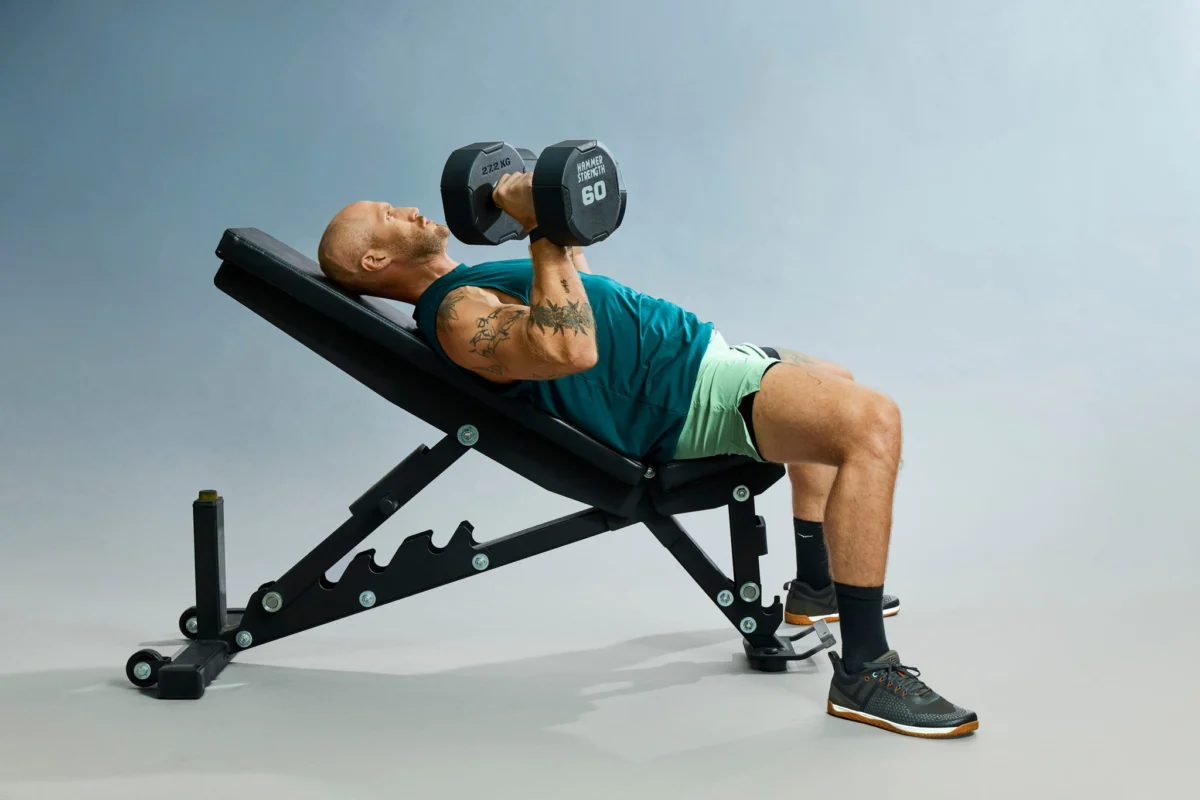
"By shifting the pressing angle to an incline, lifters can specifically isolate the clavicular fibers of the pectoralis major, transforming a standard strength move into a precision tool for both aesthetic development and functional shoulder health."
While the flat barbell bench press remains the foundational movement for raw upper-body power, the dumbbell incline bench press offers a nuanced approach to muscle hypertrophy and joint preservation. By elevating the torso on an adjustable bench, athletes can target the often-neglected upper region of the chest while utilizing the independent movement of dumbbells to correct muscular imbalances and accommodate the natural biomechanics of the shoulder joint.

The Anatomy of the Incline Press
To understand why the incline press is indispensable, one must first understand the anatomy of the chest. The pectoralis major is not a single, uniform slab of muscle; it is comprised of distinct sets of fibers. The sternocostal head makes up the bulk of the mid-to-lower chest, while the clavicular head—commonly referred to as the "upper chest"—originates at the collarbone.
Standard flat pressing movements tend to prioritize the larger sternocostal fibers. While effective for overall mass, a training regimen that relies solely on flat pressing can lead to a "bottom-heavy" chest appearance and leave the upper pectoral region underdeveloped. The incline angle shifts the mechanical load upward. By positioning the torso at an angle, typically between 30 and 45 degrees, the humerus (upper arm) moves through a different plane of motion, forcing the clavicular fibers to take on a greater share of the work.
The Dumbbell Advantage: Freedom and Symmetry
While the incline barbell press is a viable option for moving heavy loads, the dumbbell variation offers several distinct advantages. The most significant benefit is the increased range of motion. In a barbell press, the rigid bar eventually hits the chest, creating a hard "stop" for the movement. Dumbbells, however, allow the hands to descend slightly deeper and wider, providing a greater stretch to the muscle fibers at the bottom of the rep.

Furthermore, dumbbells require significantly more stabilization. Because each arm must move independently, the smaller stabilizer muscles around the shoulder joint—the rotator cuff and serratus anterior—are forced to engage. This not only builds a more resilient shoulder but also ensures that the dominant side of the body does not overcompensate for the weaker side. Over time, this leads to better muscular symmetry and reduces the risk of injury caused by uneven force distribution.
Precision Form: The Foundation of Growth
Fitness experts Ebenezer Samuel, C.S.C.S., and Brett Williams, NASM, emphasize that the effectiveness of the incline press is entirely dependent on strict adherence to form. It is remarkably easy to "cheat" the angle, which inadvertently turns the movement back into a flat press and negates the benefits for the upper chest.
1. Core Engagement and the "Anti-Arch"
One of the most common mistakes in any bench press variation is excessive arching of the lower back. In powerlifting, a slight arch is often used to shorten the distance the bar has to travel and to engage the lower lats. However, in the context of an incline press, arching is counterproductive. When a lifter arches their back significantly on an incline bench, they effectively change their torso’s relationship to the weight, flattening the pressing angle.

To keep the focus on the clavicular fibers, the core must remain "zipped up." By pulling the ribs down and gluing the glutes and upper back to the bench, the lifter maintains the integrity of the incline. This ensures that the upper arm angle remains wide relative to the torso, which is the mechanical requirement for targeting the upper chest.
2. The Path of the Press
A common misconception is that the dumbbells should be pressed "out" or away from the body. In reality, the weights should travel in a vertical line. Samuel notes that lifters should set up with the dumbbells directly above the shoulders. After retracting the shoulder blades—driving them hard into the bench to create a stable platform—the lifter should lower the weights in a controlled manner and drive them straight back up.
A subtle but crucial adjustment involves the elbows. Flaring the elbows out at a 90-degree angle puts immense stress on the shoulder capsule. Instead, the elbows should be tucked slightly forward, moving in the "scapular plane" (roughly 30 to 45 degrees forward of the torso). This position is not only safer for the rotator cuff but also allows for a more powerful, stable press.

3. Managing Depth and Mobility
The quest for a "full range of motion" often leads lifters to lower the weights until they touch their shoulders. While this is an ideal goal for those with excellent shoulder mobility, it is not a requirement for muscle growth. The primary objective is to lower the dumbbells until the elbows dip just below the level of the shoulders.
At this "bottom" position, the lifter must demonstrate total control. If the weight is so heavy that the shoulders begin to roll forward or the tension leaves the chest and moves into the neck, the range of motion has become excessive. The focus should be on the explosive drive back to the top and a deliberate "squeeze" of the pectoral muscles at the peak of the contraction.
Secondary Muscle Involvement
While the pectorals are the primary movers, the incline press is a compound movement that recruits several other muscle groups. The triceps brachii play a major role in the lockout phase of the movement, extending the elbow to finish the rep. Additionally, the anterior deltoids (front of the shoulders) are heavily involved due to the vertical nature of the incline.

Because the anterior deltoids are highly active during incline pressing, it is important to monitor total shoulder volume throughout the week. If an athlete is performing heavy overhead presses and heavy incline presses in the same session, they may be overtaxing the front delts, leading to fatigue-related form breakdown.
Strategic Programming and Variations
For most hypertrophy-focused routines, the dumbbell incline press is best utilized as a secondary movement. A typical chest-day structure might begin with a heavy flat press (barbell or dumbbell) to move maximal weight, followed by the incline press to refine the shape and "fill out" the upper chest.
A recommended starting point is 3 to 4 sets of 8 to 10 repetitions. This rep range provides a balance of mechanical tension and metabolic stress, both of which are key drivers of muscle growth.

For advanced lifters looking to break through plateaus, several variations can be introduced:
- Unilateral Pressing: Performing all reps on one arm before switching to the other. This drastically increases the demand on the core to prevent the body from rotating off the bench.
- Alternating Pressing: Holding both weights at the top and lowering one at a time. This increases the "time under tension" for the chest and shoulders.
- Eccentric Focus: Lowering the dumbbells over a slow, 3-to-5-second count to maximize muscle fiber micro-trauma and subsequent repair.
Conclusion: Building a Resilient Upper Body
The dumbbell incline bench press is more than just a "chest exercise." It is a sophisticated movement that addresses the limitations of the barbell, targets specific muscle architecture, and respects the complex mechanics of the shoulder joint. By prioritizing core stability, maintaining a vertical pressing path, and respecting individual mobility limits, lifters can develop a powerful, well-proportioned upper body. Whether the goal is to improve the "shelf" of the upper chest for aesthetic reasons or to build a more stable overhead press, the incline dumbbell press is a fundamental tool in the modern strength athlete’s arsenal.
