
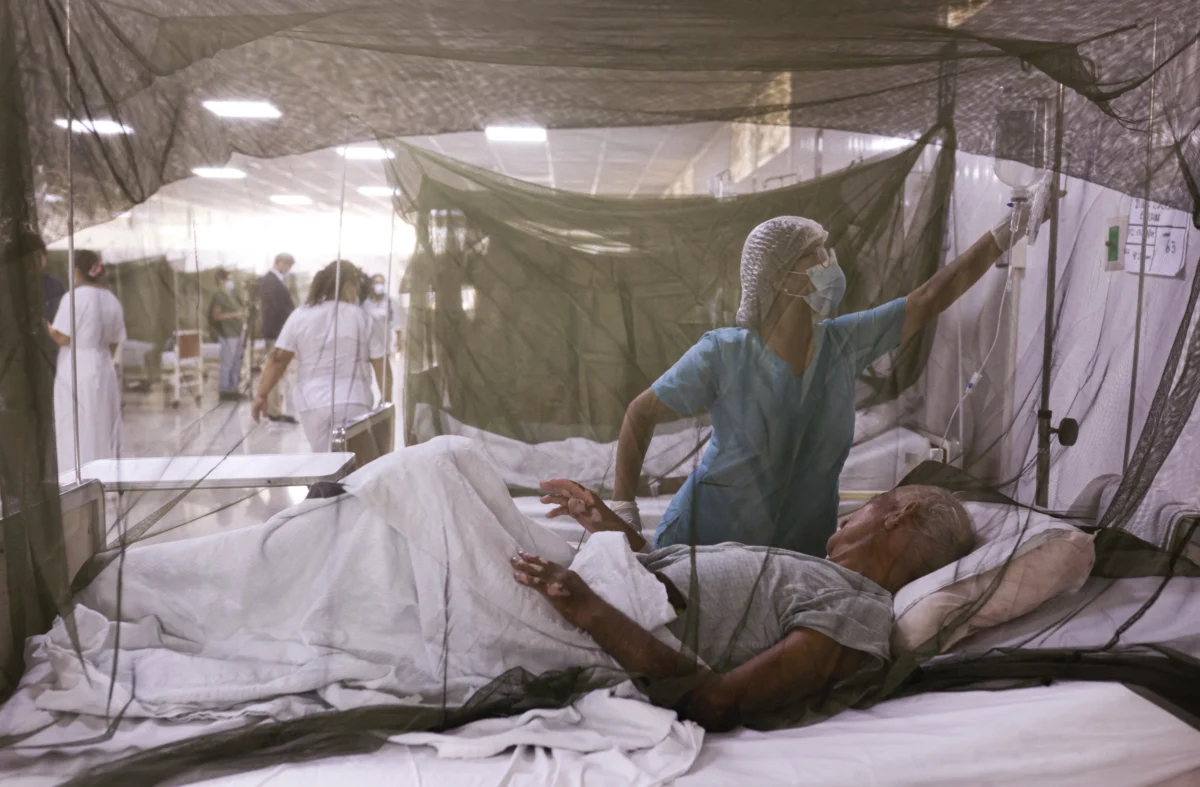
"Florida recorded its largest weekly increase in locally acquired dengue cases this year, with 41 new infections reported between September 6-12, overwhelmingly concentrated in Hillsborough County, underscoring the urgent need for community-level mosquito control and public awareness."
Florida is grappling with a significant surge in locally transmitted dengue fever, experiencing its largest weekly jump of the year with 41 new cases reported between September 6 and 12. This alarming increase, primarily concentrated in Hillsborough County, highlights a growing public health concern and emphasizes the critical role of proactive mosquito control measures and community vigilance. The state’s total for locally acquired dengue in 2026 has now reached 152, with a striking 134 of these cases originating in Hillsborough County alone. This geographical concentration suggests that the Aedes mosquitoes, the vectors for the dengue virus, are actively breeding in residential areas, posing a direct risk to residents.
The latest figures, released by the Florida Department of Health on September 17, paint a concerning picture of escalating local transmission. The weekly addition of 41 cases represents more than a quarter of the entire year’s locally acquired infections, a rapid acceleration that has health officials on high alert. While cases have been reported in several counties including Pinellas, Miami-Dade, Pasco, Orange, and Palm Beach, the overwhelming majority are clustered in the Tampa Bay region. Hillsborough, Pinellas, and Pasco counties collectively account for 143 of the 152 locally acquired cases, demonstrating a concentrated area of risk where the virus is actively circulating between mosquitoes and people.
This intensification of dengue transmission throughout the late summer months has been substantial. State surveillance data reveals a clear upward trend: 21 local cases were recorded in July, escalating to 124 in August, and seven in the early days of September. This rapid climb has outpaced previous years, with the recent week’s additions surpassing the total number of cases seen in some entire previous years. This pattern underscores the dynamic nature of arbovirus outbreaks and the importance of continuous monitoring and rapid response.
The spread of dengue in Florida is largely fueled by travel-associated cases, which act as the initial introduction points for the virus into local mosquito populations. Florida has recorded 186 travel-associated dengue cases in 2026, with a significant portion linked to recent travel to Cuba. When an infected traveler is bitten by a local Aedes mosquito, that mosquito can then transmit the virus to other individuals in the community, initiating local transmission cycles. This phenomenon highlights the interconnectedness of global travel and local public health.
In response to the escalating threat, the Florida Department of Health has issued mosquito-borne illness alerts for Duval, Hillsborough, Miami-Dade, and Pinellas counties. The Florida Department of Health in Hillsborough County, in particular, has implemented repeated public advisories and collaborated closely with Hillsborough County Mosquito Management on enhanced trapping and treatment strategies as case numbers have climbed throughout the summer. These alerts serve as a crucial mechanism for informing the public and urging preventative actions.
Beyond dengue, the same Aedes mosquitoes are also responsible for transmitting other arboviruses. Notably, Florida has reported its first locally acquired chikungunya case of the year in Miami-Dade County. Chikungunya, while distinct from dengue, shares similar transmission pathways and symptoms, further complicating public health efforts in affected regions.
The epicenter of Florida’s current dengue outbreak has been repeatedly identified as Hillsborough County. Florida Surgeon General Joseph Ladapo has publicly acknowledged the county as the focal point of local transmission, noting its high concentration of cases even when the county’s total was around 59. This designation emphasizes the concentrated nature of the current outbreak and the critical need for targeted interventions within this specific geographic area.
Investigations into mosquito breeding grounds have identified common household containers that collect rainwater as significant contributors to the spread. Discarded tires, in particular, have been found to be potent breeding sites. In one instance, mosquito management staff collected over 1,100 female mosquitoes from a single tire business, a number that dramatically reduced to just six after targeted treatment. Fourteen mosquito pools from this location subsequently tested positive for the dengue virus, illustrating the direct link between stagnant water and viral transmission.
Adding to public health concerns, health officials are investigating a potential link between dengue infection and the death of a Hillsborough County resident. While the department has not yet officially attributed the death to dengue and has cited privacy regulations for withholding further details, this investigation underscores the potential severity of the disease, particularly in vulnerable individuals.
A significant challenge in controlling dengue outbreaks is the prevalence of asymptomatic infections. Many individuals infected with the dengue virus experience no symptoms or only mild, flu-like symptoms, making them unaware they are contagious. Carla Fry, administrator and health officer for the Florida Department of Health in Hillsborough County, emphasized this point, stating that "so many people are running around asymptomatic, they can be spreading it" through mosquito bites. This means the true number of infections is likely higher than reported, as milder cases may never reach a healthcare provider.
The vast majority of individuals who contract dengue recover within approximately one week with supportive care, including rest and hydration. There is no specific antiviral medication to treat the infection. However, certain populations are at higher risk for developing severe dengue, a potentially life-threatening complication. These high-risk groups include individuals who have previously been infected with a different serotype of the dengue virus, pregnant women, infants, and older adults with pre-existing health conditions. A secondary infection with a different dengue strain significantly increases the likelihood of severe dengue, which can manifest as internal bleeding, shock, and organ failure, requiring immediate hospitalization. Given that nearly all of Florida’s typed local cases this year have been DENV-2, the primary concern in the Tampa Bay area is for individuals who may have been infected with a different serotype previously, either locally or during travel.
Symptoms of dengue typically appear three to 14 days after an infected mosquito bite and are characterized by a sudden onset of fever, severe headache, pain behind the eyes, and intense muscle and joint pain, leading to its nickname, "breakbone fever." Nausea, vomiting, and a rash are also common. Importantly, respiratory symptoms are usually absent, which helps clinicians differentiate dengue from influenza.
Warning signs that necessitate immediate medical attention include severe abdominal pain, persistent vomiting, bleeding from the gums or nose, the presence of blood in vomit or stool, and sudden weakness following the abatement of fever. Health officials strongly advise individuals experiencing suspected dengue symptoms to avoid aspirin and ibuprofen due to their potential to increase bleeding risk. They should consult a healthcare provider to determine appropriate pain management strategies.
Effective prevention and control of dengue hinge on diligent personal and community-level actions. The most impactful household measure involves the consistent elimination of standing water, which serves as breeding grounds for Aedes mosquitoes. Residents are urged to drain containers that hold water at least twice a week. This includes items such as plant saucers, buckets, children’s toys, birdbaths, pool covers, and clogged gutters. Even a small amount of standing water, such as that found in a bottle cap, can support mosquito breeding. Maintaining intact window and door screens is also crucial for preventing mosquitoes from entering homes. The use of EPA-registered insect repellents is recommended, as these products have been proven safe and effective when used as directed, including for pregnant and breastfeeding women. Wearing long sleeves and pants offers additional protection, as Aedes mosquitoes are primarily day-biting, with peak activity occurring around sunrise and sunset.
The duration of the current transmission season remains uncertain. While mosquito activity generally decreases with cooler temperatures in Florida, the state has not provided a projected end date for the outbreak. Case counts often lag behind actual infection rates, meaning that current reported numbers may not fully reflect the extent of the spread. The next state surveillance update is anticipated within the week, and ongoing monitoring of county-level data will be essential for tracking the evolving situation.
Key Questions Answered
How many dengue cases has Florida confirmed? As of data released September 17, Florida reported 152 locally acquired cases in 2026. Of these, Hillsborough County accounts for 134, Pinellas for seven, Miami-Dade for seven, and Pasco for two. An additional 186 cases were travel-associated.
What does locally acquired mean? Locally acquired dengue means an individual was infected by a mosquito bite within Florida, rather than contracting the virus while traveling abroad. This indicates that the dengue virus is actively circulating between mosquitoes and people within the community.
Which counties are under alert? Duval, Hillsborough, Miami-Dade, and Pinellas counties are currently under a mosquito-borne illness alert issued by the Florida Department of Health.
What are the symptoms of dengue? Symptoms typically begin three to 14 days after a mosquito bite and include sudden fever, severe headache, pain behind the eyes, and intense muscle and joint pain. Nausea, vomiting, and rash are also common. Respiratory symptoms are generally absent.
Who is most at risk of severe illness? Individuals who have had dengue previously with a different serotype, pregnant women, infants, and older adults with underlying chronic health conditions face the highest risk of developing severe dengue.
Is there a treatment or vaccine? Currently, there is no specific antiviral treatment for dengue. Care is primarily supportive. Prevention strategies focus on avoiding mosquito bites and eliminating breeding sites.
What should residents do this week? Residents are advised to empty any containers holding water at least twice a week, repair torn screens, and use EPA-registered insect repellents. Anyone experiencing symptoms such as fever with severe headache or joint pain, especially after potential mosquito exposure, should contact a healthcare provider.
