
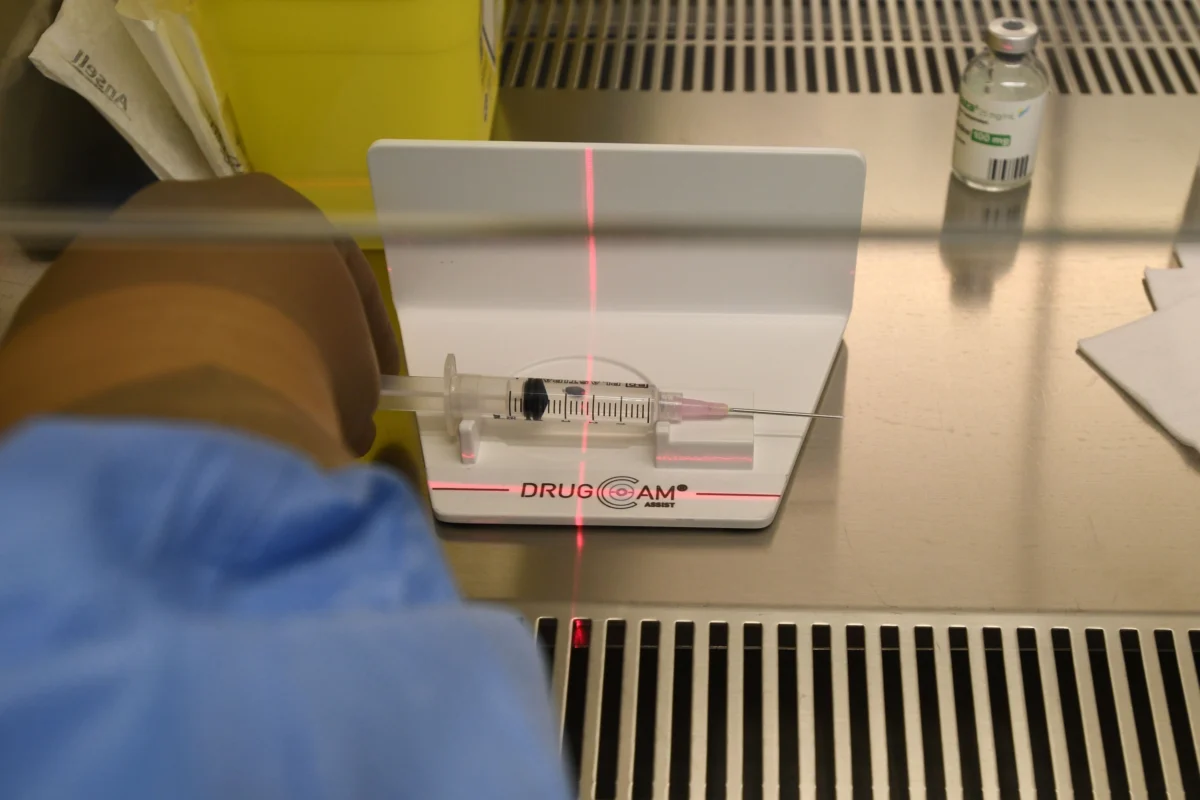
"Despite multiple generic approvals, the market for lanreotide injections has demonstrated resilience, with brand sales growing rather than shrinking, raising questions about whether patients will see immediate cost savings with Amneal’s new offering."
The U.S. Food and Drug Administration (FDA) has greenlit Amneal Pharmaceuticals’ lanreotide injection, a move that immediately introduces another competitor into a lucrative specialty injectable market. This approval, for Amneal’s 120 mg/0.5 mL single-dose prefilled syringe, marks a significant development, particularly given the product’s Competitive Generic Therapy (CGT) designation. The lanreotide market, dominated by Ipsen’s Somatuline Depot, generated nearly a billion dollars in U.S. brand sales over the past year, underscoring the economic significance of this therapeutic class and prompting scrutiny into how this latest market entry will impact pricing and patient access.
Amneal announced the FDA approval and subsequent immediate launch of its lanreotide injection on September 18th. This new entrant directly references Somatuline Depot, a well-established treatment for several serious medical conditions. The CGT designation from the FDA signals the agency’s intent to foster greater competition in markets where generic alternatives have been slow to emerge or have faced significant barriers to entry. Srinivas Kone, senior vice president and chief scientific officer for Amneal’s Affordable Medicines business, highlighted the strategic importance of this launch, stating that the product "adds another material growth driver to our Affordable Medicines business." This suggests a calculated move by Amneal to capitalize on a market segment with proven demand and potential for significant revenue generation.
While lanreotide may not be a household name, its therapeutic importance to patients who rely on it is profound. The drug is prescribed for a trio of critical conditions: acromegaly, a disorder characterized by the overproduction of growth hormone; advanced gastroenteropancreatic neuroendocrine tumors (GEP-NETs), where it helps to improve progression-free survival; and carcinoid syndrome, where it plays a vital role in reducing the need for frequent, disruptive rescue therapies. For these patients, the monthly injection is not merely a medication but a cornerstone of managing their health and maintaining a semblance of normalcy in their daily lives. The complexity of these conditions and the specialized nature of the treatment underscore the importance of consistent and affordable access to lanreotide.
The true intrigue surrounding Amneal’s approval lies not solely in the FDA’s decision itself, but in the market dynamics that have unfolded with previous generic entrants. The historical trajectory of lanreotide generic approvals offers a compelling narrative that patients and healthcare providers should consider when assessing the potential impact of Amneal’s new offering. The landscape is far from a simple equation of "generic approved equals lower price."
Inside the Approval and the Market It Enters
Amneal’s lanreotide injection is not the pioneer in the non-brand lanreotide space. Cipla, an Indian multinational pharmaceutical company, was the first to secure FDA approval for a lanreotide injection. In December 2021, Cipla received approval through the 505(b)(2) new drug application pathway, covering 60 mg, 90 mg, and 120 mg strengths. This initial approval was followed by a subsequent approval in May 2024 via an abbreviated new drug application (ANDA) for the same strengths. The ANDA approval specifically designated Cipla’s product as therapeutically equivalent to Somatuline Depot, a critical designation for generic drug equivalence.
Crucially, the market’s reaction to these earlier generic approvals did not follow the typical pattern of a dramatic collapse in brand sales. U.S. annual sales for Somatuline Depot remained remarkably robust, reaching $983 million for the 12 months ending in July 2026, according to IQVIA data cited in Amneal’s announcement. This figure, reported after at least one significant generic competitor had entered the market, demonstrates the inherent stickiness and value of this specialty injectable. For context, Cipla reported approximately $867 million in sales for the 12 months ending in October 2021, prior to its ANDA approval, and roughly $898 million for the 12 months ending in March 2024, indicating that the brand’s revenue trajectory either remained stable or even grew in the face of generic competition.
This sustained brand performance, despite the introduction of two prior non-brand lanreotide products over a five-year span, highlights a key characteristic of the specialty injectable market. Unlike many orally administered generics that can quickly erode brand market share, long-acting injectables often face different competitive dynamics. Amneal now represents the second company to introduce a non-brand lanreotide to the U.S. market, bringing the total number of available lanreotide products to three, including the original brand. The persistence of high brand sales in this segment suggests that factors beyond simple generic availability are at play, influencing patient access and ultimately, cost.
The FDA’s granting of Competitive Generic Therapy (CGT) designation to Amneal’s lanreotide injection is a deliberate regulatory strategy aimed at increasing competition. Established by Congress in 2017, the CGT pathway is designed for drugs facing "inadequate generic competition," a situation the FDA defines as having no more than one approved product in the active section of the FDA’s Orange Book. The agency’s guidance on CGT outlines a framework for expedited development and review processes for designated products. A significant incentive for the first applicant to receive CGT designation is a 180-day period of market exclusivity, intended to encourage investment in developing generics for challenging drug classes. Long-acting injectables, due to their complex manufacturing processes and smaller patient populations, are precisely the types of products this incentive is designed to address. The difficult manufacturing requirements often act as a barrier to entry, making it challenging for multiple generic manufacturers to enter the market simultaneously.
Reasons Patients May Not See Lower Bills Right Away
Several structural features inherent to the healthcare system and the nature of specialty injectables can delay or diminish the immediate cost savings that patients might expect from a generic drug approval. Unlike a pill purchased at a retail pharmacy, lanreotide is administered via a deep subcutaneous injection, a procedure typically performed in a clinical setting. This means that lanreotide is generally billed under a patient’s medical benefit, rather than their pharmacy benefit.
The distinction between medical and pharmacy benefits is critical. Drugs covered under the medical benefit are often purchased directly by the healthcare practice and then billed to the patient’s insurer. Consequently, the price a patient ultimately pays is not determined by a simple pharmacy counter price but is influenced by a complex interplay of coinsurance percentages, deductibles, and site-of-care contracts negotiated between providers and payers. This indirect purchasing model creates a buffer between the drug’s wholesale acquisition cost and the patient’s out-of-pocket expense.
Furthermore, automatic substitution, a common practice for generic oral medications at the pharmacy counter, does not readily occur in a clinical setting. While state laws empower pharmacists to dispense therapeutically equivalent generics for prescriptions, a physician’s office or clinic makes the decision about which lanreotide product to stock and administer. This decision involves purchasing strategies, supplier contracts, and formulary considerations. Payers can also exert influence by establishing prior authorization criteria that may preferentially list certain products by name, effectively steering clinical practice towards specific drugs.
Supply chain resilience is another vital consideration, particularly for complex injectables. Amneal has indicated that it possesses dedicated, large-scale in-house manufacturing capacity for its lanreotide product. This is a significant advantage, as complex injectables have historically been susceptible to shortages, especially when a single supplier experiences manufacturing disruptions. The presence of a third manufacturer in the market, even if it doesn’t immediately lead to price reductions, enhances the overall resilience of the supply chain, offering greater security of access for patients.
Currently, neither Amneal nor Ipsen has publicly disclosed patient-facing pricing for their respective lanreotide products. Amneal’s launch announcement did not include pricing information. Therefore, the true impact on net costs for patients will only become apparent in the coming months as payer formularies are updated, healthcare practices adjust their purchasing decisions, and the competitive dynamics of the market settle. The absence of this information underscores the opacity that can characterize specialty drug markets.
Steps for Patients on Monthly Injections
It is imperative that patients do not alter or discontinue their prescribed lanreotide injection schedule based on the news of a new product approval. Lanreotide plays a crucial role in managing hormone levels and is an integral component of treatment plans for advanced GEP-NETs, often coordinated with ongoing imaging and oncology follow-up. Any decision regarding substitution or changes to the treatment regimen must be made in consultation with the treating endocrinologist or oncologist. These specialists possess the comprehensive understanding of the patient’s condition, treatment history, and therapeutic goals necessary to make informed decisions.
Patients experiencing financial challenges or high coinsurance costs should proactively engage with their healthcare providers and insurance providers to gather specific information. Key questions to ask the prescribing office include whether the practice stocks more than one lanreotide product and if their insurance plan designates a preferred product. It is also essential to inquire with the insurer about whether the drug is covered under the medical or pharmacy benefit, as this directly impacts the calculation of cost-sharing obligations. Understanding prior authorization requirements before a scheduled injection is crucial to avoid unexpected denials and delays in treatment.
For patients facing a denied prior authorization, the appeal process is a vital recourse. The prescribing office can submit detailed clinical documentation to support the medical necessity of the prescribed lanreotide. Beyond insurance appeals, various support systems are available to alleviate financial burdens. Manufacturer patient assistance programs and independent nonprofit foundations dedicated to supporting patients with neuroendocrine tumors and pituitary disorders may offer financial assistance for eligible individuals, helping to cover coinsurance expenses. Medicare beneficiaries, in particular, should clarify whether the lanreotide falls under Medicare Part B, which is the typical coverage for clinician-administered injectable medications.
Patients are also encouraged to remain vigilant and report any side effects experienced while on lanreotide. The drug can affect gallbladder motility, potentially leading to gallstone formation, and may also cause fluctuations in blood sugar levels and a slowed heart rate. Comprehensive prescribing information, including potential side effects and contraindications, is readily available in the product’s package insert.
The ultimate impact of Amneal’s lanreotide approval on pricing and patient costs remains contingent on several undisclosed decisions. These include how payers strategically position the new product on their formularies, whether healthcare practices opt to switch their purchasing to the new offering, and whether Ipsen, the brand manufacturer, decides to adjust its pricing in response to increased competition. The FDA maintains a public list of designated CGT approvals, serving as a resource for potential future entrants seeking to enter this market.
The most concrete development is the introduction of a third lanreotide option into the U.S. market. For patients and their families, the most prudent course of action is to initiate a direct and specific conversation with their prescribing office regarding product choice, cost-sharing mechanisms, and the administrative processes involved. The central question that remains unanswered is whether this latest generic entry will finally catalyze a price adjustment that previous approvals failed to achieve.
Key Questions Answered
What did the FDA approve?
The FDA approved Amneal’s lanreotide injection, specifically the 120 mg/0.5 mL strength in a single-dose prefilled syringe. This product references Ipsen’s Somatuline Depot and carries the Competitive Generic Therapy (CGT) designation. Amneal has stated that the product was launched immediately upon approval.
What is lanreotide used for?
Lanreotide is a vital medication used to treat three primary conditions: acromegaly, advanced gastroenteropancreatic neuroendocrine tumors (GEP-NETs) to improve progression-free survival, and carcinoid syndrome to reduce the need for rescue therapy.
Is this the first generic?
No, Amneal’s approval is not the first for a non-brand lanreotide. Cipla received FDA approval for its lanreotide injection through the 505(b)(2) pathway in 2021 and subsequently obtained approval for an abbreviated new drug application (ANDA) in 2024.
Will patients pay less?
It is not yet definitively known whether patients will see lower costs. Despite the presence of earlier generic competitors, U.S. brand sales for Somatuline Depot remained high, reaching $983 million for the 12 months ending July 2026. No direct patient-facing price comparison has been published by the manufacturers.
Why do costs move slowly for injectables?
Specialty injectables like lanreotide are typically administered in a clinical setting and billed under a patient’s medical benefit, not their pharmacy benefit. This means that standard pharmacy counter substitution rules do not apply, and patient costs are influenced by complex factors like coinsurance, deductibles, and provider contracts, rather than a direct retail price.
What is Competitive Generic Therapy designation?
Competitive Generic Therapy (CGT) is a pathway established by the FDA in 2017 to encourage the development and approval of generic drugs for products with inadequate generic competition. It offers expedited review and, for qualifying first applicants, a 180-day period of market exclusivity.
What should patients do now?
Patients should continue their prescribed lanreotide injection schedule without interruption. They are advised to engage with their prescribing office to understand which lanreotide product is preferred by their practice and insurance plan, determine if the drug falls under their medical or pharmacy benefit, and clarify all prior authorization requirements before their next scheduled injection.
