
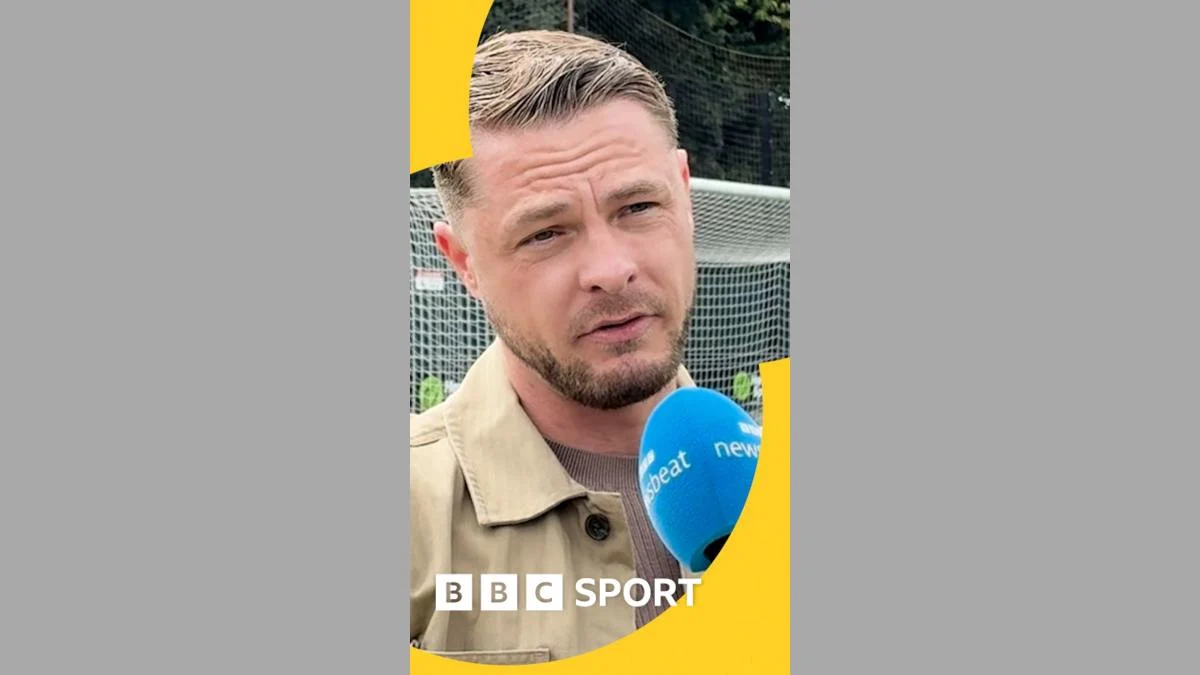
"From the pinnacle of officiating an FA Cup final to grappling with a life-altering diagnosis, Dan Robathan’s story underscores the profound vulnerability of even elite professionals to unforeseen health crises, highlighting the critical link between physical health, career identity, and mental well-being."
This article explores the poignant journey of former assistant referee Dan Robathan, whose ascent to the zenith of English football officiating was abruptly curtailed by a medical diagnosis. Just one year after fulfilling a lifelong ambition by running the line at the FA Cup final between Crystal Palace and Manchester City in 2025, Robathan found his career irrevocably altered after doctors identified benign tumours in his spine. His subsequent candid discussion with BBC Newsbeat sheds light on the devastating impact of such a diagnosis, not only on a highly demanding physical profession but also on an individual’s mental health and sense of self, necessitating a sensitive approach to the difficult themes discussed within his experience.
The Pinnacle of a Dream
For any aspiring football official, reaching the FA Cup final represents the absolute pinnacle of their career. It is a testament to years, often decades, of unwavering dedication, meticulous training, and flawless performance across countless matches at various levels. Dan Robathan’s appointment to the 2025 FA Cup final, featuring a highly anticipated clash between Crystal Palace and Manchester City, placed him on one of the sport’s grandest stages. The roar of the crowd, the intensity of the play, and the global spotlight that illuminates Wembley Stadium on such an occasion are experiences few are privileged to know. For an assistant referee, this involves an extraordinary blend of physical endurance, acute observational skills, and unwavering concentration, making split-second decisions that can influence the outcome of the game. Robathan had, by all accounts, achieved the dream. His presence on that hallowed turf signified not just personal triumph but also the recognition of his exceptional ability and commitment to the exacting standards of professional football officiating.
The Unforeseen Diagnosis: Benign but Debilitating
The abrupt turn in Robathan’s fortunes came just a year later, when doctors discovered benign tumours in his spine. While the term "benign" often carries connotations of being harmless, in the context of spinal health, it can be profoundly misleading. Benign spinal tumours, though non-cancerous, can exert significant pressure on the spinal cord and nerves, leading to a range of debilitating symptoms. These can include chronic pain, numbness, tingling sensations, muscle weakness, and, critically for an athlete or official, impaired balance and coordination. The spine is the central pillar of the human body, housing the delicate nervous system that orchestrates all movement and sensation. Any compromise to its integrity can have far-reaching and severe consequences for physical function.
For a professional assistant referee, whose role demands constant movement, rapid acceleration and deceleration, sharp changes in direction, and the ability to maintain a precise line of sight over 90 minutes or more, such symptoms are catastrophic. The physical demands are immense: covering significant distances along the touchline, maintaining pace with rapid counter-attacks, and positioning oneself perfectly for offside decisions require a body in peak condition, free from pain or neurological impairment. A benign tumour, even if not immediately life-threatening, can fundamentally undermine the physical precision and endurance required for such a role, making continued participation at an elite level impossible.
A Career Derailed: The Loss of Identity
The revelation of his condition meant Robathan had to leave his career. This was not merely a job loss; it was the cessation of a deeply ingrained identity. For many professional athletes and officials, their career is more than employment; it is a calling, a passion that has shaped their life’s trajectory from an early age. The relentless pursuit of excellence, the sacrifices made, and the camaraderie developed within the sporting world create a profound sense of purpose and belonging. To have this abruptly stripped away due to an unforeseen health crisis can be devastating, leading to a complex array of emotional and psychological challenges.
The financial implications of losing a professional career are often immediate and severe, but the non-financial losses can be even more profound. The routine, the training, the travel, the sense of contributing to the sport – all vanish. This void can leave individuals grappling with a loss of purpose, structure, and social connection that their career once provided. For Robathan, having reached the very pinnacle of his profession, the fall from grace would have been particularly steep, amplifying the sense of loss and disillusionment.
The Unspoken Toll: Mental Health and Chronic Illness
The warning accompanying Robathan’s story about discussions of suicide underscores a critical and often overlooked aspect of chronic illness and career-ending injuries in sports: the severe impact on mental health. It is not uncommon for individuals facing such profound life changes to experience significant psychological distress, including anxiety, depression, and in some cases, suicidal ideation. The transition from a highly active, goal-oriented professional life to one defined by chronic pain, limited mobility, and an uncertain future can trigger a deep sense of despair.
Athletes and officials are often expected to project an image of strength and resilience. This societal expectation, coupled with the inherent competitive nature of sports, can create an environment where mental health struggles are suppressed or stigmatized. Admitting vulnerability, particularly when dealing with the loss of a career, can feel like a further failure. Robathan’s willingness to speak to BBC Newsbeat about his experiences, including the difficult discussions surrounding suicide, is a testament to his courage and serves as a vital step in destigmatizing mental health issues within the sporting community and beyond. It highlights the urgent need for robust mental health support systems to accompany physical rehabilitation and career transition services for those whose lives are irrevocably altered by illness or injury.
Beyond the Whistle: The Broader Demands of Officiating
Modern football officiating is a physically and mentally rigorous profession. Assistant referees, often referred to as linesmen, are integral to the game’s flow and fairness. Their duties extend beyond merely spotting offsides; they are crucial in signaling fouls, substitutions, and ensuring the ball is in play. The introduction of technologies like VAR has added another layer of scrutiny and pressure, demanding even greater precision and an ability to work seamlessly within a broader officiating team.
The physical conditioning required is comparable to that of professional players, involving extensive training regimens focused on speed, agility, and endurance. Mentally, officials must possess immense composure, resilience, and decision-making under intense pressure, often in the face of public criticism. A condition like benign spinal tumours, which can affect not only mobility and pain but also concentration due to chronic discomfort, makes it impossible to meet these exacting standards consistently. The integrity of the game depends on officials being at their absolute best, and any compromise in their physical or mental state can have widespread implications.
Support Systems and Advocacy
Dan Robathan’s story serves as a powerful reminder of the human element behind professional sports. While the focus often remains on the players, the countless individuals who contribute to the game’s operation, including officials, are equally susceptible to life’s unpredictable challenges. His openness in discussing his struggles can pave the way for increased awareness and improved support mechanisms.
Organisations like the Professional Footballers’ Association (PFA) for players, and similar bodies for officials, often provide welfare services, including mental health support, career advice post-retirement, and financial planning. However, cases like Robathan’s highlight the need for these systems to be comprehensive and readily accessible, particularly when career cessation is sudden and due to unforeseen illness rather than planned retirement. Furthermore, advocacy for research into conditions affecting athletes and officials, and better integration of long-term health monitoring, could prove invaluable.
Resilience and Rebuilding: A Path Forward
While Robathan’s immediate future involves navigating the complexities of his health condition and the profound loss of his career, his decision to share his story suggests a path towards resilience. Finding new purpose, whether through advocacy, mentorship, or exploring alternative careers that accommodate his health needs, will be crucial. The human spirit’s capacity to adapt and rebuild in the face of adversity is remarkable, though the journey is often arduous and requires immense courage and support.
Dan Robathan’s experience transcends the boundaries of football; it is a universal narrative about the fragility of life, the pursuit of dreams, and the often-hidden battles individuals face when health intervenes. His willingness to speak out offers solace to others grappling with similar challenges and serves as a poignant call to action for greater empathy, understanding, and robust support systems for all those whose lives are unexpectedly derailed by illness. The unseen scrutiny on the touchline pales in comparison to the internal struggle of losing a dream, a struggle that demands our collective attention and compassion.
