
"A fundamental shift is underway in fitness culture, as Gen Z increasingly prioritizes strength training over traditional cardio. This movement reflects a desire for holistic well-being, tangible results, and community, reshaping how younger generations approach their physical and mental health."
This evolving fitness landscape signifies more than just a passing trend; it points to a profound re-evaluation of health and exercise priorities among younger demographics. Moving beyond the historical emphasis on endurance and cardiovascular fitness, Gen Z is embracing the multifaceted benefits of strength training, driven by a blend of scientific understanding, social media influence, and a desire for robust, functional bodies. This article delves into the motivations behind this significant shift, examining its impact on gym culture, exercise habits, and personal well-being across the UK.

For decades, the image of fitness was largely synonymous with pounding the pavement or logging miles on a treadmill. However, a new generation is rewriting the rulebook, opting for barbells and deadlifts over steady-state cardio. This significant cultural shift, particularly noticeable among Gen Z (those typically born between 1997 and 2012), reflects a changing understanding of health, aesthetics, and community in the digital age.
Antonia Duffin, a 34-year-old personal trainer from Manchester, embodies this transformation. Her own fitness journey, which began with a desire to lose weight and tone up, led her to establish a women’s gym. Her clients now seek a broader range of outcomes, from building physical strength and preparing for pregnancy to managing chronic conditions like endometriosis. Duffin observes a clear preference for strength-based workouts and hybrid training modalities, such as Hyrox, which combine elements of strength and endurance in a competitive, social format. "I think people are now realising the importance of it," she explains, highlighting long-term benefits like preventing osteoporosis, a condition traditionally associated with older age but whose prevention begins with early lifestyle choices.
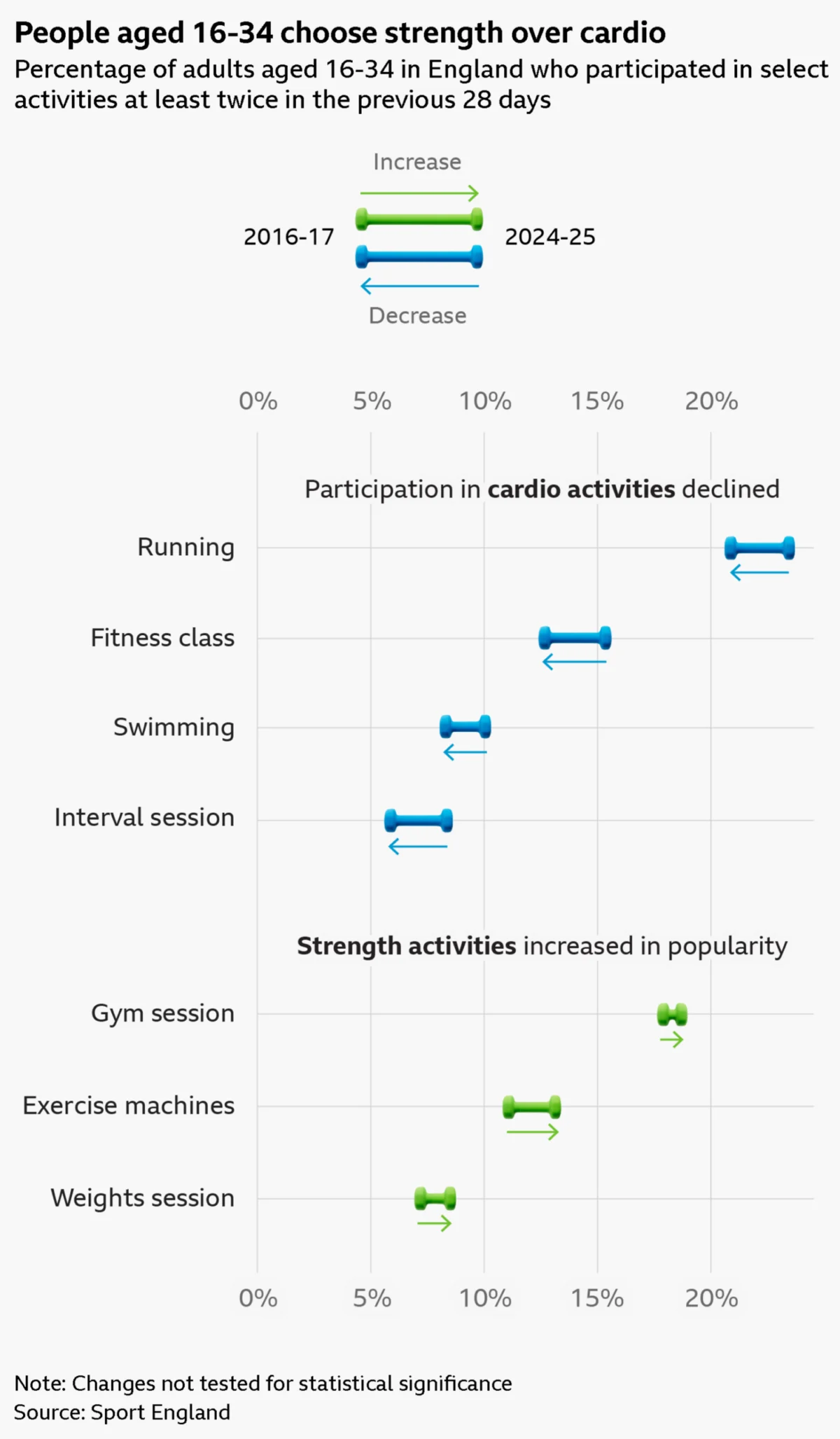
Data from Sport England corroborates Duffin’s observations, revealing a noticeable decline in participation in traditional cardio activities among adults aged 16-34 in England between 2016-17 and 2024-25. Running saw a decrease from 23.4% to 20.9%, fitness classes from 15.3% to 12.7%, swimming from 10.0% to 8.3%, and interval sessions from 8.3% to 5.9%. Conversely, strength-focused activities experienced a rise in popularity during the same period. Gym sessions increased from 17.9% to 18.6%, the use of exercise machines climbed from 11.1% to 13.1%, and dedicated weights sessions saw an uptick from 7.2% to 8.5%. While these changes have not been tested for statistical significance, the trend is indicative of a broader recalibration of fitness priorities.

The Rise of the Gym and Social Media Influence
The gym, once perceived by some as an intimidating space, has become a central hub for this fitness revolution. Dr. Andrew Scott, an exercise expert from the University of Portsmouth, attributes this "gym boom" to the comprehensive benefits offered by resistance training. "Gyms offer broader types of exercise, like resistance training, which can improve body composition and shape more quickly than aerobic exercise training," he notes. This focus on body composition—reducing body fat and increasing muscle mass—resonates strongly with a generation seeking visible and tangible results.
Social media’s pervasive influence cannot be overstated. Platforms like Instagram and TikTok have become fertile ground for fitness influencers who demystify strength training, showcase diverse body types, and promote "strong not skinny" narratives. Dr. Scott points out that "lots of people are largely learning from influencers, suggesting ‘I can do it, this is what I did and so can you’." This democratisation of fitness knowledge, coupled with visual proof of progress, makes strength training accessible and aspirational. Will Seward, a 19-year-old student, exemplifies this, having transitioned from initial cardio to more explosive weights training to build athleticism, improve his mood, and feel generally healthier.

Beyond aesthetics, the scientific community increasingly champions the holistic benefits of strength training. Recent research underscores that two hours of strength training per week can rival the advantages of regular aerobic exercise, significantly lowering the risk of heart disease and stroke, while also protecting cognitive function and boosting self-esteem. For Gen Z, who are often acutely aware of long-term health and mental well-being, these benefits add a compelling layer of justification to their preferred workout style.
Diverse Activity Levels and the Power of Community
While the shift towards strength training is pronounced, overall exercise habits across different age groups in the UK present a nuanced picture. Data from Our Future Health, derived from nearly 2 million participants, indicates that younger adults (18-29) tend to engage in shorter bursts of vigorous activity, averaging 116 minutes per week, often through fitness classes, aerobics, or team sports like football. In contrast, older adults (50-79) consistently log more minutes of moderate exercise, exceeding the UK Chief Medical Officers’ recommendation of at least 150 minutes of moderate or 75 minutes of vigorous activity per week. This suggests that while all age groups strive for activity, the type and intensity often vary significantly.

Despite the surge in gym-based strength training, running retains its foundational popularity. It remains the most common form of exercise for young men and women and ranks among the top two activities for adults overall. The endurance sport has also found new life in community-driven initiatives like Parkrun, which offers free, weekly 5k events. Parkrun data reveals a dynamic participation landscape: while the share of 11-19 and 30-49 year olds participating has seen some decline between 2016 and 2026, participation among children (0-10), 20-somethings, and notably, older age groups (50-59, 60-69, and 70+) has significantly grown. The 60-69 age group, for instance, nearly doubled its share of completions from 5.2% to 11.3%, and the 70+ group more than tripled its share from 0.9% to 3.5%.
This trend highlights the enduring appeal of communal exercise. Professor Esther van Sluijs, a behavioural epidemiologist from Loughborough University, emphasizes the crucial role of social connection. In an era where working from home is increasingly common, particularly for younger professionals, "easy access to community clubs close to home is very important," she states. These groups provide not just physical activity but also vital social interaction and a sense of belonging, addressing a growing need for connection in an increasingly digital and often isolating world. Dr. Hussain Al-Zubaidi, a GP, personal trainer, and triathlete, describes this as an "enormous ecosystem" encompassing gyms, running clubs, fitness apps, social media, and wearable tech, all contributing to making fitness a more integrated and social part of life.
Fitness as an Essential Investment

Perhaps one of the most striking indicators of this shift is Gen Z’s financial commitment to fitness. In an era of tight budgeting, data from UK Active shows that over a quarter of 16-34 year olds now prioritize spending on gym membership and keeping fit, surpassing expenses like holidays and eating out. This marks a significant increase from a fifth in 2024, demonstrating a fundamental re-ordering of spending priorities. A 2026 survey by The Gym Group further revealed that a third of Gen Z allocate £26-50 per month to health and fitness, with a quarter spending over £50.
Cordelia Sheridan, a 27-year-old events manager, exemplifies this dedication. She treats her £45 gym membership "like an essential utility bill," exercising four to five times a week. For her, the cost is justified when compared to other discretionary spending: "If you go to the pub and you’re with a group of mates, you can buy a few pints and easily spend that on a night out." Her routine, which includes 10 minutes on a stair climber followed by 35 minutes of weights to strengthen her thighs, hips, and lower back, is a deliberate departure from her previous cardio-centric approach. The ability to track progress, lift heavier, and feel tangibly stronger provides a sense of achievement that cardio alone did not offer. "I want to go into my 30s being strong," she affirms, highlighting a proactive approach to long-term health.
The social aspect of gym culture, often overlooked, is another draw for Cordelia. Despite the individual nature of lifting weights, she finds it "weirdly more sociable." This speaks to the shared environment, mutual encouragement, and perhaps the indirect connections forged within a fitness community.

Ultimately, the burgeoning popularity of strength training among Gen Z is a multifaceted phenomenon. It is fueled by a desire for functional strength, body recomposition, and long-term health benefits, amplified by the pervasive influence of social media. Coupled with a strong emphasis on community and a willingness to prioritize fitness financially, this generation is not just changing their workout routines; they are redefining the very essence of what it means to be fit and healthy in the 21st century. As Dr. Al-Zubaidi aptly puts it, activities like the gym, running clubs, and padel are thriving "not because they prevent disease but because they are fun and sociable." For Gen Z, fitness is an enjoyable, empowering, and essential investment in a stronger, healthier future.
