
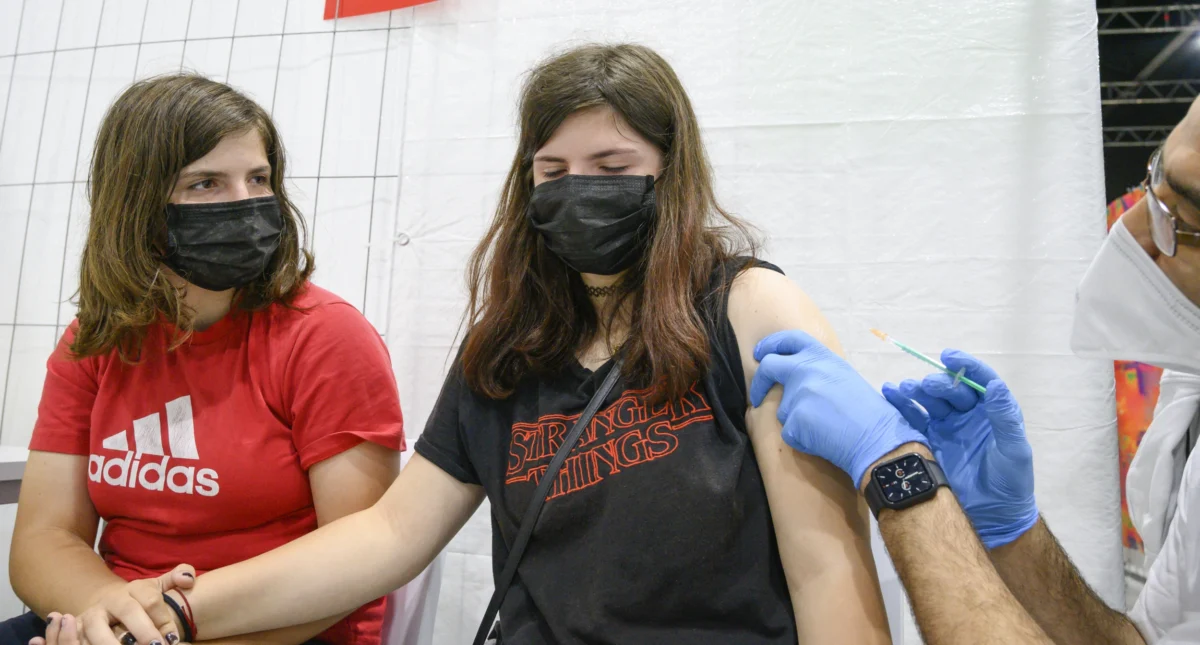
"A single family’s measles cluster in Jasper County underscores the rapid transmission of this highly contagious disease within unvaccinated households and highlights the ongoing risk posed by travel in a post-pandemic world."
The confirmation of five measles cases within a single family in Jasper County, Georgia, has brought the state’s total for 2026 to 21, a significant increase compared to the 10 cases reported throughout all of 2025. This cluster, involving siblings who were either unvaccinated or under-vaccinated, is a stark reminder of measles’ formidable contagiousness and the critical role of vaccination in preventing widespread outbreaks. Officials have indicated that at least one of the infected siblings had a history of out-of-state travel, underscoring how a single trip can serve as the catalyst for community transmission, even within a localized family unit. This development comes on the heels of a separate outbreak in Cobb County, demonstrating that measles continues to pose a persistent threat across different regions of Georgia.
Jasper County, situated approximately one hour southeast of Atlanta, has become the epicenter of this latest measles concern. The Georgia Department of Public Health (DPH) is actively engaged in contact tracing to identify individuals who may have been exposed to the virus through the infected siblings. This meticulous process includes individuals who may have come into contact with the family during their recent travel, though the specific destinations remain undisclosed by officials. The DPH has emphasized that symptoms of measles can take up to three weeks to manifest after exposure, meaning that the full scope of this particular cluster may not be immediately apparent. The investigation is ongoing, and the department has not yet reported whether any individuals outside the immediate family have fallen ill.
Measles is renowned as one of the most infectious diseases known to humankind. A single infected individual can transmit the virus to an estimated 15 susceptible people. The airborne nature of the measles virus is particularly concerning, as it can remain viable in the air for up to two hours after an infected person has left a space. This characteristic makes enclosed environments, such as homes and public transportation, high-risk settings for transmission. Within a household, where children often share close quarters, meals, and personal items, the virus can spread with alarming speed, especially among those who have not been fully vaccinated. This Jasper County cluster serves as a microcosm of how easily measles can propagate within a community when vaccination rates are insufficient.
The surge in measles cases in Georgia mirrors a broader national trend. The Centers for Disease Control and Prevention (CDC) reported a significant uptick in confirmed measles cases across the United States. As of September 24, 2026, the nation had recorded 3,659 confirmed cases, a substantial increase from the 2,289 cases reported in all of 2025. A striking observation from the CDC data is that approximately 95% of the current year’s cases are linked to documented outbreaks, reinforcing the idea that measles is not circulating sporadically but is actively spreading through defined chains of transmission. Travel continues to be a primary vector for the introduction and spread of measles, with families traveling for holidays, sporting events, or to visit relatives potentially encountering the virus in other states and inadvertently bringing it back to their home communities.
The efficacy of the Measles, Mumps, and Rubella (MMR) vaccine in preventing these infections cannot be overstated. The Georgia Department of Public Health highlights that a single dose of the MMR vaccine provides immunity to over 95% of individuals. A second dose further enhances this protection, typically boosting immunity to approximately 98%. The standard vaccination schedule recommends the first dose for children between 12 and 15 months of age, with a second dose administered between four and six years of age. However, for individuals who may have missed these scheduled doses, catch-up vaccinations are readily available. Furthermore, adults who are uncertain about their vaccination status or prior exposure can consult with their healthcare providers to assess their immunity and receive appropriate vaccination if needed. For infants as young as six to eleven months who will be traveling internationally, a single dose of the MMR vaccine is recommended as a precautionary measure.
Dr. Kathleen Toomey, Georgia’s Public Health Commissioner, issued a strong endorsement of the MMR vaccine in a letter to physicians prior to the Jasper County cases. She emphasized that the MMR vaccine is both safe and highly effective in combating measles, mumps, and rubella. The groups at the highest risk of severe complications from measles include infants too young to be vaccinated, children and adults who have not completed their vaccination series, pregnant women who lack immunity, and individuals with compromised immune systems. These vulnerable populations underscore the importance of community-wide vaccination efforts to achieve herd immunity and protect those who cannot be vaccinated.
Recognizing the symptoms of measles is crucial for prompt action and preventing further spread. Symptoms typically emerge seven to 14 days after exposure, though the incubation period can extend up to 21 days. Initial signs include a high fever, persistent cough, runny nose, and characteristic red, watery eyes. This is often followed by a distinctive rash that begins on the face and scalp and gradually spreads downwards across the body.
In the event of suspected measles infection following potential exposure, it is imperative for individuals to take a specific course of action. The state strongly advises against going directly to a doctor’s office, hospital, or public health clinic without first calling to inform them of the symptoms. This proactive measure allows healthcare facilities to implement appropriate infection control protocols, such as isolating the patient and protecting other individuals in waiting areas from potential exposure. For those experiencing severe symptoms such as difficulty breathing, seizures, extreme drowsiness, or signs of dehydration in children, immediate emergency medical care is warranted. Families with concerns or questions are encouraged to reach out to their healthcare provider or local health department for guidance.
The Georgia Department of Public Health continues its diligent efforts to trace contacts and monitor the spread of measles. Given the incubation period of the virus, it is anticipated that additional cases linked to this Jasper County family may emerge over the next three weeks. The state regularly updates its measles case count on its official website, providing the public with the most current information as new cases are confirmed.
Key Questions Answered
What happened in Jasper County?
Five siblings from a single family in Jasper County have been confirmed to have measles. All of them were either unvaccinated or under-vaccinated.
How did the infection start?
Officials have not specified the exact source of the infection. However, it has been confirmed that at least one sibling had a history of out-of-state travel, although the destination has not been disclosed.
How many measles cases does Georgia have this year?
As of September 30, 2026, Georgia has recorded a total of 21 confirmed measles cases. This is more than double the 10 cases reported throughout the entire year of 2025.
Is this connected to the Cobb County outbreak?
No, the Georgia Department of Public Health has stated that these new cases in Jasper County are not related to the earlier outbreak in Cobb County.
How well does the MMR vaccine work?
The MMR vaccine is highly effective. A single dose provides immunity to over 95% of individuals, while a second dose boosts protection to approximately 98%.
What should someone with symptoms do?
If you suspect you have measles symptoms after a potential exposure, you should call your doctor or clinic before arriving. This allows healthcare providers to take necessary precautions to prevent exposing other patients.
