
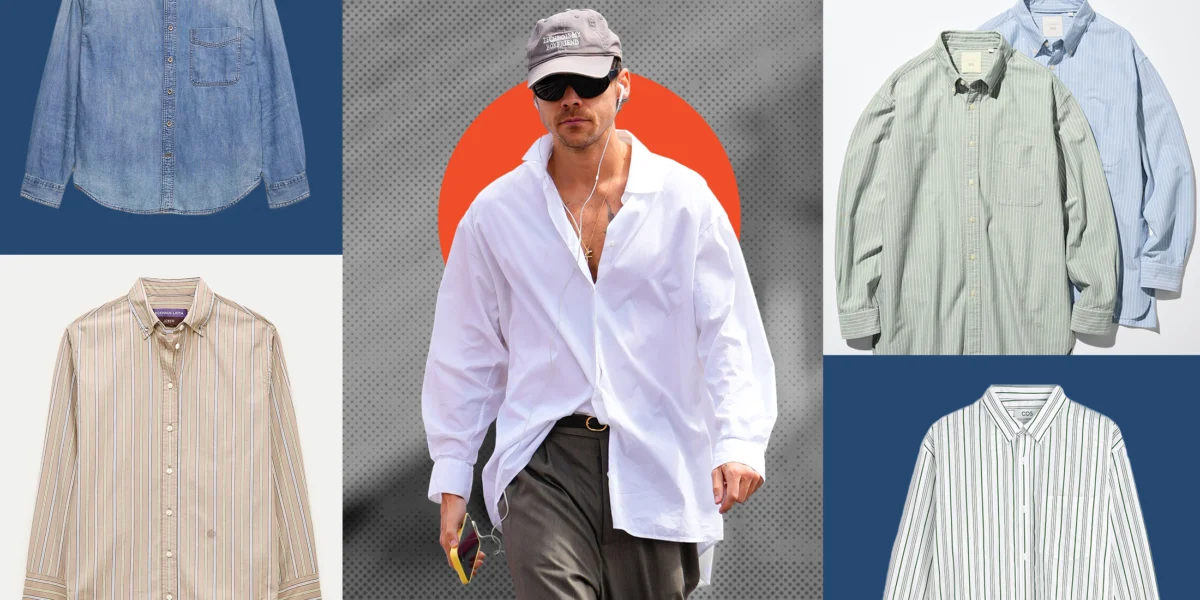
"The transition from restrictive tailoring to the oversized button-down represents a shift in modern masculinity, where comfort and intentional volume replace the traditional constraints of the slim-fit era."

The oversized button-down has transcended its origins as a casual weekend staple to become a cornerstone of contemporary menswear, reflecting a broader cultural move toward relaxed, fluid silhouettes. This evolution is not merely about wearing larger clothing, but rather about understanding the architecture of a garment—utilizing dropped shoulders, generous proportions, and specific fabric weights to create a look that is simultaneously effortless and highly curated.
For the better part of the last two decades, menswear was defined by the "slim-fit" revolution. From the runways of Milan to the offices of Wall Street, the prevailing aesthetic demanded sharp lines, narrow shoulders, and silhouettes that closely hugged the frame. However, fashion is a pendulum, and the current swing toward oversized proportions is a direct response to that era of restriction. Today, the oversized shirt serves as a versatile tool for the modern man, offering a way to play with volume and texture while maintaining a sense of sartorial authority.

The rise of this trend is deeply rooted in the "New Prep" and "Coastal Grandmacore" aesthetics, which prioritize high-quality fabrics and relaxed cuts. Influential figures, such as musician Harry Styles, have popularized the "billowy" look, demonstrating that a shirt with excessive fabric can still look intentional and high-end if styled with the correct proportions. The key to mastering this look lies in the distinction between a shirt that is simply too large and one that is "intentionally oversized."
The Strategic "Size-Up": A Sartorial Cheat Code
One of the most effective ways to enter the world of relaxed silhouettes is through the strategic sizing of standard-fit garments. As demonstrated by the Cotton Poplin Alumni Standard Shirt from Reigning Champ, a "standard" fit provides a reliable baseline of quality and construction. By intentionally choosing a size larger than one’s typical measurements, a wearer can create extra room through the shoulders, sleeves, and body without the garment losing its structural integrity.

This "hack" works because high-quality standard shirts often maintain a traditional point collar and classic cuff, ensuring that even as the body of the shirt becomes more voluminous, the "anchor points" of the outfit remain crisp. It is a reminder that the "oversized" label is often a design choice, but the "oversized look" can be achieved through clever shopping and an understanding of one’s own frame.
The Architecture of the Boxy Cut
While sizing up is a viable strategy, many contemporary brands are now designing shirts with "boxy" or "oversized" silhouettes from the ground up. This approach allows for specific architectural details that a simple size-up cannot replicate. For instance, the Oversized Striped Cotton-Poplin Shirt from COS and the Striped Oversized Shirt from Uniqlo utilize dropped shoulders—a design feature where the shoulder seam sits an inch or two down the arm rather than at the natural shoulder bone.

This dropped seam is crucial because it creates a soft, rounded silhouette that eliminates the stiffness often associated with formal button-downs. When combined with a boxy cut—meaning the shirt falls straight from the chest to the hem without tapering at the waist—the result is a garment that breathes and moves with the wearer. The inclusion of vertical stripes, a recurring theme in this category, serves a dual purpose: it adds visual interest and provides a linear contrast to the wide proportions, preventing the wearer from looking overwhelmed by the fabric.
Materiality: Structure vs. Fluidity
The success of an oversized shirt is heavily dependent on its fabric. Different materials dictate how the volume "behaves" on the body.

Cotton Poplin: This is the gold standard for the oversized button-down. Poplin is a plain-weave fabric that is lightweight yet durable, with a crispness that holds its shape. This crispness is what makes the oversized trend feel "effortless" rather than "sloppy." It allows for a billowy effect while maintaining sharp lines at the collar and placket.
Denim: For those seeking a more rugged interpretation of the trend, heavier fabrics like 100% cotton denim are essential. As seen in the Relaxed-Fit Denim Shirt from Banana Republic, the weight of the denim provides a structural volume that lighter fabrics lack. A denim oversized shirt functions almost as a "shacket" (a shirt-jacket hybrid), making it an ideal layering piece over a standard T-shirt. The density of the fabric ensures that the dropped shoulders and roomy sleeves feel substantial and purposeful.

Lyocell: On the opposite end of the spectrum is Lyocell, a semi-synthetic fiber known for its incredible drape and silky texture. Brands like AllSaints utilize Lyocell in their Carlyle Oversized Shirt to lean into a more "undone" aesthetic. Unlike the crispness of poplin, Lyocell flows and ripples. This material is perfect for the "rumpled" look—the kind of shirt that looks better after a day of wear than it does when perfectly pressed. It represents the "soft masculinity" that has become a hallmark of modern celebrity style.
The High-End Evolution: Couture and Construction
As the oversized trend matures, we are seeing more experimental takes on the classic button-down. J. Crew’s Overlap Button Down Shirt is a prime example of how designers are adding "couture" elements to standard menswear. By utilizing an overlapping construction, the shirt gains a unique geometric shape that goes beyond simple width. This type of design is intended for high-end occasions where a traditional suit might feel too stiff, but a standard button-down feels too casual.

Similarly, the Del Mar Oversized Shirt from California Arts leans into the extreme end of the spectrum. With a wide, billowy fit that mimics the stage-wear of icons like Harry Styles, this style is about making a statement. It embraces the idea of "swimming in fabric," using the excess material to create a sense of movement and drama.
Styling the Volume: Proportions and Context
The primary challenge of the oversized shirt is maintaining a sense of balance. The "rule of thirds" is a helpful guide here: if the top half of the body is voluminous, the bottom half should provide a sense of grounding.

- The Half-Tuck: To prevent an oversized shirt from looking like a nightgown, many stylists recommend the "French tuck" or half-tuck. By tucking only the front portion of the shirt into the trousers, you define the waistline and create a more dynamic silhouette.
- Layering: The oversized shirt is the ultimate mid-layer. Wearing it open over a fitted tank top or a lightweight turtleneck creates depth and allows the fabric to catch the air as you move.
- Footwear: Because the oversized look is inherently more relaxed, it pairs best with substantial footwear. Chunky loafers, lug-sole boots, or clean white sneakers provide the visual "weight" necessary to anchor a voluminous top.
Conclusion: A Permanent Shift in the Wardrobe
The resurgence of oversized clothing is more than a fleeting fad; it is a reflection of a changing lifestyle that values versatility and personal expression over rigid dress codes. The oversized button-down, in all its forms—from the crisp poplin of COS to the rugged denim of Banana Republic—offers a way for men to navigate the world with a sense of ease.
By understanding the nuances of fit, fabric, and proportion, any man can adopt this silhouette. Whether you are "cheating the system" by sizing up a standard Alumni shirt or investing in a purposefully boxy Uniqlo design, the goal remains the same: to look like you aren’t trying too hard, even when every detail is perfectly in place. The oversized shirt is a celebration of the space between the body and the garment, a space where modern style truly lives.
