
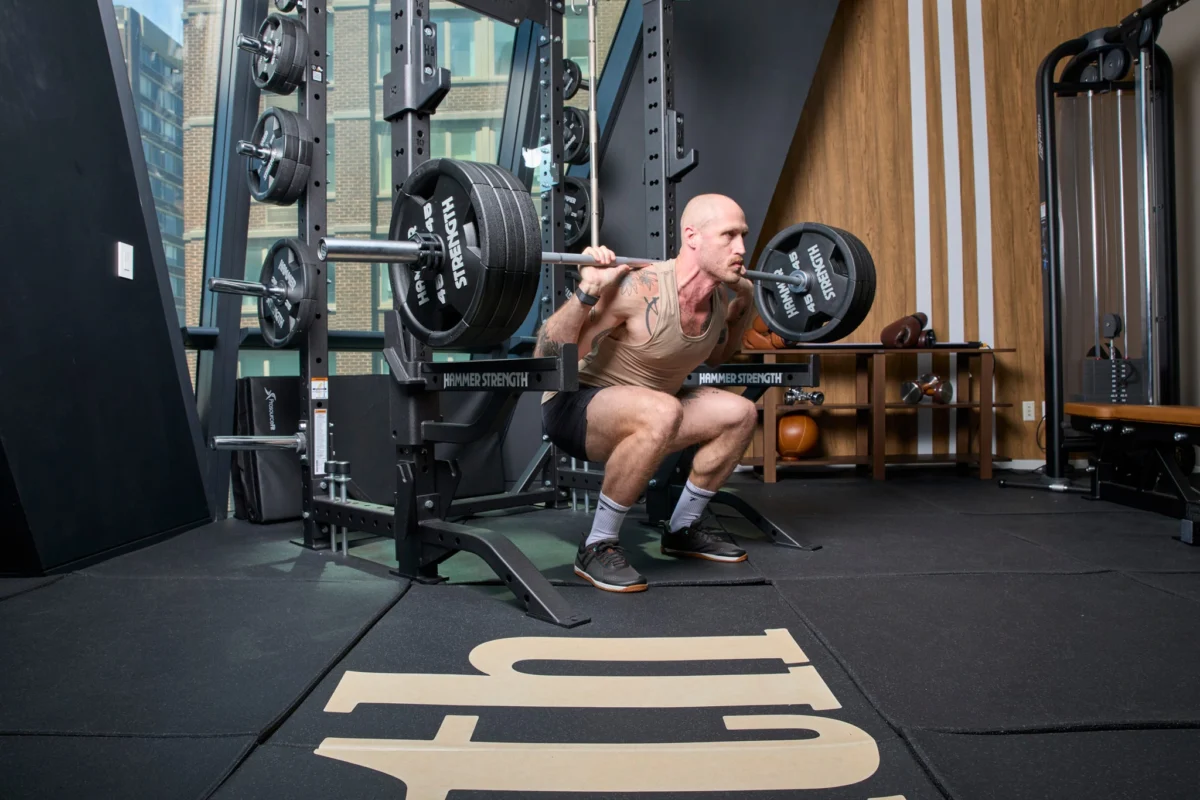
"The barbell back squat remains the gold standard for lower-body development, offering unmatched potential for heavy loading that triggers systemic muscle growth and explosive athletic power."
As one of the "big three" lifts in powerlifting and a cornerstone of athletic conditioning, the barbell back squat is often referred to as the king of all exercises. Its reputation is built on its unique ability to tax the body’s largest muscle groups while demanding high levels of stability and neurological coordination. When performed with precision, the back squat serves as a potent stimulus for hypertrophy and functional strength; however, its technical complexity requires a nuanced understanding of biomechanics to ensure safety and long-term joint health.
The Foundation of the Back Squat
In the world of strength and conditioning, few movements are as revered—or as scrutinized—as the barbell back squat. According to Ebenezer Samuel, C.S.C.S., fitness director at Men’s Health, and senior fitness editor Brett Williams, C.P.T., this exercise is the premier tool for those looking to build "tree trunk legs." The primary reason the back squat stands above variations like the goblet squat or the lunge is the capacity for loading. By placing the resistance across the upper back, the lifter can move their maximum possible load, creating the mechanical tension necessary to force muscle fibers to adapt and grow.

Beyond aesthetic gains, the back squat is a fundamental human movement pattern. It mirrors the mechanics required for jumping, running, and heavy lifting in daily life. By mastering the extension of the hips and knees under load, athletes can see a direct carryover to their vertical jump height and sprint speed, making it an essential component of any performance-based training regimen.
The Anatomy of the Lift: Primary and Secondary Movers
The barbell back squat is a quintessential compound exercise, meaning it involves multiple joints and muscle groups working in concert. The primary drivers are the quadriceps and the gluteus maximus. The quadriceps are responsible for knee extension—straightening the leg as you rise from the bottom of the hole—while the glutes drive hip extension, pushing the pelvis forward to return to a standing position.
However, a common misconception exists regarding the role of the hamstrings and the abdominals during the lift. While many believe the hamstrings are a primary mover, they actually function as stabilizers. Because the hamstrings cross both the hip and the knee, their length remains relatively constant throughout the movement; they do not significantly shorten or lengthen, which is a requirement for a muscle to be a primary driver.
Similarly, the role of the core is often misunderstood. While a strong "brace" is required to protect the spine, the rectus abdominis (the "six-pack" muscles) is not the star of the show. In fact, over-engaging the rectus abdominis can lead to spinal flexion—a rounding of the back—which is the primary cause of injury under heavy loads. Instead, the lower back extensors and the deep transverse abdominis work to maintain a rigid, neutral spine, allowing force to be transferred efficiently from the legs to the bar.

Technical Setup: The Power Rack and Safety
Before a single rep is performed, the setup of the environment is paramount. A power rack or squat stand with adjustable J-hooks and safety catches is non-negotiable for heavy training. The J-hooks should be positioned at a height just below the shoulders. This prevents the lifter from having to rise onto their toes to unrack the bar, a move that compromises stability before the set even begins.
Safety catches should be set at a height that allows the lifter to reach full depth but will catch the bar if they are unable to complete the ascent. Generally, this is one or two notches below the lowest point of the squat. By eliminating the fear of being "pinned" by the weight, a lifter can focus entirely on form and intensity.
The Execution: Precision in Motion
To execute the lift, the athlete must first establish a "shelf" for the bar. This is created by pulling the shoulder blades together, tightening the upper back. The bar should rest on the meaty part of the trapezius (high bar) or across the rear deltoids (low bar), depending on the lifter’s anatomy and goals.
Once unracked, the lifter takes two small steps back to establish their stance. While foot placement varies based on hip anatomy, a shoulder-width stance with toes slightly pointed outward is a standard starting point. The descent begins by simultaneously hinging at the hips and bending the knees. It is vital to "sit back" into the squat, keeping the weight distributed across the mid-foot and heel rather than shifting entirely to the toes.
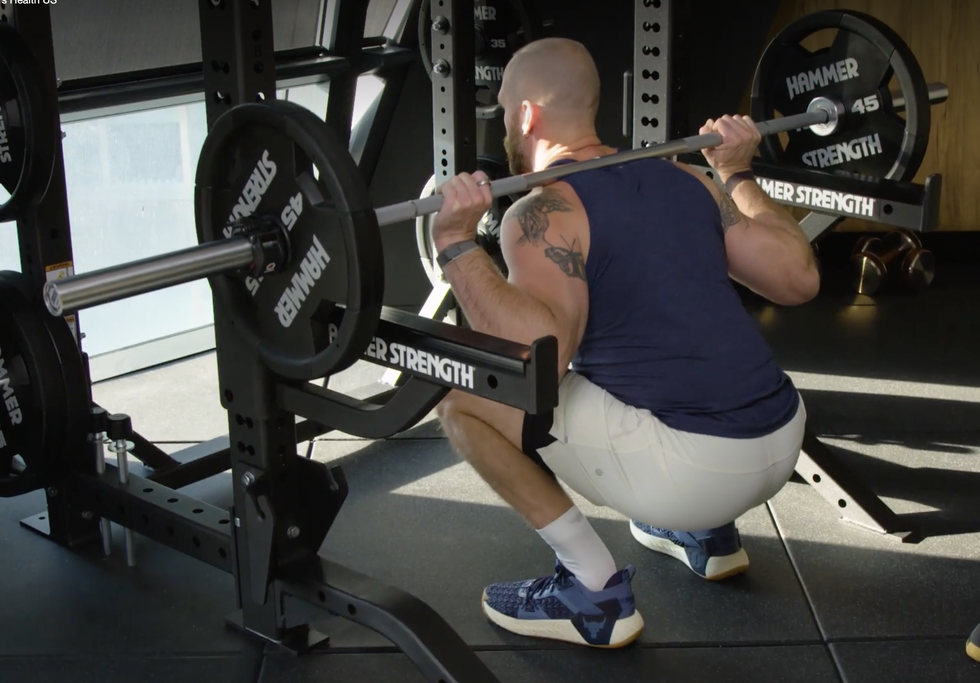
The ascent is initiated by driving the floor away. A common error is the "good morning" squat, where the hips rise much faster than the chest, placing excessive strain on the lower back. To avoid this, the lifter must focus on keeping the chest up and the core braced, ensuring the hips and shoulders rise at the same rate.
The Question of Depth and Mobility
"How deep should you squat?" is perhaps the most debated question in the gym. The standard answer is to bring the thighs parallel to the ground. However, depth is ultimately dictated by individual mobility in the ankles, hips, and thoracic spine.
Lifters with excellent ankle dorsiflexion and hip mobility may be able to perform "ass-to-grass" squats, where the hamstrings touch the calves. While this provides a greater range of motion and potentially more hypertrophy, it should never come at the cost of spinal integrity. The moment the lower back begins to round—a phenomenon known as "butt wink"—the lifter has exceeded their active range of motion. Pushing past this point increases the risk of disc herniation and ligamentous strain. For most, stopping at or just below parallel is the "sweet spot" for safety and results.
Strategic Programming for Maximum Results
Because the barbell back squat is so taxing on both the muscular system and the central nervous system (CNS), it must be programmed with care. It is not an exercise that should be performed daily or at high intensities every session.
Fitness experts recommend placing the back squat at the very beginning of a workout when the body is freshest. Attempting heavy squats after fatiguing the legs with extensions or lunges increases the likelihood of form breakdown. For general strength and muscle growth, 3 to 4 sets of 3 to 10 repetitions are ideal. Lower rep ranges (3–5) with heavier weights prioritize neurological strength gains, while higher ranges (8–10) focus on metabolic stress and hypertrophy.
Due to the recovery demands, squatting heavy once or twice a week is sufficient for most lifters. On off-days, focusing on mobility work for the ankles and hips can help improve squat depth and comfort over time.
Addressing Common Pitfalls
To master the back squat, one must remain vigilant against common technical errors. One such error is "knee valgus," where the knees cave inward during the ascent. This is often a sign of weak gluteus medius muscles or poor hip stability. Concentrating on "screwing the feet into the floor" and pushing the knees outward helps engage the lateral glutes and stabilizes the joint.
Another pitfall is the reliance on equipment too early. While lifting belts and knee sleeves have their place in powerlifting, they should not be used as a crutch for poor core stability or weak joints. Developing a strong natural brace and solid technique without equipment ensures a more well-rounded and resilient physique.
Conclusion: The Lifelong Lift
The barbell back squat is more than just a leg exercise; it is a full-body challenge that tests a lifter’s discipline, mobility, and raw strength. By following the guidance of seasoned professionals like Ebenezer Samuel and Brett Williams, and by respecting the technical demands of the movement, anyone can harness the power of the squat to transform their athleticism and physique. Whether the goal is to build massive quadriceps or to improve explosive power for sport, the back squat remains an essential, albeit demanding, tool in the modern fitness arsenal. Progress may be slow, and the weight may feel heavy, but the rewards of a well-executed squat are unparalleled in the world of physical training.
