
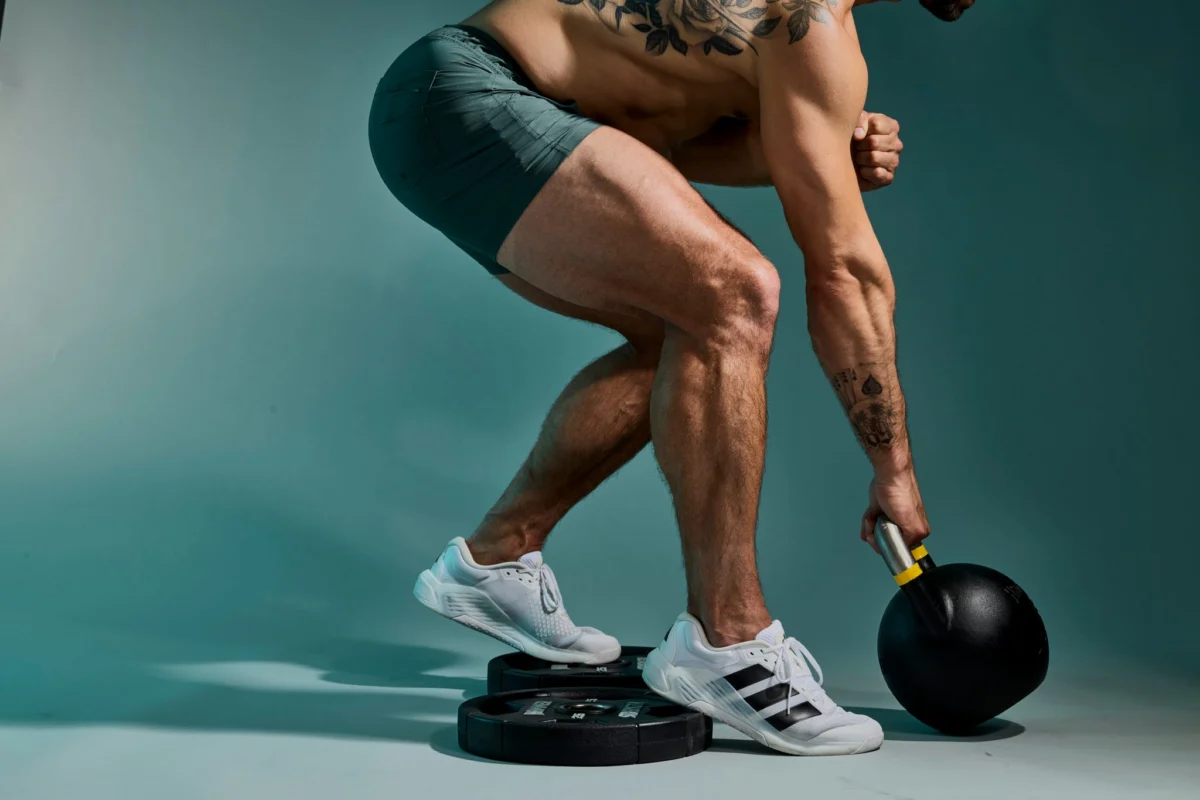
"To unlock peak athletic performance and aesthetic symmetry, the glutes must transition from a supporting role in compound lifts to the primary focus of a dedicated hypertrophy strategy."
While most fitness enthusiasts understand that the glutes are the body’s largest muscle group by both mass and volume, they are frequently relegated to secondary status in traditional lower-body programming. By shifting the training paradigm to prioritize direct glute engagement through both hip extension and abduction, individuals can achieve superior pelvic stability, explosive power, and a more defined physique that compound movements alone cannot provide.
The Anatomical Engine: Understanding the Gluteal Complex
The glutes are not a single monolithic muscle but a complex of three distinct muscles: the gluteus maximus, the gluteus medius, and the gluteus minimus. To train them effectively, one must understand the unique biomechanical role each muscle plays.
The gluteus maximus is the largest of the three and is primarily responsible for hip extension—the action of moving the thigh backward. This movement is the engine behind running, jumping, and rising from a seated position. Because it is the most visible muscle in the complex, it is often the primary target for those seeking aesthetic improvements. However, its functional role as a force generator is what makes it the "seat of power" in human movement.

The gluteus medius and minimus sit on the outer aspect of the hip. Their primary function is hip abduction—moving the leg away from the midline of the body—and internal/external rotation of the thigh. Perhaps more importantly, these smaller muscles act as the primary stabilizers of the pelvis. Without a strong medius and minimus, the pelvis can tilt or drop during walking or running, leading to a cascade of kinetic chain issues, including knee pain and lower back instability.
The Limitation of Compound Movements
The most common mistake in lower-body training is the assumption that squats and deadlifts are sufficient for maximal glute development. While these "big rocks" of strength training certainly involve the glutes, they are often limited by the strength of other muscle groups. In a barbell back squat, the quadriceps often take the brunt of the load; in a conventional deadlift, the hamstrings and lower back (erector spinae) may reach fatigue before the glutes are fully taxed.
Furthermore, squats and deadlifts are vertical loading patterns. Research in biomechanics suggests that while vertical movements are excellent for overall strength, horizontal loading patterns—where the tension is greatest when the hips are fully extended—provide a more potent stimulus for gluteal hypertrophy. This is why a well-rounded program must supplement compound lifts with targeted, glute-specific exercises.
The Mechanics of Hip Extension
To maximize the gluteus maximus, a trainee must master the hip hinge and hip extension. The trap bar deadlift serves as an excellent middle ground between a squat and a straight-bar deadlift. By allowing the lifter to stand inside the center of gravity, the trap bar reduces the shearing force on the spine and allows for a deeper hip hinge, which places the glutes under significant stretch-mediated tension.
However, the "gold standard" for direct gluteal loading is the hip thrust. Unlike the squat, where the tension decreases at the top of the movement, the hip thrust maintains maximum tension on the glutes at the point of full hip extension (the "lockout"). This constant tension is a primary driver of muscle growth. By removing the balance requirements of a standing lift and the limiting factor of spinal loading, the hip thrust allows the trainee to push the glutes to near-failure safely.

Other essential hip extension movements include:
- Romanian Deadlifts (RDLs): These emphasize the eccentric (lowering) phase, creating micro-tears in the muscle fibers that lead to growth.
- Kettlebell Swings: These train the glutes to produce force explosively, bridging the gap between weightroom strength and athletic power.
- Glute Bridges: A shorter-range version of the hip thrust, ideal for high-repetition metabolic stress.
The Importance of Hip Abduction and Stability
If hip extension builds the "mass" of the glutes, hip abduction builds the "frame." The gluteus medius and minimus require specific lateral movements to be fully activated. Exercises like the clamshell or side-lying hip abduction may appear less intense than a heavy deadlift, but they are vital for structural integrity.
When the lateral glutes are weak, the femur (thigh bone) tends to rotate inward during strenuous movements, a phenomenon known as knee valgus. This "caving in" of the knees is a leading cause of ACL injuries and general joint wear. By incorporating abduction work, lifters ensure that their knees track properly over their toes during heavy squats, thereby increasing their ceiling for strength and reducing injury risk.
Frequency and Programming Logic
Because the glutes are so large and resilient, they can handle—and often require—higher volume and frequency than smaller muscle groups. For optimal results, most experts recommend targeting the glutes three to four times per week.
This frequency can be achieved through two primary methods:

- The Dedicated Leg Day: In a traditional body-part split, a trainee might dedicate one or two days entirely to the lower body, performing a mix of compound movements (squats, lunges) and 3–4 targeted glute exercises (hip thrusts, cable kickbacks, clamshells).
- The Integrated Approach: In a total-body or upper/lower split, a trainee can "sprinkle" glute work into almost every session. For example, Monday might involve heavy deadlifts, Wednesday could focus on high-rep hip thrusts, and Friday might prioritize lateral stability with banded walks and lunges.
One of the logistical advantages of glute-specific training is that many of the movements (like the hip thrust or glute bridge) do not tax the central nervous system (CNS) as heavily as a maximal-effort back squat. This allows for faster recovery times, enabling the trainee to hit the muscles more frequently without hitting a wall of systemic fatigue.
The Functional and Aesthetic Payoff
The benefits of prioritizing the glutes extend far beyond the weight room. From a functional standpoint, strong glutes act as a shield for the lower back. When the glutes are "lazy" or underactive—a common side effect of modern sedentary lifestyles—the lower back often compensates to provide stability, leading to chronic pain. Strengthening the glutes restores the natural mechanics of the pelvis and spine.
Athletically, the glutes are the primary drivers of horizontal velocity. Whether you are sprinting for a ball or hiking up a steep incline, your glutes provide the necessary thrust. Even in sports like golf or baseball, the power for the swing is generated in the hips and transferred through the core to the upper body.
Aesthetically, well-developed glutes provide a balanced, athletic silhouette. For many men, direct glute training is the missing link in filling out their clothing and achieving a proportional lower body that matches a well-trained torso.
Conclusion: Elevating the Standard
To treat the glutes as an ancillary muscle group is to leave significant performance and aesthetic gains on the table. By understanding the anatomical breakdown of the gluteal complex and implementing a variety of hip extension and abduction movements, trainees can transform their "supporting cast" into a powerhouse of movement. The transition from accidental glute engagement to intentional glute training is the hallmark of an advanced fitness program, resulting in a body that is as functional and resilient as it is visually impressive.
