
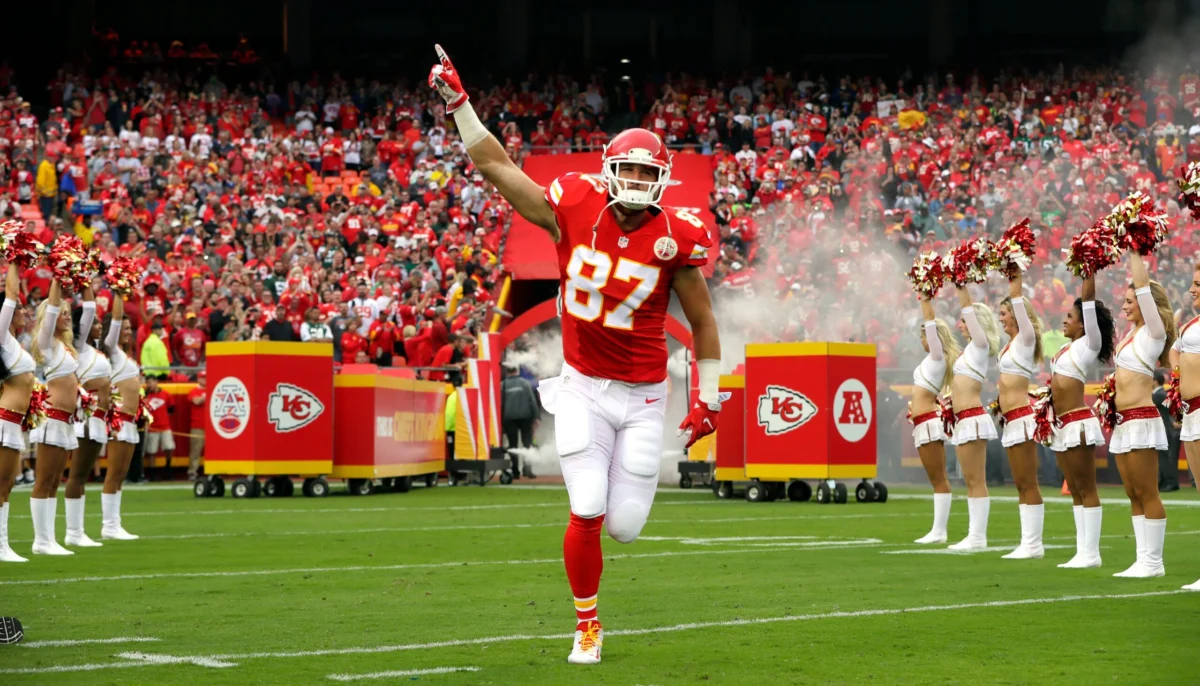
"The NFL’s rigorous operational guidelines extend far beyond the playbook, governing everything from the precise length of a player’s stockings to the specific phrases permitted on a helmet, all in the name of brand integrity and professional uniformity."

While fans focus on the strategic complexities of a West Coast offense or a blitzing 3-4 defense, the National Football League operates under a massive, secondary architecture of regulations known as the Game Operations Manual. This document, alongside the Collective Bargaining Agreement, dictates the minute details of a player’s professional life, ensuring that "The Shield"—the league’s iconic logo—maintains a consistent, high-stakes image across every broadcast. These rules are not merely suggestions; they are strictly enforced mandates that carry significant financial penalties, illustrating the league’s commitment to a standardized aesthetic and a disciplined corporate culture.

The Aesthetics of Professionalism: Uniformity and Image
The NFL’s obsession with its public image begins with the uniform. According to the league’s official stance, a player’s appearance on the field is a direct reflection of the league’s reputation and success. This philosophy manifests in several highly specific requirements. For instance, jerseys must be tucked into the pants at all times during play. A loose jersey is viewed not just as a potential safety hazard—providing an easy handle for a tackler—but as a visual lapse in the professional standard the league demands.

This attention to detail extends to the lower half of the uniform. NFL regulations state that pants must be worn in a manner that covers the entire knee area. This is both a safety measure, ensuring that knee pads remain in the correct anatomical position, and a stylistic requirement to prevent the "biker short" look that some players prefer for mobility. Furthermore, the league dictates the exact composition of a player’s legwear. Stockings must be white from the top of the shoe to the mid-calf, transitioning into an approved team color from the mid-calf to the bottom of the pant leg. This "two-tone" requirement is one of the most frequently cited sources of uniform-related fines, as players often attempt to wear solid-colored "scrunchy" socks or non-compliant hosiery.

The Numeric Hierarchy
Unlike many other professional sports where players have a wide latitude in choosing their jersey numbers, the NFL utilizes a rigid numbering system based on player positions. This system was designed to help officials, coaches, and fans quickly identify the roles of players on the field. For example, quarterbacks are traditionally restricted to numbers between 0 and 19. While the league recently relaxed these rules to allow certain positions, such as defensive backs and linebackers, to wear a wider range of single-digit numbers, the core structure remains. These assignments are not merely aesthetic; they are functional tools for the officiating crew to determine eligible and ineligible receivers during a play.

Accessories and the "Hard Object" Policy
The league’s control extends to the smallest accessories. Towels, a common sight on the waists of quarterbacks and centers, must be tucked into the front of the waistband. Furthermore, players are prohibited from using personal towels; they must use the specific towels issued by the NFL. These towels are forbidden from carrying any personal messages, logos, or names, ensuring that the only branding visible is that of the league and its official partners.

Headwear is similarly regulated. While players are encouraged to wear headbands to manage sweat and hair, bandanas are strictly prohibited, even when worn underneath the helmet. The league views these as non-regulation items that detract from the uniform’s uniformity. Jewelry, while not explicitly banned, falls under the "hard object" policy. The league prohibits any accessory that could be considered a hard object and thus a safety risk to the wearer or other players. This rule gained significant media attention in 2019 when star receiver Odell Beckham Jr. was scrutinized for wearing an expensive, high-end watch during a game. Because the watch was a hard, protruding object, it violated the safety-first approach to on-field accessories.

The Intersection of Expression and Fine Culture
One of the most contentious areas of NFL regulation involves personal messaging. The league maintains a strict ban on players displaying personal messages on their bodies or equipment during games. A landmark case of this enforcement occurred in 2015 when veteran running back DeAngelo Williams was fined nearly $6,000 for wearing eye black that featured the phrase "find the cure." Williams was attempting to honor his mother, a breast cancer survivor, but the league ruled that the message violated the uniform code.

However, the NFL has evolved its stance on expression through organized campaigns. Since 2016, the "My Cause My Cleats" initiative has allowed players to wear custom-designed shoes for a specific week of the season to highlight charitable organizations. This exception allows for a burst of creativity and personal storytelling within a strictly controlled window. Similarly, in response to the social justice movements of 2020, the league permitted players to feature one of four pre-approved phrases on their helmets or caps, such as "End Racism" or "It Takes All of Us." By providing a pre-approved list, the league manages to support social causes while maintaining a level of centralized control over the messaging.

Professional Obligations and Attendance
The life of an NFL player is governed by a clock as much as it is by a playbook. The league treats its players as high-level corporate employees, and the penalties for tardiness or absence are severe. Attendance at team meetings is mandatory, with the only acceptable excuses being documented illness or injury verified by a team physician. Missing a meeting without such clearance often results in a fine, a practice famously highlighted when the Dallas Cowboys fined star receiver Dez Bryant for missing a team meeting and a scheduled MRI.

The requirements for practice and preseason participation are even more stringent. Training camp is considered the foundation of the season, and the current Collective Bargaining Agreement (CBA) makes fines for missing camp mandatory and non-waivable for players under contract. This was a strategic shift to discourage "holdouts"—players who stay away from camp to negotiate better contracts. Missing preseason games or practices can result in fines that reach into the tens of thousands of dollars per day, underscoring the league’s expectation of total professional commitment.

Game Day Etiquette and Fan Interaction
Even the moments of celebration and fan engagement are scripted by the rulebook. After a touchdown, players are generally allowed to give the football to a fan, provided it is done in a safe and non-disruptive manner. This "giveaway" has become a beloved tradition, particularly for players like Cam Newton, who made a habit of finding children in the stands after scoring.

However, the celebration itself has boundaries. Players are prohibited from using the ball as a prop in a way that could be interpreted as taunting. For instance, spinning the football in the air or on the ground in the direction of an opposing player can result in a 15-yard unsportsmanlike conduct penalty and a subsequent fine. The league’s logic is that such actions are disrespectful to the opponent and can incite altercations, detracting from the "sportsmanship" image the NFL seeks to project. Similarly, physical acts like "leapfrogging" over an opponent to block a kick are banned for safety reasons, further narrowing the scope of what is permissible on the field.

Conclusion: The Cost of Compliance
The National Football League is often jokingly referred to by players and critics as the "No Fun League" due to these extensive regulations. However, from the perspective of the league office in New York, these rules are the scaffolding of a multibillion-dollar enterprise. By controlling every variable—from the height of a sock to the wording on a helmet—the NFL ensures that its product remains consistent, professional, and marketable. For the players, these rules represent the fine print of a lucrative career, where the price of a tucked jersey or a timely arrival is measured in the thousands of dollars, and the integrity of "The Shield" remains the ultimate priority.
