
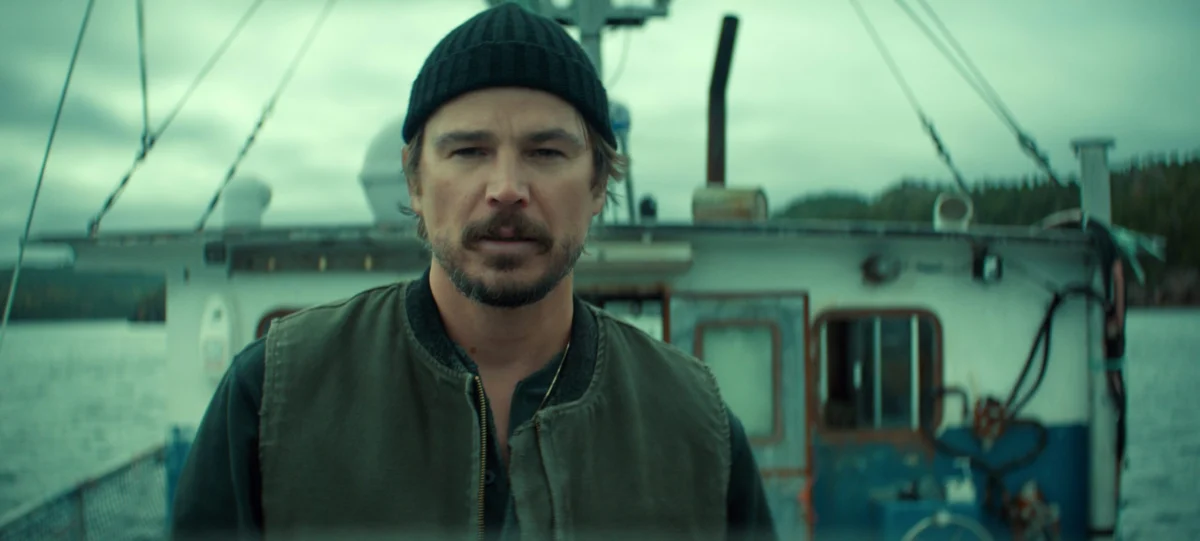
"While Below is currently framed as a self-contained limited series, its narrative ambiguity and commercial success highlight a growing trend in streaming where a definitive ending is often just the beginning of a broader franchise."
Netflix’s latest maritime thriller, Below, has captivated audiences by blending the atmospheric tension of classic creature features with a poignant exploration of environmental decay and corporate malfeasance. Set against the rugged, unforgiving backdrop of Newfoundland, the series follows the Penney family as they encounter a prehistoric cephalopod, eventually discovering that the true monsters are not the creatures of the deep, but the humans seeking to exploit the earth’s resources. Although the production was marketed as a limited series, the thematic depth and a lingering final cliffhanger have sparked intense speculation regarding the future of the story.
The Cinematic DNA of Below
To understand the impact of Below, one must first acknowledge its cinematic lineage. The series draws heavily from the blueprint established by Steven Spielberg’s 1975 masterpiece, Jaws. Spielberg’s film did more than just terrify beachgoers; it fundamentally altered the architecture of the Hollywood blockbuster and established the "unseen monster" trope as a cornerstone of the horror genre. By keeping the shark—affectionately named "Bruce" by the crew—hidden for the majority of the film, Spielberg utilized psychological tension to amplify the eventual payoff.
Below adopts this philosophy in its early episodes, utilizing the murky waters of the North Atlantic to build a sense of dread. However, creator Jesse McKeown performs a narrative subversion that distinguishes the series from its predecessors. While Jaws presented the Great White as a mindless, man-eating machine, Below eventually reveals its giant cephalopod to be a maternal figure, protecting its offspring from a rapidly changing world. This shift from "monster horror" to "ecological tragedy" provides the series with a moral complexity that is often lacking in the genre.
The Conflict at Snook’s Arm: A Plot Overview
The narrative centers on Calvin Penney, portrayed by Josh Hartnett, a fisherman struggling to maintain his livelihood and his relationship with his son, Wade (Charlie Heaton). The discovery of a massive cephalopod near their village, Snook’s Arm, initially triggers a survivalist instinct. However, the introduction of Fonda (Mackenzie Davis), a scientist with a deep understanding of marine biology, shifts the perspective.
The primary antagonist of the series is not the creature, but the Crocker family. Representing the cold efficiency of industrial greed, the Crockers aim to displace the local population to mine the region’s copper deposits. This conflict elevates the show from a simple creature feature to a sociopolitical commentary on the displacement of rural communities by corporate interests.

In the climactic resolution, Calvin thwarts the Crockers’ plans and manages to relocate the cephalopod by moving the iceberg it had claimed as a nest. The act serves as a moment of redemption for Calvin, repairing his fractured relationship with Wade and securing the immediate safety of Snook’s Arm. The story then leaps forward one year, showing the Penneys running a successful local brewery, seemingly at peace.
The Cliffhanger and the "Jaws" Dilemma
Despite the apparent resolution, the final moments of the season introduce a chilling uncertainty. As Calvin and Wade return to the sea, the horizon is dotted with numerous icebergs, suggesting that the "lone" monster was merely one of many. This ending serves two purposes: it reinforces the theme of nature’s resilience and provides a "hook" for potential future installments.
However, the shadow of Jaws looms large over the prospect of a sequel. While the original 1975 film is a flawless piece of cinema, its three sequels—Jaws 2, Jaws 3-D, and Jaws: The Revenge—are widely cited as examples of diminishing returns. Each subsequent film struggled to replicate the magic of the original, eventually descending into camp and absurdity. By billing Below as a limited series, Netflix and McKeown may be attempting to preserve the integrity of the story, avoiding the trap of "sequelitis" that has plagued the creature feature genre for decades.
Josh Hartnett and the "Hartnett-aissance"
The success of Below is inextricably linked to the performance of Josh Hartnett. Once a quintessential teen idol of the late 90s and early 2000s, Hartnett famously stepped away from the Hollywood limelight to pursue more idiosyncratic projects. His recent resurgence—seen in projects like Christopher Nolan’s Oppenheimer, M. Night Shyamalan’s Trap, and his acclaimed episode of Black Mirror—has been dubbed the "Hartnett-aissance" by critics.
In Below, Hartnett brings a weathered, blue-collar gravitas to the role of Calvin Penney. In interviews, Hartnett has expressed a deep affinity for the character and the world of the show, yet he remains cautious about the prospect of a second season. "The story works very well on its own," Hartnett told Men’s Health. "I don’t think there are any plans. I know [Jesse McKeown] has moved on to something else. All the actors have moved on… for me, the door’s not closed, but it’s a limited series."
Hartnett’s pragmatism reflects the current reality of the television industry. While actors and creators may be open to returning, the decision ultimately rests on the data-driven metrics of the streaming giant.
The Fluid Definition of the "Limited Series"
The term "limited series" has become increasingly porous in the modern streaming era. Traditionally, a limited series (or miniseries) was a standalone narrative with no intention of continuation. However, if a project achieves significant viewership or critical acclaim, networks and streamers are often quick to pivot.

A recent example is Netflix’s The Beast in Me. Despite being marketed as a limited series, and even winning an Emmy in that category for star Matthew Rhys, the streamer recently announced a second season. Similarly, HBO’s The White Lotus was originally conceived as a one-off limited series before being transitioned into an anthology format.
If Below continues to perform well through the autumn and winter months—seasons where atmospheric, "cold-weather" horror typically thrives—Netflix may find the incentive to greenlight a second chapter. This could take the form of a direct sequel following the Penney family’s further encounters with the cephalopods, or an anthology approach that explores different maritime myths in other parts of the world.
Ecological Implications and Real-World Context
Beyond its entertainment value, Below taps into contemporary anxieties regarding climate change. The character of Fonda explicitly mentions that due to warming waters, the cephalopod’s offspring likely didn’t survive—a statement the final shot contradicts. This tension between scientific prediction and nature’s unpredictable adaptability is a recurring theme in modern environmental fiction.
The setting of Newfoundland is also significant. The province has a long history of maritime lore, including sightings of the "Kraken," which many historians believe were actually sightings of the giant squid (Architeuthis dux). By grounding its fiction in the geography and culture of a real fishing community, Below achieves a level of authenticity that makes its supernatural elements feel more grounded and, consequently, more terrifying.
Conclusion: To Return or To Remain?
As it stands, Below remains a singular, well-crafted narrative that honors its influences while forging its own path. The decision to leave the "multiple icebergs" as a final, haunting image rather than a definitive bridge to Season 2 allows the audience to use their own imagination—a luxury rarely afforded in an era of over-explained cinematic universes.
If the series remains a one-off, it will be remembered as a high-water mark for Josh Hartnett’s career and a sophisticated entry into the Netflix library. If it returns, it faces the monumental task of proving it can beat the "sequel curse" that sank the Jaws franchise. For now, the cephalopods of Snook’s Arm remain hidden beneath the ice, leaving viewers to wonder exactly what else might be lurking in the depths.
