
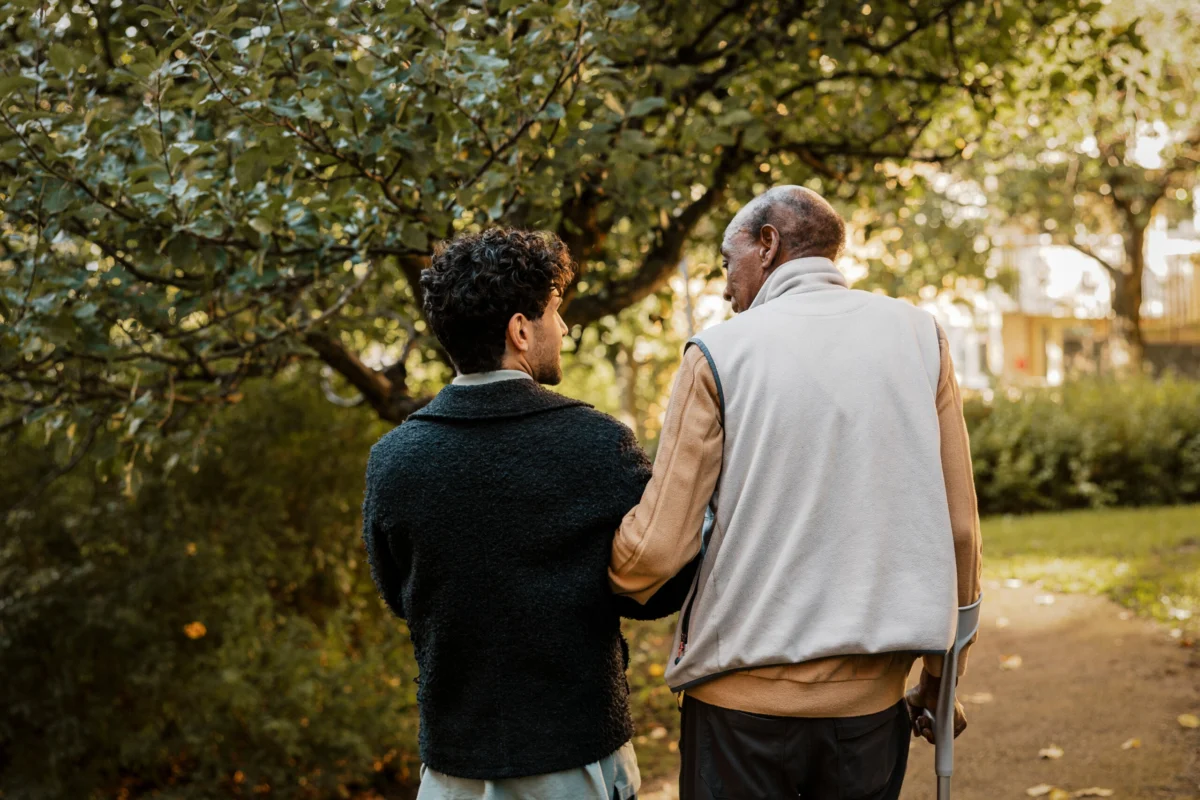
"In an era of increasing isolation and changing family structures, friendships are emerging as a vital, yet often overlooked, pillar of support for aging individuals, filling crucial gaps in care that traditional familial networks can no longer consistently provide."
As societal demographics shift and traditional family models evolve, the concept of eldercare is undergoing a profound transformation. With more individuals remaining single, divorced, or childless, and with geographic distances and estrangements further fragmenting family ties, the responsibility of caring for aging loved ones is increasingly extending beyond immediate relatives. This evolving landscape highlights the growing importance of friendships and neighborly bonds, which are stepping in to provide essential support, bridging gaps in care and offering companionship to older adults navigating the challenges of aging.
The story of Nicole Straight and Patricia Wood in Sausalito, California, beautifully illustrates this emerging paradigm. For years, their relationship was characterized by polite neighborly interactions. However, a serious fall that left 93-year-old Patricia Wood with a broken neck and unable to walk unaided redefined their connection. Wood, a retired insurance executive, found herself reliant on assistance, particularly for navigating stairs. This is where Straight, a 53-year-old retired chef, stepped in, transforming their casual acquaintance into a deep and supportive bond.
Straight’s commitment goes far beyond simple neighborliness. She now visits Wood weekly, bringing treats, meals, and performing practical tasks like installing grab bars, changing light bulbs, and replacing smoke detector batteries. Their communication is constant, with Straight proactively checking if Wood needs anything from the grocery store, a vital service for Wood, who no longer drives. Wood’s heartfelt declaration that Straight is "a gift from heaven" and that she "never thought I’d have a new best friend at this time of my life" underscores the profound emotional and practical impact of this friendship.
This personal narrative is emblematic of a broader societal trend, as highlighted by sociologist Deborah Carr of Boston University. Carr points to increasing numbers of older adults who are unmarried, divorced, or childless, leading to a greater proportion of individuals aging alone. Furthermore, smaller family sizes in contemporary generations mean fewer adult children are available to provide care. These demographic shifts, coupled with factors like geographic distance and family estrangement, create a growing need for alternative caregiving networks.
Research is beginning to quantify the extent of this phenomenon. A study published in JAMA Network Open, led by researchers at the University of Michigan, analyzed data from the National Health and Aging Trends Study, involving over 2,600 older adults with health limitations. While family members remained the primary caregivers, approximately 14% of participants identified friends, including neighbors, as providing assistance. This translates to an estimated 2.4 million caregiving friends nationwide. A national survey by AARP and the National Alliance for Caregiving in 2025 also reported that 11% of caregivers support non-relatives.
Karen Fingerman, a gerontologist at the University of Texas-Austin and a co-author of a commentary accompanying the JAMA study, emphasizes that friends are "auxiliary caregivers who have not been acknowledged." She stresses the importance of recognizing and appreciating the sacrifices these individuals make. The University of Michigan study further differentiated the roles of friend-caregivers from those of family members. It found that friends are less likely to live with the person they are helping and rarely serve as the sole caregiver.
Yee To Ng, a gerontologist and lead author of the study, noted that friends typically provide fewer hours of care compared to family members, averaging about 18 hours per month, in contrast to the roughly 67 hours provided by family. However, the nature of their assistance often fills specific and critical needs. Friends are more likely to offer transportation, with two-thirds of caregiving friends driving their friends. Other common tasks include shopping, accompanying individuals outdoors, meal preparation, and attending medical appointments.
The study also revealed that friends can provide support in unique ways, as exemplified by Czes Ferrino, 82, from Westerly, Rhode Island. When her car broke down, her next-door neighbor accompanied her to multiple dealerships to help her find a replacement, a gesture she described as being like a son helping his mother.
However, the boundaries of friend-based caregiving are also acknowledged. Ng points out that certain tasks, such as personal care like bathing and dressing, are often more comfortably handled by family members. These intimate activities can impact an individual’s self-esteem, making it difficult to accept such assistance from friends.
The study’s findings also indicated that individuals who identify friends as caregivers tend to be younger than those relying solely on family and are more likely to have college degrees. Fingerman suggests that individuals with higher education often possess larger social networks, which can facilitate these friendships. Unsurprisingly, those receiving care from friends are also less likely to be married and more prone to living alone.
Ann Greenwater, 84, residing in rural Humboldt County, California, is one such individual. After a severe back injury left her bedridden for months, and with no close family support, a group of friends from a local Zen Buddhist center stepped in. Milli Quam, 86, does her laundry and picks up prescriptions. A 73-year-old friend assists with her computer, and others regularly take her grocery shopping. Volunteers from a local organization provide transportation to medical appointments. Quam’s sentiment, "I love Ann, and I’m happy there’s something concrete I can do," reflects the deep satisfaction derived from offering meaningful support.
The advantages of friends as caregivers are multifaceted. Carr notes that friends are often of similar age and can empathize with the challenges of aging, sometimes drawing on their own acquired knowledge. Their involvement can also alleviate the burden on family caregivers.
Despite these benefits, the stability of friend-based caregiving can present challenges. Neighbors may move, and strains can arise if care demands become excessive or if guilt arises from accepting help, potentially disrupting the egalitarian nature of friendships. Such strains can exacerbate depression in individuals with physical limitations, as indicated by a study led by Carr.
Furthermore, policy support for these non-familial caregiving relationships is limited. Laura Lawless, a labor and employment lawyer, points out that federal legislation like the Family and Medical Leave Act rarely provides job-protected leave for caring for a friend with a serious health condition.
Carr contrasts the familial expectation of support "through thick and thin" with the more transient nature of some friendships. While family estrangement carries significant stigma, the gradual fading of friendships is often perceived as more socially acceptable.
In Sausalito, Wood’s lighthearted remark that Straight "is not allowed to move until I die" highlights the profound, albeit sometimes humorously expressed, dependence and affection that has developed. Similarly, Greenwater’s friends in Humboldt County have provided invaluable support. However, as Greenwater herself acknowledges, her friends are also aging, and their ability to provide care may diminish over time. This raises a poignant question about the long-term sustainability of such arrangements, underscoring the need for broader societal recognition and support for the evolving landscape of eldercare. The increasing reliance on friends and neighbors highlights a critical gap in traditional support systems, necessitating a deeper understanding and acknowledgment of these vital, often informal, care networks.
