
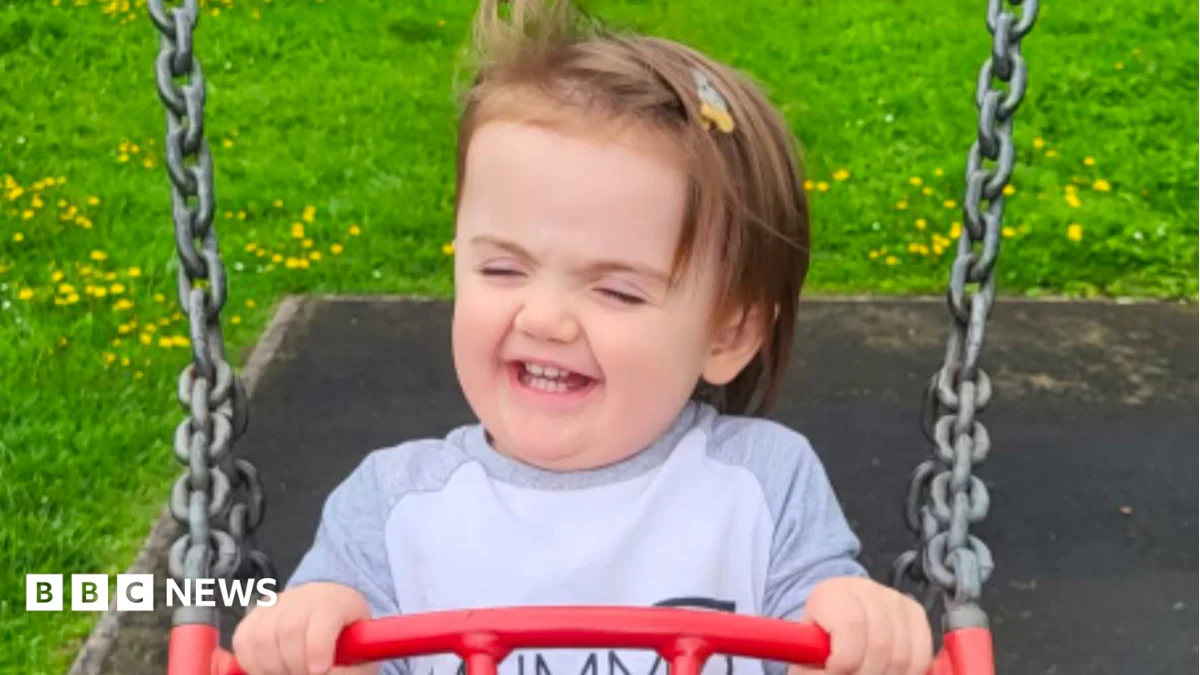
A hospital trust has taken full responsibility for 24 systemic failures that directly led to the death of 21-month-old Eleanor Hazel Aldred-Owen, underscoring critical lapses in post-operative care and the profound impact on her family.
The tragic passing of Eleanor Hazel Aldred-Owen at Liverpool’s Alder Hey Children’s Hospital in October 2023 has prompted the trust to issue a full admission of responsibility for the cascade of errors that contributed to her death. A coroner’s ruling of misadventure, significantly contributed to by neglect, has brought to light a distressing sequence of 24 distinct care failures, ranging from critical communication breakdowns to neglected monitoring protocols. This case not only highlights the devastating consequences of systemic oversight but also the arduous journey families undertake to secure accountability and instigate meaningful change within the healthcare system.
The Preventable Tragedy at Alder Hey
Eleanor Hazel Aldred-Owen, a vibrant 21-month-old from Mold, Flintshire, died on 2 October 2023, following what was intended to be a routine surgical procedure. Her death, later attributed to misadventure contributed to by neglect, has exposed a harrowing series of 24 distinct failures within the care provided by Alder Hey Children’s Hospital NHS Foundation Trust. The trust has now unequivocally accepted full responsibility, acknowledging that Eleanor’s "tragic" death "should not have happened." This admission follows an extensive investigation and a coroner’s inquiry that illuminated critical deficiencies in post-operative monitoring, communication, and adherence to established protocols.
Craniosynostosis Surgery and Initial Success
Eleanor had undergone surgery on 29 September 2023 to correct craniosynostosis, a congenital condition where one or more of the fibrous joints in an infant’s skull (sutures) prematurely fuse, affecting the normal growth of the brain and the shape of the head. This type of surgery, while complex, is generally considered routine and highly successful in correcting the skull deformity and preventing potential complications related to intracranial pressure. The initial procedure itself reportedly went as planned, save for an accidental, though swiftly rectified, removal of a breathing tube during anaesthesia. This minor incident did not, at the time, signal the grave issues that would subsequently emerge during Eleanor’s recovery.
A Cascade of Critical Failures
The post-operative period for Eleanor was marked by a series of concerning events and missed opportunities. During recovery, Eleanor exhibited a raised heart rate and required oxygen. A decision was made to initiate AIRVO, a form of high-flow humidified oxygen therapy. Critically, this intervention was undocumented and not prescribed in accordance with the trust’s established guidelines. The absence of proper documentation for such a crucial medical intervention represents a significant lapse, potentially hindering effective monitoring and accountability.
More alarmingly, Eleanor developed a collapsed lung, a serious post-surgical complication. A chest X-ray was performed, which clearly showed an abnormality. However, a radiographer failed to flag this critical finding to anyone on the ward. Further compounding this oversight, the doctor responsible for reviewing the X-ray was delayed in doing so because she was attending to another child in the Accident and Emergency department. This breakdown in communication and prioritisation meant that a vital diagnostic finding went unaddressed at a critical juncture.
The Unheeded Warnings: Paediatric Early Warning System (PEWS)
Among the 24 failures identified, a particularly grave concern was the repeated failure to correctly calculate Eleanor’s Paediatric Early Warning System (PEWS) score. The PEWS is a crucial clinical tool designed to identify children who are at risk of deterioration by assigning scores based on physiological parameters such as heart rate, respiratory rate, blood pressure, and level of consciousness. An escalating PEWS score should trigger a structured response, leading to an earlier medical review and, if indicated, further diagnostic tests like a chest X-ray. In Eleanor’s case, had her PEWS scores been accurately calculated and acted upon, it would have prompted a much earlier and more urgent medical review, potentially leading to the timely identification and treatment of her collapsed lung. The systemic failure to correctly utilise this fundamental patient safety mechanism directly contributed to the delay in recognising her deteriorating condition.
Devastating Consequences and the Family’s Ordeal
The cumulative effect of these failures proved fatal. Eleanor suffered a cardiac arrest before her collapsed lung was identified and treated. This led to an unsurvivable brain injury, and she tragically died in her parents’ arms. For Eleanor’s family, her father Chaz and mother Rachel, from Mold, Flintshire, the aftermath has been defined by "unbearable" guilt and profound trauma. They have lived with the agony of not understanding how or why their daughter died, transforming their grief into a relentless pursuit of justice and accountability.
Chaz Aldred-Owen recounted the arduous process of seeking answers, noting the initial reluctance of Alder Hey to fully admit the extent of their negligence. "They said it was breach of duty and not gross neglect and it took a long time for the trust to admit that," he stated. The distinction between a "breach of duty," which implies a deviation from standard care, and "gross neglect," which denotes a flagrant and culpable disregard for patient safety, was a critical point for the family in their quest for the truth. The trust "being compelled to admit gross neglect" was, for them, one of the hardest aspects of their journey.
The Coroner’s Conclusion and Legal Implications
The coroner’s verdict of misadventure, contributed to by neglect, is a significant legal and moral finding. "Misadventure" implies an unintended but foreseeable outcome of a lawful act, while "contributed to by neglect" firmly places responsibility on systemic or individual failures in care. This conclusion, coupled with the trust’s full acceptance of responsibility for 24 distinct failures, highlights a profound institutional lapse in fulfilling its duty of care. For Eleanor’s family, represented by Lynda Reynolds, a partner at Hugh James, this outcome, while validating, comes after a "long and painful process." Reynolds emphasized the betrayal of trust, stating, "Eleanor’s parents placed their trust in Alder Hey Children’s Hospital to care for their daughter and were let down."
Eleanor’s Legacy: Driving Change in Patient Safety
In the wake of this tragedy, Alder Hey Children’s Hospital has initiated significant changes to its protocols and practices. The family has acknowledged these improvements, expressing hope that they will be "used properly, kept under review and make care safer for other children." Crucially, two new post-operative procedures have been implemented at Alder Hey and named after Eleanor, a poignant tribute to her memory and a testament to her parents’ unwavering resolve to prevent similar incidents. Chaz Aldred-Owen articulated this aspiration, stating, "The real victory is making sure what happened to Eleanor doesn’t happen to anyone else. No other family or child will have to go through what we have."
These changes, spurred by Eleanor’s case, represent a vital step towards enhancing patient safety. They underscore the critical importance of robust communication channels, meticulous documentation, accurate and timely use of early warning systems like PEWS, and immediate review of diagnostic results. Such systemic improvements are not merely procedural adjustments; they are fundamental shifts aimed at fostering a culture of vigilance and accountability within healthcare settings.
The Enduring Impact and Lessons Learned
Eleanor’s death serves as a stark reminder of the devastating consequences when established medical protocols and professional vigilance falter. Her parents’ journey, from unbearable grief to tenacious advocacy, exemplifies the profound courage required to challenge powerful institutions and demand accountability. Their pain is deeply personal, as they grieve not only for their daughter but also for "the people we used to be when our daughter was here."
The comprehensive admission of responsibility by Alder Hey Children’s Hospital NHS Foundation Trust is an important, though belated, acknowledgement. It underscores the imperative for healthcare organisations to foster open communication, learn from errors, and continuously strive for excellence in patient care. Eleanor’s legacy, enshrined in the new procedures bearing her name, stands as a powerful symbol of the enduring fight for safer healthcare for all children, ensuring that her preventable death was not in vain. The hope remains that the systemic changes implemented will indeed make care safer, honouring Eleanor’s memory and sparing other families from similar unimaginable sorrow.
