
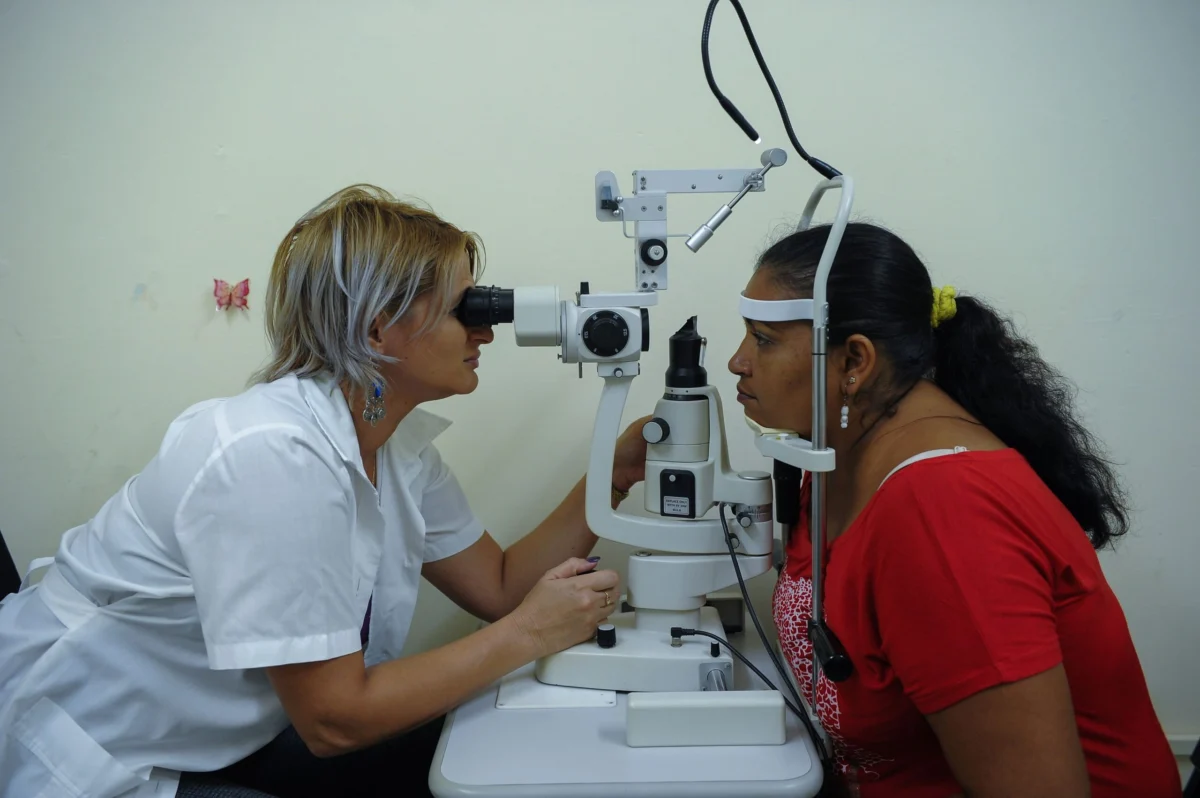
"A woman’s vision loss and severe eye pain were traced to an astonishing accumulation of 23 daily disposable contact lenses, highlighting the critical dangers of reduced corneal sensation and cognitive impairment in contact lens wearers."
This extraordinary case, documented by ophthalmologists, reveals a startling medical anomaly where a 64-year-old woman experienced excruciating pain and near-total vision loss in her left eye due to an unprecedented number of stacked contact lenses. The discovery underscores a critical public health warning regarding contact lens hygiene, especially for individuals with underlying conditions that compromise their ability to detect discomfort or adhere to proper wear schedules. The situation was exacerbated by her significantly elevated eye pressure, a condition that, if left untreated, can lead to irreversible vision damage.
A 64-year-old woman presented to eye specialists with a deeply concerning constellation of symptoms: severe pain in her left eye, vision so profoundly impaired that she could only discern hand movements, and an intraocular pressure measuring a staggering 54 mmHg. For context, the American Academy of Ophthalmology defines a normal intraocular pressure as falling within the range of 10 to 21 mmHg. Her eye was visibly inflamed, exhibiting redness and a cloudy cornea, a sign of significant distress and potential damage to its outermost layer. The examination took a dramatic turn when clinicians discovered an unexpected and alarming foreign body: a dense stack of numerous daily disposable soft contact lenses adhered to her eye. A total of 23 lenses were meticulously removed.
This remarkable case was published in 2022 as an image report in Ophthalmology, the esteemed journal of the American Academy of Ophthalmology, by optometrist Christine M. Kroll and ophthalmologists Andrew G. Kalina and Paul H. Kalina, affiliated with Park Nicollet Health Services in Minnesota and the University of Kansas School of Medicine. The report, aptly titled "An Unlikely Culprit for Red Eye and Elevated Eye Pressure," brought to light a rare but potentially devastating consequence of improper contact lens wear.
An Eye That Could Not Sound the Alarm
The most significant diagnostic revelation emerged after the removal of the accumulated lenses. Subsequent testing revealed a profound lack of sensation in the woman’s cornea. A healthy cornea is richly innervated, meaning it is densely supplied with nerve endings. This robust sensory network is crucial for alerting individuals to even the slightest foreign body, such as a stray eyelash or a misplaced contact lens, prompting prompt removal and preventing potential harm. The absence of this protective reflex in the patient’s case was a critical factor that allowed the lenses to accumulate unnoticed.
Further investigation into the patient’s medical history provided several crucial pieces of the puzzle. She had a history suggestive of limbal stem cell deficiency, a condition that affects the health and regenerative capacity of the cells responsible for maintaining the corneal surface. Additionally, she had a prior diagnosis of herpetic encephalitis, a serious brain infection caused by the herpes virus, and documented cognitive impairment. These pre-existing conditions, particularly the reduced corneal sensitivity and cognitive challenges, created a vulnerability that made her susceptible to the extreme accumulation of contact lenses. She had also been a wearer of daily disposable soft lenses for an extended period, a practice that, when combined with other risk factors, can lead to complications.
While the authors did not definitively elucidate the precise mechanism by which the lenses built up to such an extreme degree, they presented the case as a stark warning. Their primary concern was directed at the risks associated with contact lens wear in individuals who have diminished corneal sensation, especially those experiencing cognitive impairment. Such individuals may not register the discomfort or irritation that would typically signal a problem, and memory issues could further contribute to the oversight of lens removal or insertion. This combination of factors can lead to the continuous addition of new lenses without the wearer realizing that older ones have not been removed.
The loss of corneal sensation, a condition known as neurotrophic keratitis, can stem from various causes. According to Contact Lens Spectrum, infections such as herpes zoster (shingles) and herpes simplex viruses are recognized as common culprits leading to this type of corneal disease, which arises from nerve damage. Furthermore, Cataract & Refractive Surgery Today highlights that improper contact lens use, including excessively prolonged wear, is frequently implicated in the development of neurotrophic keratitis. The specific underlying cause for the patient’s reduced corneal sensation was not detailed in the report, leaving open the possibility of multiple contributing factors or a combination thereof.
The Pressure Dropped Once the Lenses Came Out
The immediate impact of the lens removal was a dramatic normalization of the patient’s intraocular pressure. Following the extraction of the 23 lenses, her eye pressure was measured at 18 mmHg, which falls squarely within the medically accepted normal range. The brief image report did not delve into the exact pathophysiological mechanism that led to the extreme elevation in eye pressure or provide details on the patient’s final visual acuity or long-term prognosis. However, the swift return to normal pressure after lens removal strongly suggests that the accumulated lenses were the primary driver of this dangerous condition.
Elevated intraocular pressure is a significant concern in ophthalmology because sustained high pressure can exert damaging force on the optic nerve. The optic nerve is the critical conduit of visual information from the eye to the brain. According to the American Academy of Ophthalmology, chronic pressure-induced damage to the optic nerve is the hallmark of glaucoma, a progressive and irreversible blinding disease. The rapid reduction in pressure in this case highlights the acute danger posed by the foreign body impaction.
Twenty-Three Lenses, Twice in One Year
While the number 23 is exceptionally high, it is not an isolated occurrence. In September 2022, just months before this case was published, ophthalmologist Katerina Kurteeva of Newport Beach, California, gained widespread attention on social media after removing 23 daily disposable lenses from the upper eyelid of another patient, a woman in her 70s who had worn contact lenses for three decades. Dr. Kurteeva shared her astonishment, stating, "I had never seen so many contact lenses in a patient’s eye in my life," in an interview with Optometry Today.
On her Instagram account, Dr. Kurteeva described the challenging removal process, noting that the lenses were "essentially glued together after sitting under the eyelid for a month." She reported using jeweler’s forceps to meticulously separate the mass of lenses. In an interview with ABC7, she further explained that years of consistent contact lens wear can lead to a desensitization of the cornea, making wearers less likely to perceive discomfort or foreign body sensations as acutely. This diminished sensitivity can contribute to a gradual buildup of lenses without immediate awareness.
A similarly startling case was documented in 2017, when medical professionals at Solihull Hospital in England discovered 27 contact lenses within the eye of a 67-year-old woman while preparing her for cataract surgery, as reported by Live Science. This patient had worn monthly disposable lenses for 35 years and had attributed her persistent eye discomfort to the natural aging process and dry eye syndrome. The accumulation of lenses in her case also went unnoticed for an extended period, likely due to a similar desensitization or misinterpretation of symptoms.
The three women—the patient in the Ophthalmology journal, Dr. Kurteeva’s patient, and the patient from Solihull Hospital—share several common characteristics: all were in their 60s or 70s, and all were long-term contact lens wearers. However, the case published in Ophthalmology holds particular significance due to its rigorous documentation in a peer-reviewed journal and the inclusion of a critical clinical detail: the documented lack of corneal sensation. This specific finding offers a deeper understanding of the physiological mechanisms that can lead to such extreme accumulations.
It is important to clarify that a contact lens cannot physically slip behind the eyeball. The eye’s anatomy, specifically the conjunctiva—a thin, transparent membrane that lines the eyelids and covers the white part of the eye—forms a closed pocket. While a lens may become dislodged from its normal position, it can only become trapped within this conjunctival sac, most commonly beneath the upper eyelid. This is the anatomical space where multiple lenses can collect undetected.
Habits and Checkups That Lower the Risk
For the vast majority of contact lens wearers, the lesson from these alarming cases emphasizes the paramount importance of routine care and adherence to recommended practices. The Centers for Disease Control and Prevention (CDC) strongly advises against sleeping or napping in contact lenses, as this habit increases the risk of serious eye infections by six to eight times. Regular visits to an eye care provider are also strongly recommended for monitoring eye health and ensuring proper lens fit and hygiene.
Individuals who are responsible for the care of elderly relatives with memory issues who continue to wear contact lenses should consider discussing the safety of their lens wear with an eye doctor. In such situations, switching to eyeglasses or establishing a supervised contact lens wear and care routine may be a safer alternative. Anyone who wears contact lenses and experiences symptoms such as a red, painful eye, or sudden onset of blurry vision, should immediately remove their lenses if possible and seek prompt professional medical attention from an eye care specialist. Early intervention is crucial in preventing the progression of potentially sight-threatening complications.
Key Questions Answered
What did doctors find in the woman’s eye?
Doctors discovered a startling accumulation of 23 daily disposable soft contact lenses stacked together. The eye was also red, the cornea was cloudy, and the patient exhibited extremely high intraocular pressure.
Why didn’t she feel them?
Testing revealed that the woman’s cornea had no sensation. This lack of feeling, combined with her cognitive impairment and a history of herpetic encephalitis, prevented her from detecting the presence of the lenses.
What happened to her eye pressure?
After the removal of the 23 contact lenses, her eye pressure dropped significantly from 54 mmHg to 18 mmHg, returning to the normal range.
Can a contact lens get lost behind the eye?
No, a contact lens cannot get lost behind the eye. The conjunctiva forms a closed pocket, meaning a dislodged lens can only be found under an eyelid.
Who is most at risk of retained lenses?
The authors highlighted individuals who wear contact lenses and have reduced corneal sensation, particularly those with cognitive impairment, as being at the highest risk for undetected lens accumulation.
What habits help prevent lens problems?
Key preventative habits include never sleeping in contact lenses, strictly adhering to recommended lens replacement schedules, and attending regular appointments with an eye care provider.
