
Dáithí Mac Gabhann’s joyous sprint onto the Aviva Stadium pitch as a football mascot profoundly symbolizes the life-altering power of organ donation, a triumph made possible by the very law he inspired. His vibrant participation, a stark contrast to his past struggles, offers a beacon of hope and a powerful testament to the impact of altruism and advocacy.
The recent UEFA Nations League match between the Republic of Ireland and Kosovo at Dublin’s Aviva Stadium witnessed more than just a 3-0 victory for the home side; it became the stage for a deeply moving story of resilience, medical marvel, and the enduring power of a family’s campaign. Ten-year-old Dáithí Mac Gabhann, whose tireless advocacy led to groundbreaking changes in Northern Ireland’s organ donation laws, fulfilled a childhood dream, taking to the pitch as a mascot. What made this moment particularly poignant was his ability to "skip" out with Republic of Ireland forward Troy Parrott, a simple act of joy that underscored a remarkable transformation enabled by a life-saving heart transplant received just months prior.

This was not Dáithí’s first foray as a mascot. A couple of years earlier, he had graced the Women’s Irish Cup final, walking out with Toni Leigh Finnegan for Cliftonville and Glentoran. However, that occasion presented a stark reminder of his debilitating condition: he required a wheelchair, and Finnegan had to carry him. The contrast between these two moments could not be more striking. His father, Máirtín Mac Gabhann, captured the profound difference, stating, "He had such an amazing experience, but this time he skipped out, and he skipped out simply because of the gift of organ donation, and how incredible the gift of organ donation is." This unbridled energy, the ability to sing loudly and be "absolutely full of beans the whole night" without a hint of breathlessness, was a testament to the new heart beating strongly within him.
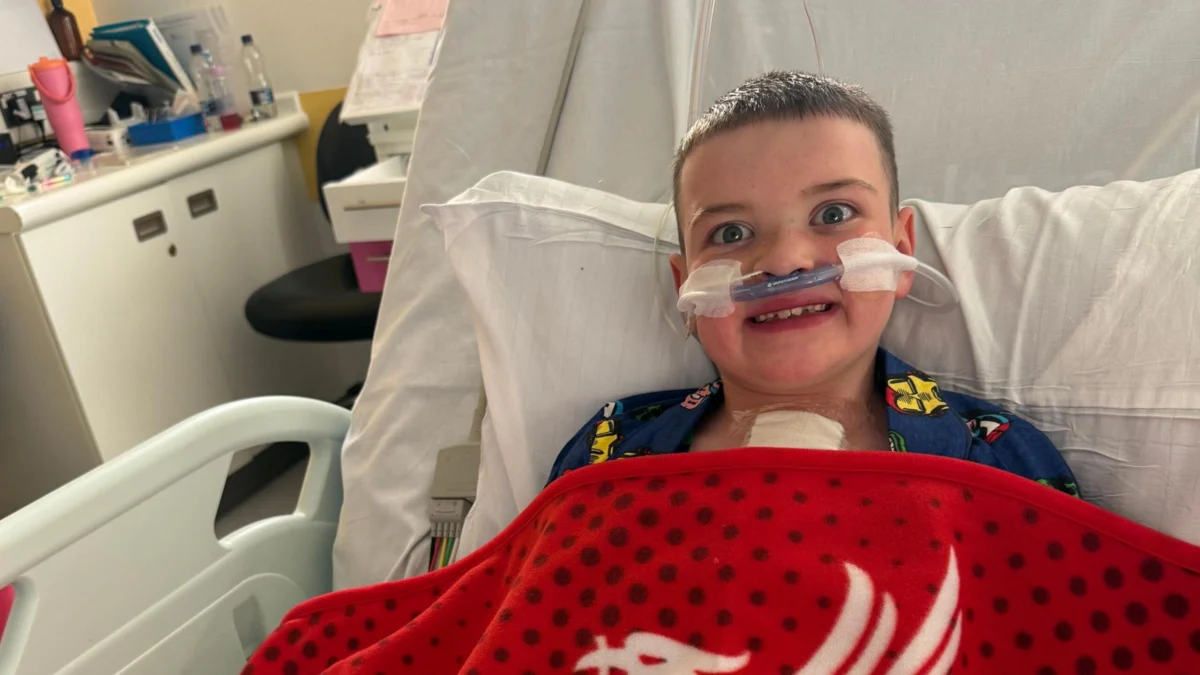
Dáithí’s journey has been one of extraordinary challenges and remarkable courage. Born in 2016, he was diagnosed with Hypoplastic Left Heart Syndrome (HLHS), a severe congenital heart defect where the left side of the heart is critically underdeveloped. This rare and complex condition means the left ventricle, aorta, and mitral valve are too small or completely absent, leaving the heart unable to effectively pump blood to the body. Children with HLHS typically undergo a series of reconstructive surgeries, known as the Norwood, Glenn, and Fontan procedures, but often, as in Dáithí’s case, a heart transplant becomes the ultimate and most definitive treatment.
For eight long years, Dáithí and his family endured an agonizing wait for a suitable donor heart. The scarcity of pediatric organ donors, coupled with the precise immunological and size matching required for successful transplantation, makes such waits incredibly arduous. During this period, Dáithí’s life was defined by medical appointments, hospital stays, and the constant threat of his condition worsening. His energy levels were severely limited, restricting his ability to participate in typical childhood activities. The transplant in July brought not just a new heart, but a new lease on life, transforming his physical capabilities and opening up a world of possibilities previously unimaginable. His father proudly stated that Dáithí is now "doing incredible" and "living his life to the absolute fullest."

Beyond his personal medical battle, Dáithí’s story resonated deeply across Northern Ireland, igniting a powerful campaign for systemic change in organ donation laws. The Mac Gabhann family, driven by their son’s plight and the desperate need for more donor organs, tirelessly advocated for an opt-out system. Their efforts culminated in the passing of the Organ and Tissue Donation (Deemed Consent) Act (Northern Ireland) 2022, affectionately known as "Dáithí’s Law," which came into effect in 2023.
Dáithí’s Law represents a significant shift from an "opt-in" system, where individuals had to explicitly register their wish to donate organs, to a "deemed consent" or "opt-out" model. Under this new legislation, all adults in Northern Ireland are considered potential organ donors unless they have explicitly recorded a decision not to donate. While families are still consulted before donation proceeds, the law aims to significantly increase the number of available organs by normalizing organ donation as a default, rather than an active choice. This change aligns Northern Ireland with other parts of the UK, including England, Scotland, and Wales, which have already adopted similar opt-out systems, demonstrating a collective commitment to addressing the critical shortage of organs for transplantation. The rationale behind such laws is rooted in the belief that many people support organ donation but simply haven’t taken the step to register their consent. By shifting the default, it is hoped that more lives will be saved and waiting lists reduced.
The impact of Dáithí’s Law is expected to be profound. Prior to its introduction, Northern Ireland had some of the lowest organ donation rates in the UK. The Mac Gabhann family’s campaign brought vital public awareness to the issue, highlighting not only the medical necessity but also the profound ethical and compassionate dimensions of organ donation. Their personal story provided a compelling human face to the statistics, galvanizing public support and political will. Dáithí’s ability to walk onto that football pitch, brimming with health and energy, is a living embodiment of the very hope his family fought to extend to countless others awaiting life-saving transplants.

The excitement surrounding his mascot duties began even before match day. Dáithí was reportedly "screaming down the phone" when he received the call from Republic of Ireland players Chiedozie "Chieo" Ogbene, Caoimhín Kelleher, and Troy Parrott, inviting him to join them. This personal touch from his heroes undoubtedly amplified his anticipation for the big night.
However, the journey to the Aviva Stadium was not without its dramatic moments. The Dublin Port Tunnel, a critical artery for reaching the stadium, was unexpectedly closed, threatening to derail their meticulously planned evening. Máirtín Mac Gabhann vividly recounted the scramble, explaining that he had to stay behind while Dáithí’s grandad bravely navigated the traffic to ensure Dáithí made it to the pitch on time for the initial walk-out. "I have never been so happy to have missed Dáithí walking out in front of 50,000 people with Troy Parrott, because it meant he made it," Máirtín said, describing the feeling as akin to Ireland scoring a last-minute winner. This stressful dash against time also became a teachable moment for Dáithí, with his father imparting a crucial life lesson: "This is a lesson to you – why you never ever give up, because we shouldn’t have made it in time, I just said we’re not giving up here, so we’re going to keep trying."
The emotional aftermath of the match further highlighted Dáithí’s profound joy. His father humorously noted that the experience had "created a bit of a monster," as Dáithí "outright refused" to wear his school uniform the next morning, insisting on going in his full Ireland kit from the night before. He also refused to wash his hands, treasuring the memory of Troy Parrott having held them. Such childlike defiance, born of pure happiness and indelible memories, was a welcome change for a family who had faced so many years of uncertainty and medical hardship.

Dáithí Mac Gabhann’s story is a powerful narrative woven with threads of medical adversity, legislative triumph, and pure sporting joy. It serves as a potent reminder of the fragility of life, the resilience of the human spirit, and the transformative impact of altruism. His ability to stand tall, healthy, and full of vigor on a national stage, inspiring not only his family but a wider community, underscores the profound significance of organ donation. It is a testament to how one courageous boy, aided by the "gift of a new heart," not only reclaimed his own life but also paved the way for countless others to experience the same hope and opportunity.
