
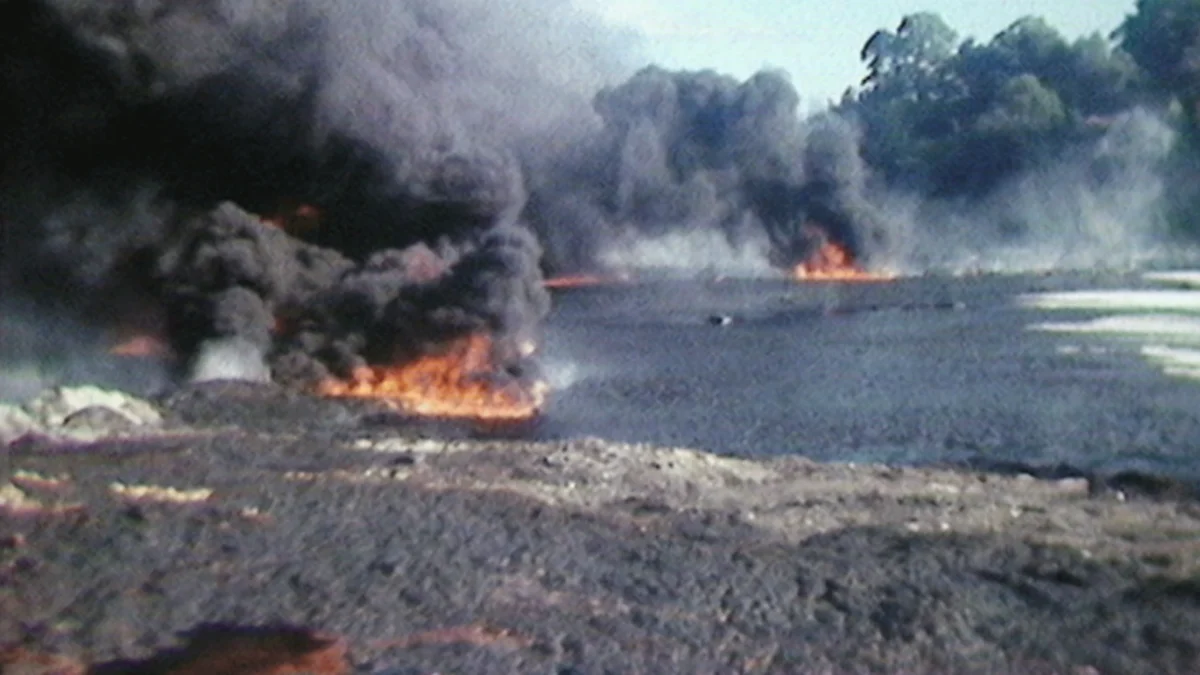
"Decades after a catastrophic chemical fire, families of firefighters who tackled the inferno are demanding accountability, convinced that prolonged exposure to toxic ‘forever chemicals’ at the Llwyneinion lagoon caused devastating cancers and reproductive issues."

This renewed call for justice follows a BBC investigation and a documentary that shed light on Wales’ hidden legacy of industrial pollution. The incident, which saw 60 firefighters battle a blazing chemical waste dump near Wrexham, North Wales, has now become a focal point for a growing number of families seeking to connect the dots between the harrowing events of 1980 and a pattern of serious health crises, including rare and deadly cancers and an unusual cluster of miscarriages.
The year was 1980, and the serene landscape near Wrexham, North Wales, was shattered by a terrifying sight: the Llwyneinion lagoon, a vast repository of chemical waste, engulfed in flames. For the 60 firefighters dispatched to quell the inferno, it was an unprecedented and perilous assignment. Barrels, brimming with unknown compounds, exploded violently, sending dangerous projectiles into the air, while thick, acrid black smoke billowed relentlessly, blanketing the nearby village and beyond. Amidst this chaos, a young firefighter named Steve Williams, then in his twenties, slipped into the burning, toxic mire. Though quickly rescued, his widow, Jilska Williams, now believes that the chemicals he ingested during that terrifying moment ultimately cost him his life from a rare form of lung cancer, 14 years later, at the tragically young age of 39.

Jilska Williams, a 71-year-old retired nurse, is adamant: "It’s a definite probability. They’re firemen and they’re always running into fires, so you don’t know what the long-term effects are going to be – but actually falling into the lake and drinking that fluid, which is full of chemicals. He had a double-whammy, didn’t he?" Her profound conviction is rooted in the devastating loss of her husband and the disturbing pattern of illnesses emerging among other first responders to the Llwyneinion blaze. She asserts that "someone should be held accountable" for the consequences of this disaster.
The Llwyneinion site itself holds a dark history, having served as a dumping ground for a cocktail of industrial chemicals, including suspected polychlorinated biphenyls (PCBs), a highly toxic class of compounds linked to the chemical giant Monsanto. These substances, once widely utilized in products ranging from electrical equipment to paints and plastics, earned the ominous moniker of "forever chemicals" due to their extraordinary persistence in the environment and human body. They do not readily break down and can accumulate over decades, posing severe health risks, including various cancers, immune system dysfunction, and reproductive harm. The lagoon was acquired by the then Clwyd County Council for a symbolic £1 just months before the fire erupted, raising questions about the due diligence conducted regarding its hazardous contents.

Steve Williams, who had followed his father into the fire service in 1978, was among the first responders from Wrexham to the lagoon fire. The incident was a gruelling 18-hour battle for the crews, during which Steve’s fall into the chemical-laden water was a stark illustration of the dangers they faced. Following his rescue, he was given a tetanus injection at the hospital and sent home, a response Jilska now views as woefully inadequate. "What is a tetanus injection going to do for him?" she questions, highlighting the lack of understanding or provision for chemical exposure at the time. "It was a disaster waiting to happen. A time bomb waiting to go off, as far as I’m concerned."
The couple later moved to Melbourne, Australia, but the shadow of Llwyneinion remained. In 1994, Steve received a devastating diagnosis: stage four small cell carcinoma, a rare and aggressive form of lung cancer. He was given mere weeks to live, dying just three days after his 17th wedding anniversary, leaving behind their two young children, then aged six and ten. The family’s last photograph together, taken in June 1994, captures a poignant moment shortly before his terminal diagnosis, a stark reminder of the life tragically cut short.

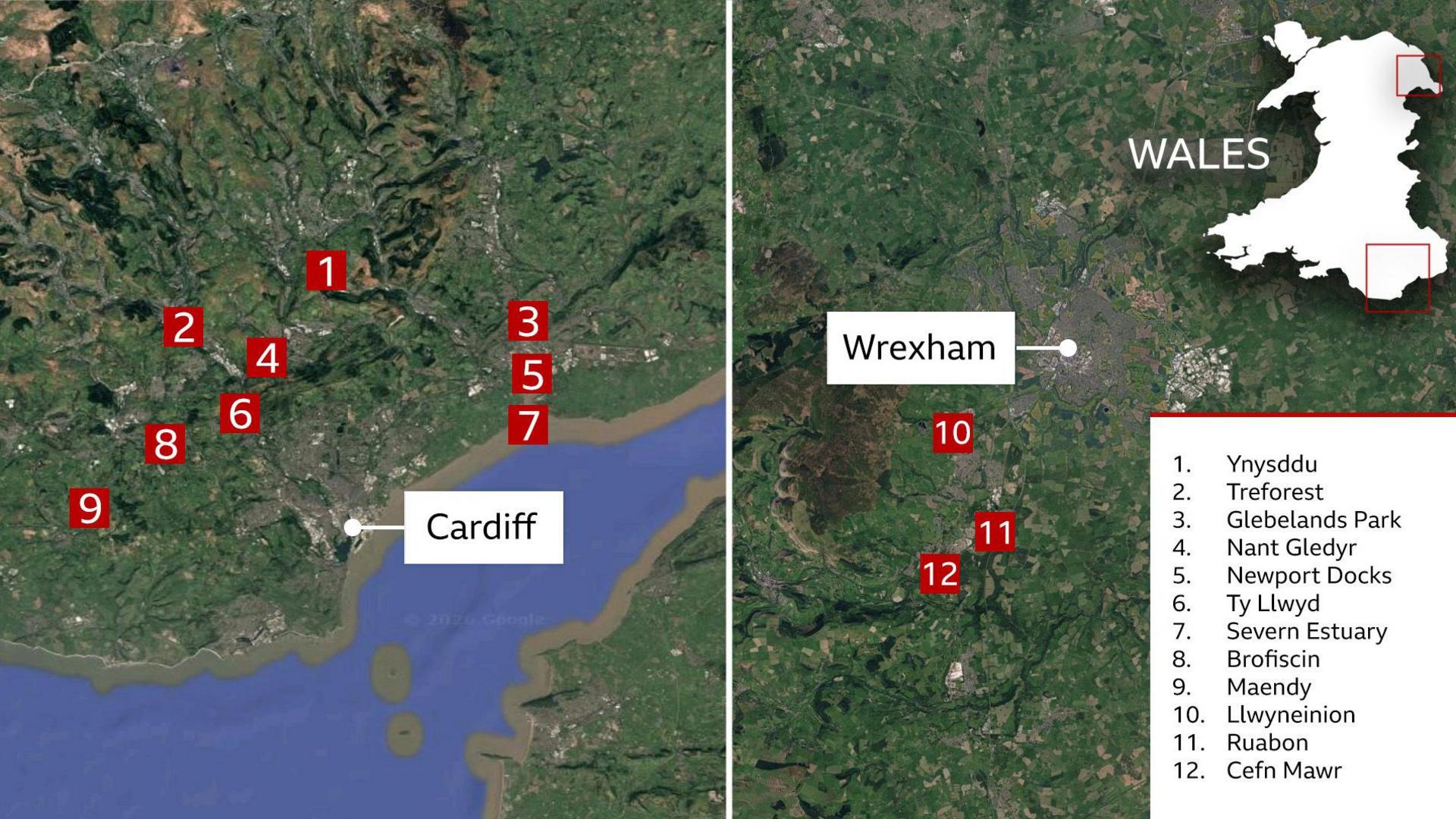
The Williams family’s quest for answers has gained momentum, aligning with a broader group of former firefighters and their relatives who have come forward following the BBC documentary "Buried with Michael Sheen." The programme extensively explored Wales’ toxic waste legacy, including allegations of conspiracy and denial surrounding "forever chemical" contamination. The documentary team’s findings, including elevated levels of PCBs in soil samples taken near the Llwyneinion lagoon and at 13 other suspected dump sites across Wales, have amplified concerns among the firefighter community.
Eleven firefighters or their families have now voiced their fears to a BBC investigation, highlighting a worrying cluster of health issues. Beyond the cancers, a particularly disturbing observation was an increased number of miscarriages suffered by partners of those who attended the fire in the year immediately following the incident. Jim MacGrane, another firefighter present at Llwyneinion, recalls his wife suffering a miscarriage during that period. "There were six wives that we can recall had miscarriages within 12 to 15 months of that incident," Jim, now 71, stated. "It was highlighted by one of the guys on the station who said, ‘that’s not coincidence. There’s something not right there’."

Another firefighter, Mark Jones, whose father Ken also attended the blaze and later died of lymph and brain cancer in 2011, echoes these concerns. "Out of the 60 people that attended that fire a significant number had cancers or passed away with cancer," said Mark, now 68. He, like others, is keen to participate in blood testing to investigate any potential links, especially in light of the recent revelations about PCBs. Firefighters noted that while they received annual health checks during their service, this crucial monitoring ceased upon retirement, leaving them without long-term oversight for potential occupational health issues.
Andy Moore, who spent 18 hours helping to smother the fire with foam and witnessed Steve Williams fall into the lagoon, vividly remembers the conditions. "There was no request for chemical PPE, we were basically fighting that fire in our normal tunics, drips and helmets," said Andy, now 70. "I was walking around that fire ground in a shirt and tie – I’ve always been concerned about what it could have done to me." Andy himself was diagnosed with skin cancer a year ago, adding another potential piece to the troubling puzzle. "Whether I can relate that back to this specific incident I don’t know but there’s too many coincidences – I talk to my colleagues and we’ve had a lot of our guys who have died young specifically of cancers."
While the anecdotal evidence is compelling, establishing a definitive scientific link between specific chemical exposure during a fire and long-term health issues presents significant challenges. Professor Anna Stec, a leading UK expert in fire chemistry and toxicity, acknowledges this complexity. "It’s very difficult to link specific chemicals to health disorders and it requires a multi-disciplinary approach where we’re looking at residents’ exposure, their lifestyle, and so on," she explains. For firefighters, the challenge is compounded by their exposure to "a cocktail of toxic substances" throughout their careers, making it difficult to isolate the impact of a single incident.
However, Professor Stec also emphasizes the importance of investigation, particularly when patterns emerge. "What we’re learning from our Firefighters’ Cancer and Disease Registry is that we see a pattern where there is a major fire incident – and a group of firefighters developing similar cancers. So it’s definitely worth looking at." This perspective offers a glimmer of hope for those seeking answers, suggesting that collective health data can provide crucial insights where individual causation is hard to prove. The call for blood testing for carcinogens like PCBs aligns with this need for comprehensive data.

The physical legacy of the fire, the Llwyneinion lagoon, remains a stark presence, albeit fenced off. This continued existence of the un-remediated site deeply concerns former firefighters like Stuart Jones, who warns, "The actual lagoon is still there from what I can make out in the same state it was 46 years ago. The potential of that happening again is very clear."
In response to these mounting concerns, the Fire Brigades’ Union (FBU) has announced it is taking the matter "really seriously." Gareth Tovey of the FBU confirmed that the union is consulting with scientists to explore available options to support the retired firefighters in their search for answers. The FBU also plans to write to Wales’ fire and rescue services, seeking information on current protections for those called to incidents at sites with historical toxic waste dumping.

Wrexham Council, the current owner of the site, stated that while Llwyneinion does not meet the legal definition of "contaminated land" under current legislation, they conduct regular inspections of the surrounding area and monitor streams and groundwater. A council spokesperson conveyed sympathy for the illnesses experienced by fire service members and their families. They also revealed that concerns about firefighters’ health were raised with their contaminated land officer twice – in February 2004 by the Wrexham fire station officer in charge, and on another occasion by a different fire officer, who was advised to contact the health authority. Regarding the risk of another fire, the council cited fire service advice from 2006 that a "number of specific circumstances" would be needed for a recurrence, and an emergency response plan was revisited in 2017.
Eastman Chemical Company, responsible for Monsanto’s legacy production in the UK, has declined to comment on the matter. The North Wales Fire and Rescue Service, unable to comment on the 1980 incident, affirmed its commitment to understanding long-term health impacts associated with firefighting and the ongoing development of occupational health and wellbeing approaches.

In a promising development, the Welsh government recently announced a commitment of £2m in its draft budget to "kick-start a new approach to managing contaminated land," alongside developing a Wales-wide strategy for restoring post-industrial land. This commitment signals a growing recognition of the widespread environmental and health challenges posed by Wales’ industrial past.
As families like the Williamses continue their tireless pursuit of truth and justice, their story serves as a potent reminder of the enduring human cost of industrial pollution and the critical need for comprehensive investigation, long-term health monitoring for first responders, and robust environmental protection. The echoes of the Llwyneinion blaze resonate decades later, demanding that the unanswered questions finally receive the clarity they deserve.
