
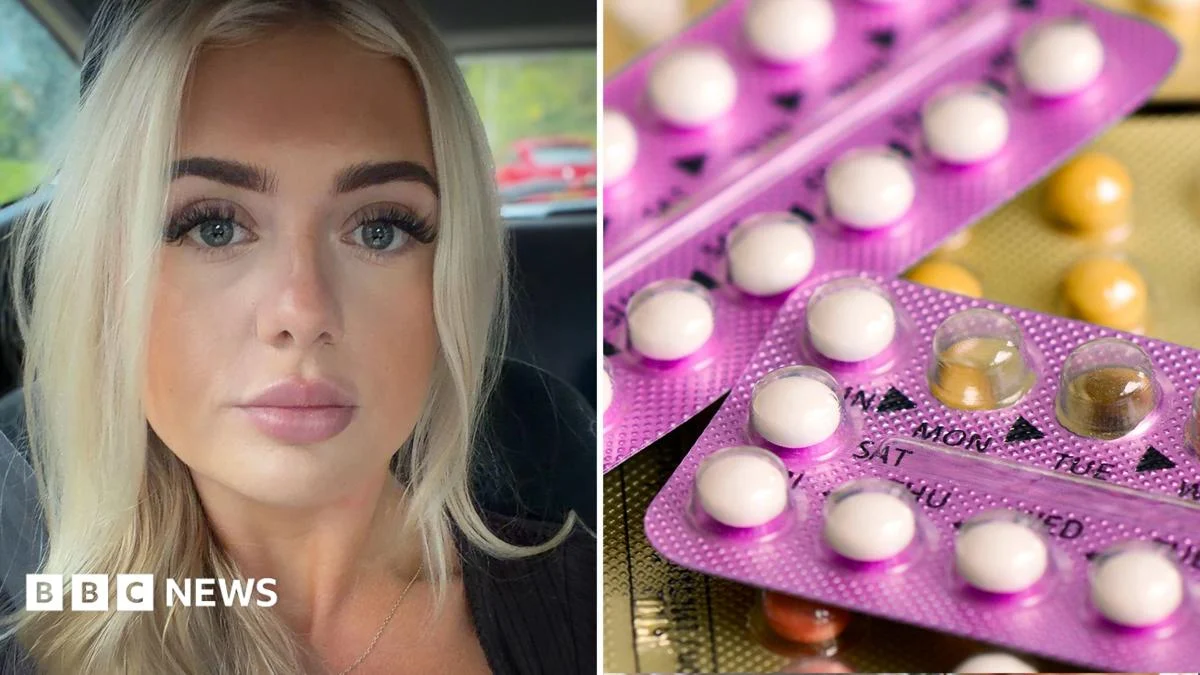
"Once a symbol of liberation, the contraceptive pill is now at the heart of a complex re-evaluation by young women, who are increasingly seeking personalized, informed choices amidst a growing landscape of alternatives and evolving attitudes towards hormonal health."
This significant decline in oral contraceptive use, highlighted by recent national studies, reflects a broader societal shift where women are seeking greater autonomy and understanding over their reproductive health. It’s a movement driven by enhanced awareness of contraceptive options, a deeper engagement with personal health narratives, and a nuanced consideration of the pill’s role in their overall well-being. This re-evaluation marks a pivotal moment in reproductive healthcare, prompting closer examination of the factors influencing women’s decisions.
When the combined oral contraceptive pill was first introduced in the 1960s, it heralded a profound revolution in women’s lives. Offering unprecedented control over fertility, it quickly became synonymous with women’s liberation, enabling greater participation in education, careers, and public life. For decades, it remained the cornerstone of family planning for millions globally. However, over the past decade, a quiet but significant shift in attitudes has emerged, challenging its once-unquestioned dominance.
The latest findings from the National Surveys of Sexual Attitudes and Lifestyles (Natsal), a crucial once-in-a-decade study monitoring sexual health across Britain, reveal a substantial drop in the proportion of young women relying on the pill. Among women aged 16 to 24, usage has plummeted by more than a third in a decade, from 48% to 32%. Across all women of reproductive age (16-49), the figures also show a notable decline, with just under 21% currently using the pill, down from 29%. This marked change signals a complex interplay of evolving societal norms, increased access to information, and a growing emphasis on personalized health choices.
Experts attribute these figures to a diverse array of underlying reasons. One significant factor is the proliferation of information regarding contraceptive choices, readily available through various platforms. This increased awareness empowers women to explore a wider spectrum of options beyond the pill. Another potential, albeit less direct, contributor could be a generational trend of reduced sexual activity compared to previous decades. However, the most compelling insights often emerge from individual narratives, reflecting a deeper engagement with personal health and well-being.
Maddison Middleton, a 24-year-old, discontinued the combined contraceptive pill last year. Her journey with the pill began at 15, primarily to manage debilitating period pain. While it effectively alleviated her symptoms, a growing unease began to surface over time. "It was purely just the thought of it isn’t natural to be taking this pill all the time," Maddison explains, articulating a sentiment increasingly echoed by many young women. This perspective reflects a broader cultural trend towards "natural" health and a desire to minimize synthetic interventions in the body. Maddison, who now relies on condoms alongside a fertility tracking app, also expressed concerns about the long-term impact on her fertility, despite never experiencing side effects herself. This perception, though common, is often at odds with scientific evidence; studies consistently show that the pill, which works by inhibiting ovulation, has no long-term detrimental effects on fertility.
However, the pill is not without its documented side effects. The NHS acknowledges that common issues can include mood changes, headaches, breast tenderness, and nausea. More seriously, there is a very small, but statistically significant, increased risk of developing blood clots, as well as a slightly elevated risk of breast or cervical cancer. Despite these considerations, the combined oral contraceptive remains a highly effective and generally safe method of birth control, used by millions of women in the UK, and continues to be one of the most popular choices globally. Beyond contraception, its hormonal regulation properties make it a common prescription for various health conditions, including acne, endometriosis, painful periods, and Polycystic Ovary Syndrome (PCOS).
Elle-Mae Thompson, 31, from Warwickshire, exemplifies the complex relationship many women have with hormonal contraception. She was prescribed the progesterone-only mini-pill to manage severe symptoms of PCOS, such as acne and fluctuating hormones. However, the medication had a profound and negative impact on her mental health, leading to her being signed off work for three months. Following her doctor’s suggestion of potential progesterone sensitivity, Elle-Mae discontinued the pill earlier this year. While switching antidepressants also contributed to her improvement, she vividly recalls feeling "clearer, felt better… this cloud had been lifted" within days of stopping the pill. Her experience leads her to believe that doctors often "dish out [the pill] far too easily," without adequate discussion of potential side effects and personalized risk factors. This highlights a critical need for more comprehensive patient-doctor dialogues and a deeper understanding of individual physiological responses to hormonal medications.
Dr. Neha Pathak, an NHS consultant specializing in sexual and reproductive health, confirms that the Natsal study’s findings resonate with her clinical observations. "I have seen more women come into my clinic with questions and concerns about using different methods and side effects – and that is a good thing," she states. This increased engagement indicates a more empowered patient population, actively seeking information and advocating for their health. Dr. Pathak emphasizes that women should have access to accurate information to make healthy, informed choices. However, she also raises a crucial point: the necessity of discerning whether some concerns about the contraceptive pill are "driven by misinformation," particularly the notion that synthetic hormones are inherently harmful because they are "not natural." This underscores the challenge of navigating health information in the digital age, where anecdotal evidence and wellness trends can sometimes overshadow evidence-based medical consensus.
The growing interest in non-hormonal contraceptive alternatives and the rise of fertility tracking apps are symptomatic of this increased awareness and a desire to understand the body’s natural hormonal rhythms. Fertility Awareness Methods (FAMs), often facilitated by apps that track indicators like basal body temperature and cervical mucus, promise a "natural" approach to family planning. The NHS states that these apps, when used correctly, can be over 90% effective in preventing pregnancy. However, their efficacy drops significantly to 76% with typical use, due to the strict adherence required. In contrast, the combined pill and mini-pill boast a 91% effectiveness with typical use, rising to 99% with perfect adherence, highlighting a crucial difference in reliability that users must weigh.
Greta Costioli, a 29-year-old content creator, experienced the double-edged sword of social media’s influence firsthand. After discussing it with her GP, she decided to stop taking the pill, which she had been on for seven years to manage her PCOS symptoms. Her decision was met with an outpouring of supportive messages from her online followers, with "people really cheering me on." This initial support underscores the collective sentiment among some women to distance themselves from hormonal contraception. However, within months, Greta’s PCOS symptoms returned with debilitating intensity. After careful consideration and in consultation with her doctor, she chose to try a different type of pill. This decision, however, drew "really rude and judgmental" comments from some social media users, who labeled her choice a "band-aid solution" that wouldn’t "fix the root cause." Greta’s experience highlights the pressure many women face to adhere to specific health narratives, even at the expense of their own well-being. "It was like they rather I suffered than take the medication I needed for my condition," she reflects, emphasizing the fundamental principle of individual preference and bodily autonomy in healthcare decisions.
The Natsal study, which surveyed 6,700 randomly selected individuals aged 16 to 59 across Britain between 2022 and 2024, confirms that many women are indeed opting for alternative contraceptive methods. Notably, the use of the hormonal coil (Intrauterine System or IUS) has seen a significant increase, rising from 4% to 10% over the last decade. Natsal is also currently analyzing data on the uptake of fertility-tracking tools, reflecting their growing popularity. Condoms, meanwhile, remain a consistently popular choice, primarily for their dual benefit of contraception and protection against sexually transmitted infections, with no notable change in usage over the past decade.
Elle-Mae Thompson’s journey illustrates the appeal of these alternatives. She had a hormonal coil fitted earlier this year. While it still contains progesterone, the localized, much smaller dose released directly into the uterus has not had the same profound impact on her mental health as the oral mini-pill. However, it has not alleviated her PCOS symptoms, underscoring that different methods serve different purposes and have varying effects on individuals. Elle-Mae observes a clear generational divide: "My mum’s generation [were] a generation of, ‘yeah, yeah, go on the pill,’" she says, whereas now there are "different perspectives" and young women are actively exploring other options.
This generational shift is also recognized by Professor Joyce Harper from University College London. She recalls that in the 1980s, it felt like "we were all just given the pill," and there was a prevailing nervousness about using the coil. "Women have more choice now," she states, highlighting the significant advancements in contraceptive technology. "We have implants, injections, the coil, the hormonal coil, there is a lot more out there." This expanded toolkit allows for a more tailored approach to contraception, moving beyond a one-size-fits-all model.
Despite the growing array of alternatives and evolving perceptions, Dr. Pathak maintains that the pill will always remain "very good for some people." She emphasizes the highly individual nature of contraceptive choice, asserting that "there will always be something different that suits every person." Dr. Paula Briggs, a consultant in sexual and reproductive health at Liverpool Women’s NHS Foundation Trust, concurs, underscoring the "awful lot of positives" associated with the pill. Beyond its primary contraceptive function, it can effectively reduce abnormal bleeding and pain, and even decrease the risks of certain gynaecological cancers.
Furthermore, the contraceptive pill itself has continued to evolve. Dr. Briggs points out that newer formulations incorporate different types of oestrogen, such as estradiol, which is closer in structure to the hormone naturally produced by the body. "The pill is not just one thing," she explains. "We now have 20 plus different hormonal combinations." This continuous innovation means that for many women, finding a suitable pill formulation that minimizes side effects and maximizes benefits remains a viable and effective option.
Ultimately, for individuals like Greta Costioli, the evolving landscape of contraception is about informed empowerment. "As women," she concludes, "we need to be informed and make the best decisions for ourselves." This sentiment encapsulates the current paradigm shift: a move towards greater autonomy, personalized care, and a nuanced understanding of contraception as a multifaceted aspect of women’s overall health and well-being.
