
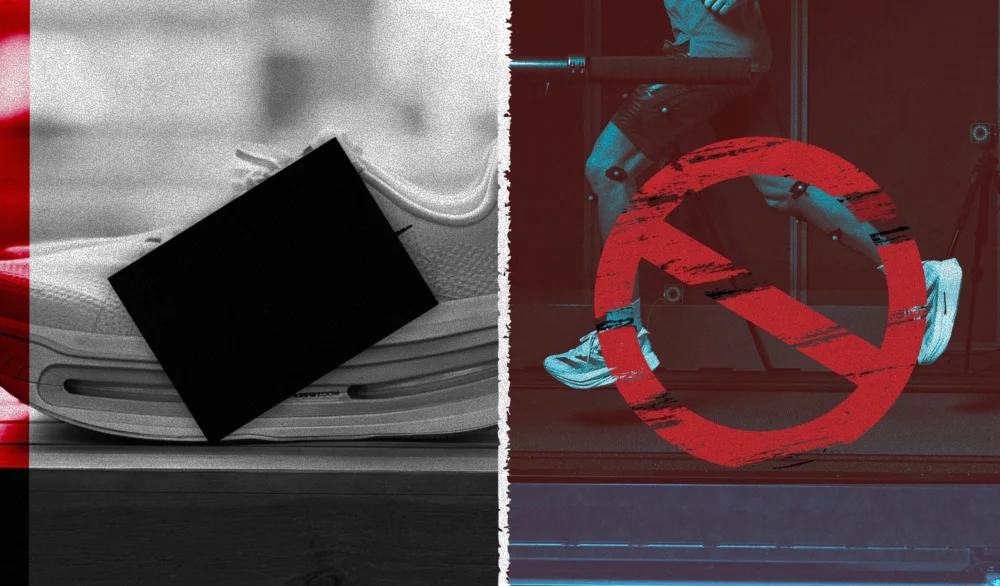
"While World Athletics enforces strict regulations on midsole thickness for elite competition, the concept of an ‘illegal’ shoe is largely a marketing narrative that has little to no impact on the recreational running community."
Over the last half-decade, the running industry has undergone a radical transformation characterized by the rise of "super shoes" and a trend toward increasingly thick midsoles. As manufacturers push the boundaries of foam technology to maximize energy return and efficiency, a new terminology has emerged in social media circles: the "illegal" shoe. This label refers to footwear that exceeds the 40-millimeter stack height limit established by World Athletics, the governing body for international track and field. However, for the vast majority of the world’s 50 million runners, these regulations are a technicality of professional sports rather than a restriction on personal performance, highlighting a significant disconnect between competitive rules and consumer reality.

The Origin of the "Illegal" Shoe
The term "illegal" in the context of running footwear is a relatively recent phenomenon, tracing its roots back to the 2016 Rio Olympics and the subsequent release of the Nike Vaporfly. The introduction of carbon-fiber plates embedded in high-energy-return foam led to a cascade of broken world records, prompting World Athletics to intervene. To ensure "fairness" and "athletic integrity," the governing body established specific criteria for footwear used in sanctioned competitions. These rules state that for road races—ranging from the mile to the ultramarathon—a shoe must have a sole thickness (stack height) of no more than 40 millimeters and may contain only one rigid structure, such as a carbon plate or a set of energy rods.
In the years following these rulings, the industry split into two lanes. On one side, brands developed "legal" racing flats designed to sit exactly at the 39.5mm or 40mm mark to maximize advantage without disqualifying their elite athletes. On the other side, brands began to experiment with "illegal" prototypes and "super trainers" designed for training and recreational use. These shoes, often featuring stack heights of 45mm, 50mm, or even higher, were built without regard for the rulebook, focusing instead on maximum cushioning, leg preservation, and comfort.
The Social Media Hype Machine
The rise of the "runfluencer" has transformed these technical manufacturing distinctions into clickbait-style content. On platforms like Instagram and TikTok, creators often frame these high-stack shoes as "contraband" or "banned" items. This conspiratorial framing suggests that the shoes provide such a profound mechanical advantage that they have been outlawed by "the authorities."

While this messaging is effective for driving engagement, it is fundamentally misleading. For a shoe to be "illegal," there must be a law or a governing body with the jurisdiction to forbid its use. For the average person running a 5K through a local park or participating in a charity 10K, there is no such authority. These runners are not competing for Olympic qualifying times, nor are they eligible for professional prize money. Consequently, the "illegal" label is a misnomer; in the context of the general public, these shoes are perfectly legal, widely available for purchase, and increasingly popular.
The Reality of Race Day Disqualifications
One of the most common fears among amateur runners is that wearing a shoe with a 45mm stack height will lead to a disqualification at a major event like the New York City Marathon or the Boston Marathon. To investigate this, organizers like the New York Road Runners (NYRR) have clarified their stance. While these organizations do technically adopt World Athletics rules for their events, the application of these rules is almost exclusively reserved for the "Elite" or "Professional" waves.
Elite athletes are subject to rigorous equipment checks and drug testing because their results carry professional and financial weight. In contrast, the "open" waves—where thousands of recreational runners participate—are treated with a different level of scrutiny. NYRR representatives have noted that while they reserve the right to address violations on a case-by-case basis, they have not historically disqualified amateur participants for shoe infractions. The likelihood of a mid-pack runner being pulled from a course because their Hoka Skyward X exceeds the 40mm limit is virtually zero.

The Rise of the "Super Trainer"
The market’s shift toward "illegal" stack heights is driven by data. According to the Strava Year in Sport Report for 2025, the most frequently logged shoes by millions of users are often those that lean into maximalist cushioning. High-stack daily trainers have become the backbone of the modern runner’s rotation. These shoes are designed to absorb the repetitive impact of road running, potentially reducing muscle fatigue and shortening recovery times between workouts.
Brands like Adidas have leaned into this category with models like the Adizero Prime X Strung, which features a massive 50mm stack height and multiple carbon plates. By explicitly marketing these as "illegal" for competition, brands have successfully created a "forbidden fruit" allure that appeals to runners looking for the ultimate training experience. These shoes are not intended to replace race-day legal shoes for those chasing specific qualifying times, but rather to provide a tool for high-volume training where leg protection is the priority.
The Physiological Trade-offs
While "illegal" shoes offer significant comfort, they are not without their risks. Dr. Mark Mendeszoon, a board-certified podiatrist and surgeon, warns that the transition to maximalist footwear requires a deliberate adjustment period. "It’s like getting braces on your teeth," Mendeszoon explains. "You have to learn slowly."

The primary concern with high-stack heights is stability. As the foot is elevated further from the ground, the "lever arm" for potential ankle rolls increases. Furthermore, the extreme cushioning can alter a runner’s natural gait and proprioception—the body’s ability to sense its position in space. One specific physiological impact is the shortening of the Achilles tendon. Because many high-stack shoes feature a significant "drop" or a highly rockered geometry that mimics a heel, the Achilles does not have to stretch as far during the gait cycle. Over time, this can lead to tightness and a higher risk of injury if the runner suddenly switches back to a more traditional, lower-profile shoe.
To mitigate these risks, experts recommend a gradual break-in period. Runners should wear new high-stack shoes around the house before taking them on the road. Additionally, focusing on Achilles flexibility and calf strength is essential to counteract the mechanical changes introduced by the foam.
Notable "Illegal" and High-Stack Models
For runners who prioritize comfort and performance over the constraints of the World Athletics rulebook, several models have become industry favorites:

- Hoka Clifton 10: A staple in the maximalist world, the Clifton series pioneered the high-stack, lightweight foam combination that defines the modern era.
- Nike Vomero Plus: Representing Nike’s push into ultra-plush daily training, this model offers a significant stack of ZoomX foam for maximum impact protection.
- Adidas Adizero Prime X3 Strung: Perhaps the most famous "illegal" shoe, it deliberately ignores the 40mm rule to provide a triple-layered foam experience with multiple carbon structures.
- ASICS Novablast 5: Known for its "trampoline effect," this shoe provides a high-energy return that sits right on the edge of, or exceeds, competitive limits depending on the specific size and version.
- Brooks Glycerin Max: A newcomer to the ultra-stack category, this shoe focuses on nitrogen-infused foam to provide a soft ride for long-distance recovery runs.
- R.A.D UFO: A boutique entry into the maximalist space, focusing on aesthetics and high-performance foam for the modern urban runner.
Conclusion
The controversy surrounding "illegal" shoes is a classic example of how professional sporting regulations can be misinterpreted by the general public. For the elite athlete, a 41mm midsole is a breach of contract and a risk to their career. For the average runner, it is simply a very comfortable piece of technology.
As long as a runner is not competing for a podium spot at an IAAF-sanctioned event, the only "laws" that matter are the laws of physics and the requirements of their own biomechanics. By ignoring the social media hype and focusing on how a shoe actually feels on the road, runners can make informed decisions that prioritize their health and enjoyment over arbitrary competitive limits. The "illegal" shoe isn’t a crime—for most, it’s just a better way to run.
