
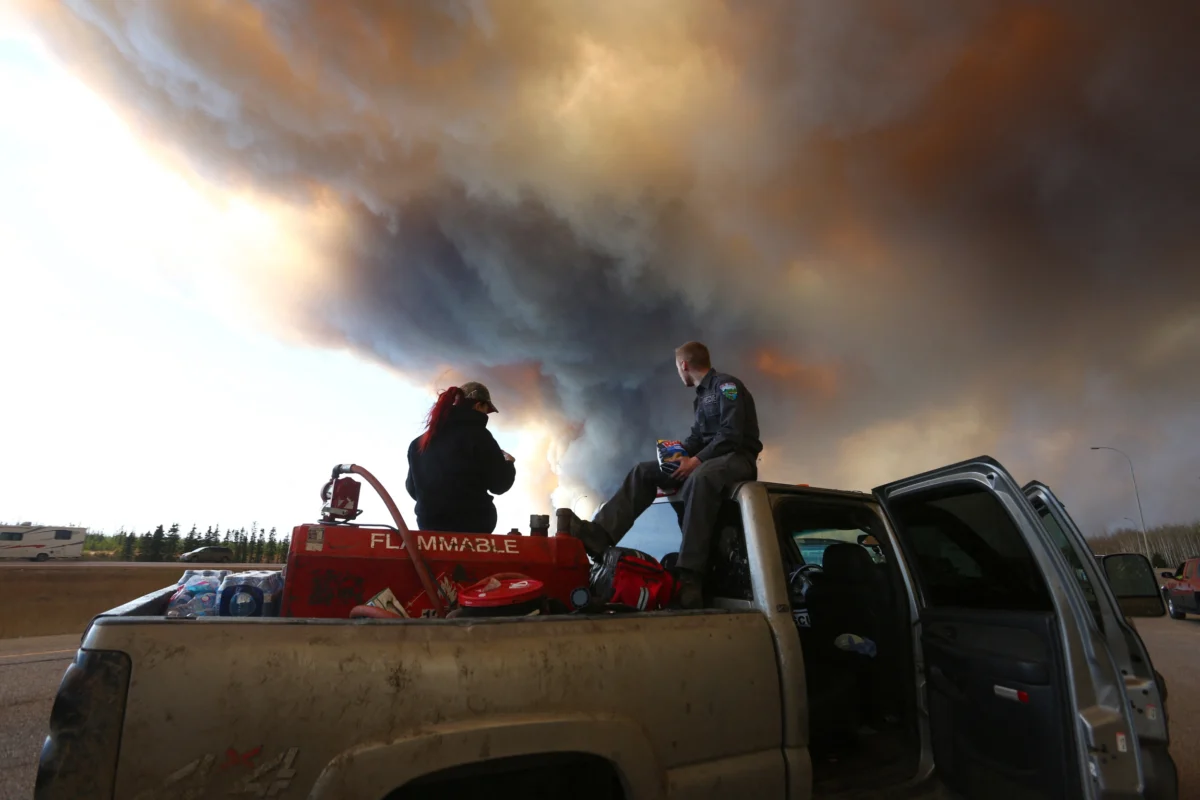
"Namaygoosisagagun First Nation was destroyed without warning or assistance, a stark illustration of a systemic failure to protect vulnerable communities during escalating wildfire seasons."
The rapid destruction of Namaygoosisagagun First Nation (Collins First Nation) on July 13, 2026, serves as a devastating and visceral example of a critical failing within Canada’s wildfire emergency management system. Within an hour, a fast-moving wildfire consumed much of the community, forcing residents to evacuate by boat with minimal time to gather their belongings. This event, marked by a complete lack of advance warning from any ministry or assistance from provincial authorities, highlights a pattern of neglect that disproportionately impacts Indigenous communities at the most critical moments. The incident lays bare the urgent need to re-evaluate and strengthen Canada’s preparedness and response mechanisms, particularly for those communities most at risk.
The devastating events at Namaygoosisagagun are not an isolated incident but rather a recurring and deeply concerning pattern that has been documented throughout decades of Canadian wildfire history. This pattern is starkly illuminated by the disproportionate number of evacuations experienced by First Nations communities. While representing approximately 5% of Canada’s total population, First Nations communities account for a staggering 42% of all wildfire-related evacuations. This disparity is rooted in a complex interplay of factors including geography, chronic underinvestment in essential infrastructure, and the historical positioning of Indigenous communities in remote areas that often lack adequate road access, robust firefighting infrastructure, and effective warning systems.
The scale of displacement due to wildfires is alarming. In 2025 alone, 44,920 individuals from 61 on-reserve First Nations were forced to leave their homes due to wildfire activity. The 2026 season has already seen over 1,600 First Nations residents in Ontario displaced, with the season far from its conclusion. Mandatory evacuation orders have been issued for multiple communities, including Armstrong, Whitesand First Nation, Lac des Mille Lacs First Nation, Lac La Croix First Nation, and Gull Bay First Nation. Evacuees have been relocated to Thunder Bay or transported to southern Ontario, underscoring the widespread and ongoing nature of the crisis.
Adding a layer of profound concern to the unfolding crisis is the timing of significant budget cuts to firefighting resources. The destruction of Namaygoosisagagun occurred in the same week that Ontario’s 2026-27 budget slashed the province’s emergency forest firefighting allocation by a substantial 44%. The budget reduced funding from the $271 million spent in the previous fiscal year to a planned $150 million. This fiscal decision has drawn sharp condemnation from Indigenous leaders, firefighting unions, and policy researchers who point to the critical timing of these cuts. The cuts were announced amidst 180 wildfires burning across Ontario, a situation where dozens of First Nations families were already fleeing their homes by boat, and the province was formally requesting federal air support due to insufficient provincial resources to manage the escalating crisis.
Ontario’s firefighting capacity is currently strained, with only 150 fire crews available, a number falling short of the province’s own internal targets. The severity of the fires has led to the withdrawal of crews from some active blazes, as extreme fire behavior has rendered direct suppression efforts too dangerous. In response to these systemic issues, organizations such as the OPSEU union, representing Ontario’s frontline firefighters, and the PIPSC scientists’ organization, have joined calls for a national firefighting authority. A Canadian Senate report published in May 2026 specifically recommended the establishment of such an authority to address what critics identify as chronic underfunding and a reactive rather than proactive response model. This proposed authority aims to shift the focus from addressing emergencies after they escalate to preventing escalation through the strategic positioning of resources.
While the federal government has announced significant funding commitments to address wildfire management, including $316.7 million over five years for new aerial firefighting aircraft through the Canadian Interagency Forest Fire Centre and $256 million over five years for firefighting equipment via the Fighting and Managing Wildfire in a Changing Climate Program, questions remain about the efficacy and reach of these investments. An additional $57.2 million over five years has been allocated for Indigenous FireSmart programs. Furthermore, a July 2026 update highlighted a $1.25 million investment for six projects aimed at enhancing wildfire preparedness in Métis communities and funding to train up to 38 Indigenous wildland firefighters through partnerships with the Dënesųłıné Government and Chipewyan Prairie First Nation.
Ginette Lavack, Parliamentary Secretary to the Minister of Indigenous Services, acknowledged the profound impact of climate change on First Nations communities, stating, "The floods, severe weather and wildland fires we’ve seen in recent weeks are another reminder that First Nations communities continue to bear the greatest impacts of climate change. As these emergencies become more frequent and more intense, our commitment remains the same: we will stand alongside First Nations." However, critics argue that the commitment to stand alongside communities after they have been destroyed does not equate to preventing their destruction in the first place, pointing to the stark reality faced by Chief Paavola and the residents of Namaygoosisagagun.
The disproportionate impact of wildfires on First Nations communities is a multifaceted issue rooted in structural disadvantages. A federal public health analysis identifies several interconnected reasons for this disparity. Firstly, geography and isolation play a critical role. Many First Nations communities are situated in remote, forested regions with limited road access, meaning that evacuation routes can be compromised by fire, leaving residents with few options. Secondly, the quality of housing and infrastructure on reserves is often precarious. Chronic underfunding means that buildings are more likely to be older, constructed with less fire-resistant materials, and lack adequate defensible space around them.
Thirdly, communication gaps represent a significant vulnerability. Warning systems that rely on cell phone alerts or municipal infrastructure often prove ineffective in remote areas. The complete lack of warning experienced by Namaygoosisagagun exemplifies a well-documented systemic gap in emergency communication for these communities. Fourthly, the loss of traditional lands and knowledge associated with wildfires has profound implications. As highlighted by federal public health analyses, wildfires restrict access to traditional land-based activities like hunting, fishing, and foraging, which are essential for the food security and cultural continuity of many First Nations. Evacuation, therefore, means more than just displacement from homes; it signifies a disconnection from a vital way of life.
Finally, the long-term consequences for mental health and recovery are often inadequately addressed. Research consistently indicates that post-wildfire mental health services in Indigenous communities are often insufficient, culturally inappropriate, and lack the resources for sustained long-term recovery. The trauma of repeated displacement compounds across wildfire seasons, creating a cycle of ongoing distress.
While the federal government’s Emergency Management Assistance Program provides 100% reimbursement for eligible response and recovery costs for First Nations affected by wildfires, this measure, while crucial for post-disaster support, does not address the fundamental issue of preventing communities from being destroyed without warning. Indigenous leaders and wildfire policy advocates are calling for a paradigm shift in wildfire management. These calls include the establishment of a national wildfire authority to coordinate resources and response efforts more effectively, increased and sustained investment in proactive wildfire prevention measures, including fuel management and community-based fire mitigation strategies, and the development of culturally appropriate and community-led early warning systems that account for the unique geographical and communication challenges faced by remote First Nations.
The 2026 wildfire season is not affecting all Canadians equally. The disproportionate burden carried by First Nations communities, who represent 5% of the population but account for 42% of wildfire evacuations, demands urgent attention. The burning of a First Nation without warning in the same week that provincial firefighting budgets are slashed underscores a critical disconnect between stated commitments and on-the-ground realities. The gap between the federal government’s declaration to "stand alongside Indigenous communities" and the lived experience of Chief Paavola and the people of Namaygoosisagagun is the central and most critical narrative of Canada’s 2026 wildfire crisis. This issue cannot be resolved by incremental budget adjustments; it requires a fundamental reevaluation of national priorities and a sustained commitment to equitable and proactive wildfire management that truly protects all communities.
