
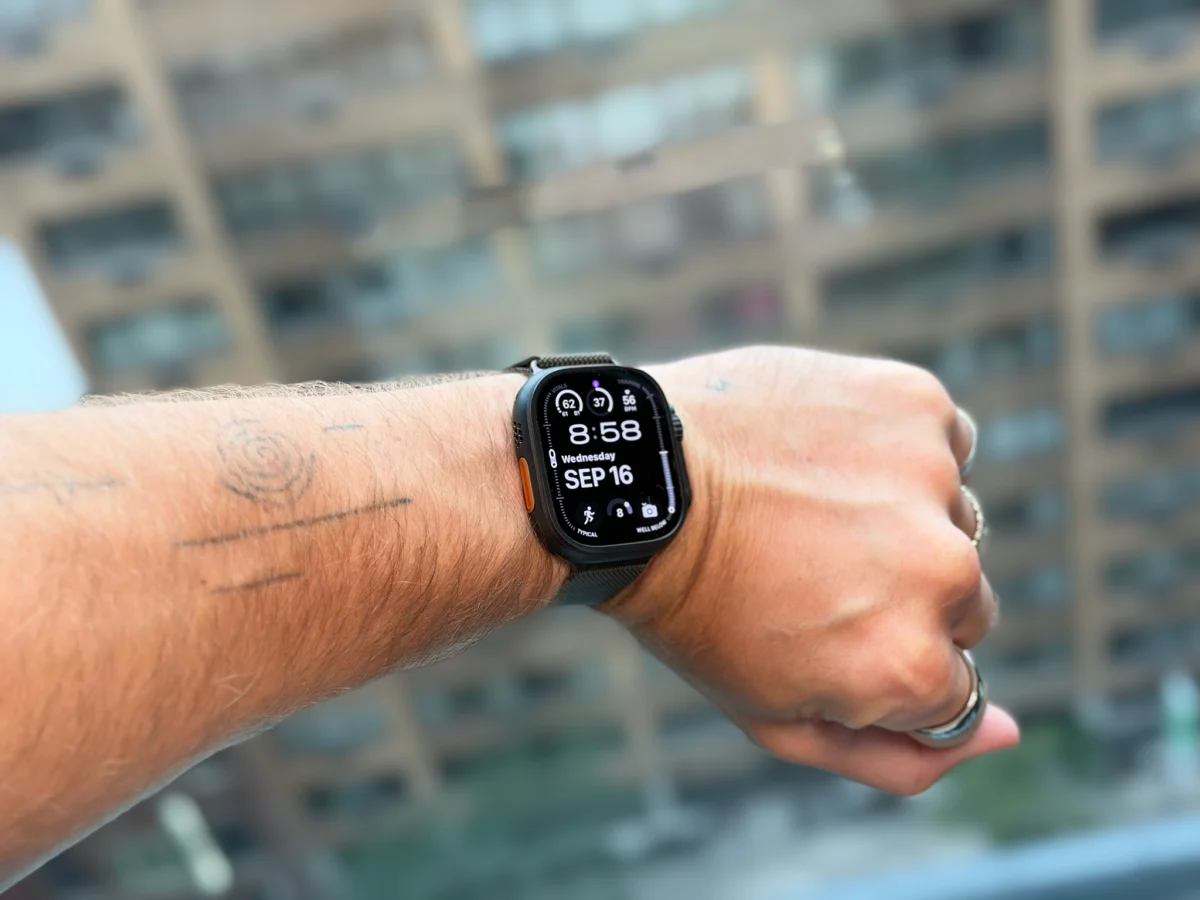
The Apple Watch Ultra 4 marks a pivotal shift from passive health tracking to continuous bio-monitoring, leveraging the new Health Sensing System to bridge the gap between consumer wearables and clinical-grade data. By moving to five-second heart rate sampling and introducing sophisticated AI-driven audio tools, Apple has transformed the smartwatch into a proactive longevity companion.
Since the debut of the Ultra line in 2022, Apple’s adventure-oriented wearable has occupied a unique niche, catering to those who demand rugged durability alongside high-performance metrics. However, the 2026 iteration represents a significant technical leap. The convergence of the Ultra 4 and the Series 12 indicates a broader strategy: Apple is no longer just selling a timepiece; it is deploying a sophisticated "Health Sensing System" powered by the S11 chip. This evolution moves beyond simple step-counting, focusing instead on deep-tissue data, heart rate variability (HRV) trends, and a new "Readiness" architecture that positions the device as a direct competitor to recovery-focused stalwarts like Whoop and Oura.

The Engineering of the Health Sensing System
The cornerstone of the Ultra 4 is the overhauled sensor array on the rear of the device. While the 49-millimeter titanium casing remains the signature silhouette of the Ultra line, the internal hardware has been radically reimagined. Apple’s new Health Sensing System increases the surface area for skin-to-device contact, a critical factor for the electrical sensors used in ECG readings. By maximizing this contact, the watch reduces "noise" in the data, providing a cleaner signal for more accurate readings.
Furthermore, the optical sensing array has been transitioned to a new circular configuration. This layout, supported by larger and more energy-efficient LEDs, allows the device to penetrate deeper into the skin’s vascular structure. The result is a significant increase in sampling frequency. Previous generations of the Apple Watch typically processed background heart rate readings every five minutes. The Ultra 4, however, provides updated data every five seconds. This shift to near-continuous monitoring is visible via a new heart rate complication on the watch face, allowing users to observe their physiological response to stress, caffeine, or exertion in real-time.
Precision and the Competitive Landscape
In the world of wearables, accuracy is often a moving target. To validate the Ultra 4’s capabilities, Apple conducted a study involving over 1,000 subjects, comparing its data against the Polar chest strap—the gold standard for heart rate monitoring—as well as competitors from Garmin, Whoop, Google, Samsung, and Oura. While independent testing remains necessary to verify these claims, early field comparisons show the Ultra 4 holding its own. In side-by-side tests against the Whoop MG, the Ultra 4’s heart rate readings typically stayed within a two-to-five beats-per-minute (BPM) margin.

The data becomes even more nuanced when examining Heart Rate Variability (HRV). The Ultra 4 now provides two distinct HRV metrics: Recovery HRV and Overall HRV. Recovery HRV, measured every five minutes during periods of rest, is a short-term indicator of the autonomic nervous system’s status. Overall HRV is used to calculate broader cardiovascular health and will eventually contribute to the "Health Age" score—a new longevity metric scheduled for release later this year. When compared to the Oura Ring and Whoop, the Apple Watch showed a slight variance in HRV (95 ms compared to 106-107 ms), yet the consistency of the trends allows users to flag significant deviations for medical consultation.
Readiness and the Vitals Ecosystem
One of the most requested features in the Apple ecosystem has been a holistic "Readiness" score. With the Ultra 4, Apple finally delivers a 1-to-10 rating that synthesizes three data pillars: Fitness, Vitals, and Sleep. By requiring several nights of sleep data to establish a baseline, the watch calculates how prepared the body is for physical strain.
This feature is designed to prevent overtraining and promote recovery, a shift in philosophy for a company that once focused primarily on "closing rings." The Readiness score is complemented by a new longevity tab in the Health app, reflecting a growing consumer interest in biological age and health span. These software enhancements are powered by the S11 chip, which ensures that the complex calculations required for these scores do not lag or excessively drain the battery.

Audio Intelligence and the AI Frontier
The S11 chip also facilitates a new suite of features Apple calls "Audio Intelligence." While Sound Recognition (for accessibility) and Music Recognition (via a Shazam-integrated Smart Stack) offer immediate utility, the most provocative additions are Live Rewind and Siri Recap.
Live Rewind allows a user to double-click the Digital Crown to receive a 15-second transcript of a conversation they just had. Siri Recap takes this further, creating summaries of conversations throughout the day during manually selected periods. These features represent a bold step into AI-assisted productivity, though they raise significant questions regarding privacy and recording consent laws. Apple has addressed these concerns by ensuring that no audio is stored or uploaded; instead, end-to-end encrypted transcripts are synced via iCloud. Furthermore, the AI does not identify or attribute speakers, maintaining a layer of anonymity for those being recorded.
Battery Life: Endurance and Efficiency
Battery life has historically been the Achilles’ heel of the Apple Watch, but the Ultra 4 continues to push the boundaries of what is possible within the watch’s form factor. Apple claims 50 hours of power for standard use and up to 84 hours in low-power mode. For athletes, the device offers 18 hours of continuous workout tracking, which can be extended to 45 hours under maximum power-saving settings.

In real-world testing, these claims are substantiated. The device easily navigates two full days and nights of use on a single charge. Perhaps more impressive is the advancement in charging speed. A 15-minute charge now provides roughly 18 hours of use. This rapid "top-off" capability is essential for users who want to use the watch for sleep tracking without missing large windows of daytime data. While it still trails specialized adventure watches from Garmin that can last weeks, the Ultra 4’s combination of high-resolution OLED display and multi-day battery makes it a formidable contender for most endurance athletes.
The Strategic Choice: Ultra 4 vs. Series 12
As the feature sets of the Ultra and the Series lines continue to merge, the decision for consumers becomes more about hardware than software. Both the Ultra 4 and the Series 12 utilize the S11 chip and the Health Sensing System. This means that for the first time, the "standard" watch offers the same high-frequency heart rate and HRV tracking as the premium model.
The $799 Ultra 4 justifies its price through its 49mm titanium build, precision dual-frequency GPS, and specialized backcountry safety features like emergency SOS via satellite and a 86-decibel siren. It is the choice for those who value battery longevity and a rugged aesthetic. Conversely, the $399 Series 12 offers a more accessible entry point for those with smaller wrists or tighter budgets, providing the same core health intelligence in a slimmer profile.

Conclusion: A New Era of Personal Health
The Apple Watch Ultra 4 is a testament to the maturation of wearable technology. It has moved beyond the "gadget" phase to become a legitimate tool for health management. By prioritizing continuous data over periodic snapshots, Apple is providing users with a more accurate reflection of their internal biology.
Whether it is through the lens of longevity, athletic performance, or AI-driven productivity, the Ultra 4 stands as a comprehensive health hub. It acknowledges that for a wearable to be truly useful, it must be worn constantly, charge quickly, and provide insights that are easy to act upon. For those invested in the Apple ecosystem, the Ultra 4 is not just a replacement for a previous watch—it is an investment in a more informed, data-driven lifestyle.
