
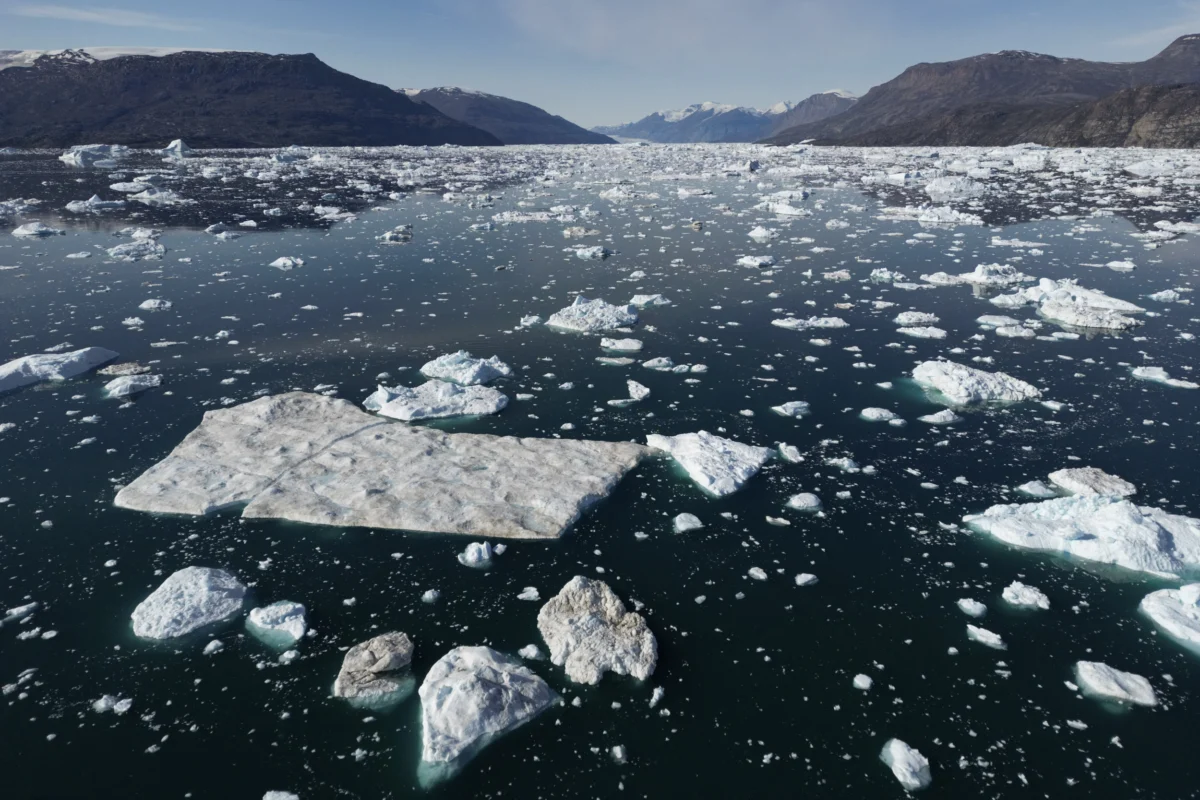
"The Arctic’s apparent ‘ice pause’ was a fleeting anomaly, not a sign of recovery, as a record year-to-year drop in winter sea ice coverage between 2024 and 2025 reveals a return to a significant downward trend driven by global warming."
New research dispels earlier hopes that the Arctic might be entering a period of stability regarding its winter sea ice. A dramatic year-to-year decline, the largest ever recorded in the satellite era, has signaled a clear return to a pronounced downward trend. This finding, stemming from a comprehensive study led by the University of Southampton and the National Oceanography Centre, suggests that a previously observed slowdown in ice loss was merely a temporary lull within the overarching trajectory of climate change. The implications are significant, as the Arctic’s shrinking ice cover plays a crucial role in regulating global weather patterns and climate.
A Sharp Reversal in Arctic Sea Ice Trends
The scientific community has been closely monitoring the Arctic’s winter sea ice extent, particularly following a period in the early 2020s that appeared to indicate a slowdown in its decline. However, the latest findings, published in the Proceedings of the National Academy of Sciences (PNAS), paint a starkly different picture. Between the winter peak of 2024 and the winter peak of 2025, Arctic sea ice extent plummeted by an unprecedented 5.8%. This magnitude of year-to-year loss is the largest observed since the satellite record commenced in 1978, a period spanning over four decades of continuous data collection.
While there was a slight increase in ice coverage in 2026, the overall extent remained the second lowest on record. This pattern strongly suggests that the perceived pause in Arctic sea ice loss was not an indication of recovery or stabilization, but rather a temporary fluctuation within a much longer and more profound decline directly linked to anthropogenic global warming.
Researchers meticulously analyzed the most recent satellite observations of Arctic sea ice during its crucial winter growth and peak periods. Earlier studies had indeed pointed to a weakening rate of winter sea ice loss between 2005 and 2024. This trend had been somewhat perplexing, given that global temperatures continued to climb steadily during the same timeframe. The new research, however, recalibrates this understanding by highlighting how the exceptionally low ice levels recorded in 2025 and 2026 fundamentally altered the long-term perspective.
Duo Chan, the lead author of the study and a researcher at the University of Southampton, emphasized the significance of these findings. "This sharp drop changes the way we interpret recent Arctic winter sea ice change," Chan stated. "It indicates that what appeared to be a pause was instead a temporary slowdown within a much longer decline linked to global warming." The researchers’ analysis incorporated advanced climate model simulations to assess the plausibility of such a dramatic decline under current warming conditions. While acknowledging that such a steep drop is unusual, they concluded that it is entirely consistent with the physical conditions and ongoing warming trajectory of the Arctic environment.
The Critical Role of Winter Sea Ice
The decline in Arctic winter sea ice is far more than a mere statistic about frozen water. Arctic sea ice serves as a vital insulating layer, effectively acting as a barrier between the relatively warm waters of the Arctic Ocean and the extremely cold Arctic atmosphere during winter. This insulating function plays a critical role in regulating the exchange of heat and moisture between the ocean and the atmosphere.
When the extent of sea ice diminishes, this insulation weakens, allowing more heat and moisture to escape from the ocean into the atmosphere. This increased energy influx can have cascading effects on atmospheric dynamics. It can influence pressure systems, contribute to the development of more intense storms, and alter large-scale atmospheric circulation patterns. These changes are not confined to the polar region; they can propagate outwards, influencing weather systems at lower latitudes. Scientists are actively engaged in studying these complex teleconnections to understand how alterations in the Arctic climate system might contribute to extreme weather events and broader climate variability across the globe.
The loss of winter sea ice, in particular, has profound implications. It affects the albedo effect, where ice reflects solar radiation back into space. As ice melts, darker ocean water absorbs more solar energy, further accelerating warming in a feedback loop. This warming of the Arctic is occurring at a rate significantly faster than the global average, a phenomenon known as Arctic amplification.
Furthermore, the presence of substantial winter sea ice is crucial for Arctic ecosystems. It provides habitat for numerous species, including polar bears and seals, and influences the productivity of marine food webs. Changes in ice cover can disrupt migration patterns, hunting grounds, and breeding cycles, posing significant threats to Arctic biodiversity.
A New Arctic Equilibrium?
The latest findings from the University of Southampton and the National Oceanography Centre suggest that the Arctic may be entering a new state of equilibrium, characterized by consistently lower levels of winter sea ice. Climate model comparisons indicate that, under the current trajectory of Arctic warming, winter sea ice extent is more likely to fluctuate around a diminished baseline in the coming years, rather than undergoing a rapid rebound to historical levels.
This projection implies that the record-breaking decline observed in 2025 might not be an isolated anomaly but rather an indicator of the Arctic climate system’s evolving direction. The region has already witnessed dramatic transformations in its summer sea ice. September sea ice extent, which typically marks the annual minimum, has declined sharply since the advent of satellite monitoring. The new research now demonstrates that the winter season is also undergoing a significant and transformative shift.
This shift towards a new normal carries substantial implications for Arctic communities, indigenous populations who rely on stable ice conditions for travel and subsistence, and the global climate system. The accelerated warming and changing ice dynamics in the Arctic are also impacting permafrost thaw, potentially releasing significant amounts of greenhouse gases into the atmosphere, further exacerbating global warming.
Interpreting Climate Trends with Caution
The study serves as a potent reminder of the complexities involved in interpreting climate data and the dangers of drawing hasty conclusions from short-term trends. Scientists consistently caution against mistaking periods of relative stability in climate data for evidence that long-term warming trends have been reversed.
Natural climate variability, driven by factors such as ocean currents and atmospheric oscillations, can temporarily mask the underlying influence of rising global temperatures. These natural fluctuations can create periods where changes appear to slow down or even stabilize, leading to a false sense of reassurance. However, these temporary plateaus can be quickly overcome by the persistent and cumulative effects of greenhouse gas emissions, leading to larger and more abrupt shifts in the climate system.
The record winter decline in 2025, coupled with the continued low ice levels in 2026, strongly suggests that the Arctic’s broader transformation is not only ongoing but is accelerating. This transformation is not confined to the physical environment but also has profound implications for ecosystems, human societies, and the global climate. The scientific consensus is clear: sustained reductions in greenhouse gas emissions are essential to mitigate the most severe consequences of Arctic warming and its far-reaching global impacts. The Arctic’s changing ice cover acts as a sensitive barometer for the health of the planet’s climate, and its current trajectory demands urgent attention and decisive action.
