
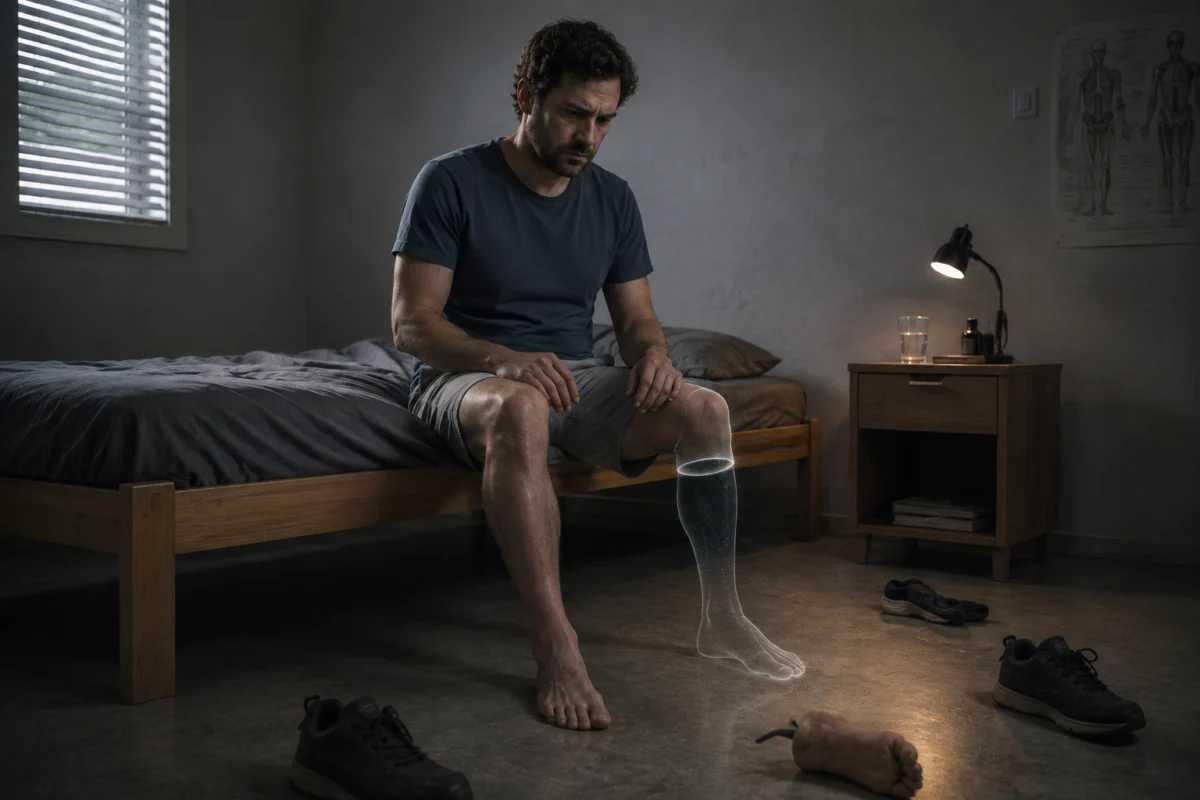
"For decades, individuals experiencing a profound disconnect between their physical selves and their internal identity suffered in silence, their distress unclassified. The recent inclusion of Body Integrity Dysphoria in ICD-11 offers a crucial step toward validation and a shared framework for clinicians, though the path to effective treatment remains largely uncharted."
The emergence of formal diagnostic criteria for Body Integrity Dysphoria (BID) marks a significant, albeit nascent, turning point for a condition that has historically left individuals feeling profoundly isolated and misunderstood. For many, the internal experience of a limb or body part being fundamentally "wrong" or "foreign" persisted for decades without a name, a framework, or an accepted clinical response. The recent classification of BID under code 6C21 in the World Health Organization’s International Classification of Diseases, 11th Revision (ICD-11), signifies a critical move towards acknowledging the reality of this distress and providing a shared language for clinicians. This recognition, however, is just the first step in a complex journey that extends from understanding the condition’s neurological underpinnings to developing evidence-based therapeutic pathways.
The case of a 50-year-old man, described by clinicians affiliated with the University of Bristol and North Bristol NHS Trust, powerfully illustrates the long-standing nature of this disconnect. For the entirety of his adult life, he experienced a profound aversion to one of his legs, despite it being fully functional and capable of movement. This internal dissonance, the feeling that a part of his own body was not truly his, remained unaddressed by medical science for decades. His journey culminated in a self-inflicted injury using dry ice, resulting in severe burns that necessitated a below-knee amputation. He reported profound satisfaction with this outcome, a sentiment that underscores the depth of his dysphoria and the relief he experienced following the surgical intervention. This specific case, published in Case Reports in Psychiatry in August 2025, was among the first to be assessed against the new diagnostic criteria for BID, highlighting the practical application of this evolving understanding.
Historically known by various terms, including body integrity identity disorder and xenomelia, BID fundamentally describes a persistent and often intense mismatch between a person’s physical body and their internal sense of self. The most common manifestation involves a single limb being perceived as alien or not belonging to the individual. The condition was first documented in the medical literature in 1977, but it languished for decades without formal recognition or a standardized diagnostic framework. This lack of classification left clinicians encountering such cases in a state of uncertainty, grappling with significant ethical dilemmas and lacking a shared understanding of how to approach the condition. The inclusion in ICD-11, therefore, represents a crucial step in establishing a common ground for research, diagnosis, and potential treatment development.
The ICD-11 criteria for BID are designed to capture the core features of this complex condition. They stipulate an intense and enduring desire for significant physical disability, with an onset typically occurring by early adolescence. A persistent sense of discomfort or profound inappropriateness concerning the current, non-disabled bodily configuration is also a hallmark. Crucially, the criteria acknowledge that this dysphoria leads to significant distress and potentially harmful consequences, as tragically exemplified by the case of the man who inflicted injury upon himself.
The onset of BID is frequently reported to occur in childhood, with individuals often describing the feeling of their body being "wrong" as a lifelong experience. While the initial desire for disability may emerge early, clinical observations suggest an intensification of distress during the thirties and forties, a period when the internal conflict can become so severe that it drives individuals to engage in dangerous behaviors. The Bristol patient, at 50 years of age, was well past the typical age of initial manifestation, placing him firmly within the demographic where such distress can escalate to critical levels, sometimes leading to life-threatening situations.
It is important to distinguish BID from psychotic disorders. Available evidence suggests that individuals with BID are not delusional; they recognize that the limb in question is physically their own. The core of the condition lies in the inability to integrate this physical reality into their sense of bodily self. Neuroimaging studies have begun to shed light on the potential neurological underpinnings, pointing towards alterations in the brain’s body-mapping systems rather than overt psychosis. Research has indicated structural and white matter differences in neural networks responsible for limb ownership. This neurological perspective positions BID alongside conditions like somatoparaphrenia, a neurological state often seen in stroke patients who disown a limb. However, the precise causal mechanisms of BID remain an active area of investigation, and no definitive cause has yet been established.
The formal recognition of BID through ICD-11 classification, while a monumental achievement, has not been accompanied by established treatment guidelines. The landscape of therapeutic interventions remains largely uncharted, presenting a significant challenge for healthcare services. The Bristol authors explicitly frame this as an open question, underscoring the need for further research and development. The current literature offers a fragmented view, consisting primarily of scattered case reports. Some of these reports detail the application of cognitive and psychological interventions, while others document the outcomes of amputations that patients have reported as providing significant relief. One notable case involved a young man who sought the removal of two fingers after conventional psychotherapy and medication proved ineffective. At a one-year follow-up, his dysphoria remained in remission, suggesting that in select cases, surgical intervention can offer a resolution.
The ethical considerations surrounding the treatment of BID are profound. The notion of surgically removing a healthy, functional limb fundamentally challenges the traditional goals of medicine, which are typically focused on preservation and restoration of bodily integrity. Clinicians who have explored this dilemma have openly discussed the considerable moral and ethical complexities involved, acknowledging that there are no easy answers. A case published in 2024 from an NHS trust in England documented a 52-year-old man who, driven by his dysphoria, went to railway tracks with the intent of having a limb removed by a passing train. He explicitly denied suicidal ideation, emphasizing that his goal was amputation rather than death. Similarly, a Canadian team reported on the significant uncertainty and ambivalence experienced by their multidisciplinary team when faced with a patient who had repeatedly self-harmed his leg.
The relative obscurity of BID is also a critical concern. Prevalence estimates are currently unknown, and the reason for this is telling: individuals experiencing BID often conceal their condition. The pervasive shame associated with such profound bodily dissonance, coupled with a reasonable expectation of being dismissed or pathologized by healthcare professionals, drives individuals away from seeking clinical help. Instead, they often find solace and community in online forums, where the advice and support offered may not be grounded in clinical expertise. This pattern of self-isolation and reliance on informal networks is recurrent in published reports. The Bristol patient himself described feeling frustrated with the limited support available and ashamed to seek it, ultimately arriving at his outcome through an online forum rather than a clinical consultation.
The argument for formal recognition of BID is intrinsically linked to this pattern of concealment. A defined diagnosis with published criteria provides individuals with a means to articulate their experience and offers clinicians a framework with which to respond. Whether this formal recognition will translate into the development of accessible and effective services remains an unresolved issue. The authors of the recent case report are careful not to overstate the immediate impact on service provision, emphasizing the ongoing challenges.
This is undeniably a complex and sensitive area of human experience. For individuals experiencing persistent distress related to their body image or harboring thoughts of self-harm, seeking professional help is paramount. Qualified clinicians can provide a safe and confidential space to explore these feelings. In the United States, the 988 Suicide and Crisis Lifeline is available 24/7 by call or text, offering immediate support for those in crisis. The journey towards understanding and treating Body Integrity Dysphoria is ongoing, but the recent steps toward formal recognition represent a vital shift from silence and stigma towards acknowledgment and the potential for healing.
