
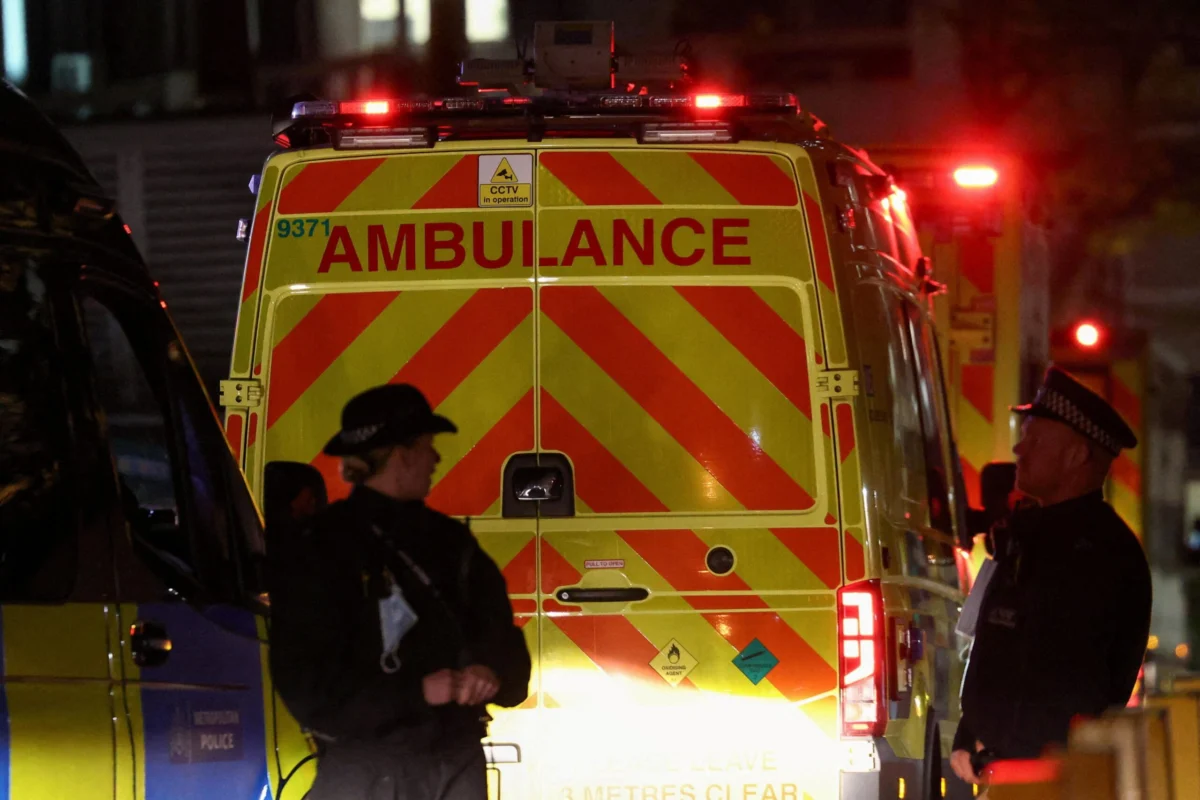
"The swift and meticulously coordinated medical evacuation of a British doctor contracting Ebola in the Democratic Republic of Congo underscores the global commitment to containing highly infectious diseases and highlights the UK’s advanced capabilities in specialist critical care."
The United Kingdom has initiated a high-level medical response following the confirmed diagnosis of a British doctor with Ebola Virus Disease (EVD) in the Democratic Republic of Congo (DRC). The unidentified healthcare professional was flown back to the UK on a dedicated medical evacuation flight, landing at RAF Northolt, before being transferred under strict protocols to the Royal Free Hospital in north London. This incident marks the first confirmed case of a UK national contracting Ebola during the current DRC outbreak, which has tragically claimed over 5,000 lives and presents significant challenges to international public health efforts. The sophisticated logistical operation and the availability of a world-class isolation unit in the UK are crucial elements in managing this complex medical situation, reassuring the public of robust preparedness.

The repatriation of the infected doctor was a meticulously orchestrated operation, reflecting the gravity of managing a highly contagious pathogen. Upon arrival at RAF Northolt, a military airbase renowned for its secure operations, the patient was immediately transferred into a specialized convoy. This extensive escort included three large police vans, positioned at the front and rear, along with two ambulances and an additional support vehicle. The convoy proceeded through north London, with police officers actively stopping traffic and managing crowds to ensure an unimpeded and secure passage to the Royal Free Hospital. This level of public safety and logistical coordination is standard procedure for such high-risk medical transfers, designed to minimize any potential exposure and maintain public order. The patient is now receiving treatment in the Royal Free Hospital’s highly specialized isolation unit, a facility purpose-built and equipped to manage severe infectious diseases with maximum containment.
Ebola Virus Disease is a severe, often fatal illness in humans and nonhuman primates, caused by ebolaviruses. It belongs to the Filoviridae family, a group of RNA viruses that cause viral hemorrhagic fevers. The current outbreak in the Democratic Republic of Congo is predominantly fueled by the Bundibugyo variant of the virus, distinct from the more commonly known Zaire ebolavirus responsible for the devastating 2014-2016 West Africa epidemic. Early symptoms of Ebola can be non-specific, including fever, fatigue, muscle pain, headache, and sore throat, making early diagnosis challenging. As the disease progresses, it can lead to vomiting, diarrhoea, rash, and in severe cases, impaired kidney and liver function, as well as internal and external bleeding. Transmission occurs through direct contact with the blood, secretions, organs, or other bodily fluids of infected people, or from contaminated surfaces and materials. It is not an airborne disease, meaning casual contact does not typically lead to infection, which is a key factor in mitigating risk to the general public in a controlled environment.
The outbreak in the Democratic Republic of Congo has emerged as the second most deadly recorded spate of infections globally, only surpassed by the catastrophic West Africa outbreak. With over 10,000 confirmed cases and a fatality rate reported at 48.6% as of late last month, the scale of the crisis is immense. The response in DRC has been compounded by numerous challenges, including ongoing armed conflict in affected regions, which hinders safe access for healthcare workers and undermines public trust. Moreover, deep-seated community mistrust, misinformation, and attacks on health facilities and personnel have severely hampered containment efforts, making it difficult to implement vaccination campaigns, contact tracing, and safe burial practices. These complex socio-political factors underscore the extraordinary bravery and dedication of healthcare professionals, like the repatriated British doctor, who volunteer to work in such high-risk environments.

The UK’s capacity to manage such a complex case stems from its well-established public health infrastructure and specialized medical facilities. The Royal Free Hospital in north London is home to one of the UK’s leading high-level isolation units, serving as a national referral center for patients with highly infectious diseases. This unit is equipped with advanced containment features, including negative pressure rooms, specialized air filtration systems, and rigorous protocols for personal protective equipment (PPE) and waste management. Crucially, the hospital has a proven track record, having successfully treated three health workers who were evacuated after contracting Ebola during the 2014-2015 West Africa outbreak. These experiences have refined the hospital’s expertise and protocols, ensuring a state-of-the-art response capability.
Dr. Renu Bindra, deputy director of the All Hazards Public Health Response team at the UK Health Security Agency (UKHSA), emphasized that "well-established procedures for dealing with cases like this" are in place and that the "risk to the public remains low." This assurance is grounded in the understanding of Ebola’s transmission routes and the stringent infection control measures activated. The UKHSA plays a pivotal role in assessing public health risks, coordinating responses, and providing expert guidance. Their comprehensive approach includes robust surveillance, rapid contact tracing if necessary (though the patient was isolated immediately upon diagnosis abroad), and public communication to prevent panic and provide accurate information. The entire process, from diagnosis in DRC to treatment in London, involves seamless collaboration between the UK government, the DR Congo government, and various international health partners, demonstrating a unified global effort against the virus.
Understanding the progression of Ebola Virus Disease is critical for effective treatment. After an incubation period typically ranging from 2 to 21 days, symptoms manifest. The virus attacks various organ systems, including the liver, kidneys, and blood vessels, leading to systemic inflammation and widespread damage. This can result in increased vascular permeability, leading to fluid leakage, hypotension, and ultimately, multi-organ failure. The hemorrhagic manifestations, while often frightening, are not always present, but when they occur, they can include gastrointestinal bleeding, bleeding from mucous membranes, and petechial rashes. Intensive supportive care is the cornerstone of treatment, focusing on maintaining hydration and electrolyte balance, managing pain, treating secondary infections, and supporting organ function. Early diagnosis and prompt, aggressive supportive care significantly improve patient outcomes.

Recent years have seen remarkable progress in the development of treatments and vaccines for Ebola, particularly for the Zaire ebolavirus. Monoclonal antibody therapies, such as Inmazeb (REGN-EB3) and Ebanga (mAb114), have shown significant efficacy in improving survival rates when administered early. For the Bundibugyo variant, however, the landscape is still evolving. While there is no currently approved vaccine specifically for Bundibugyo, the World Health Organization (WHO) has highlighted encouraging developments. Experts have recommended adding two new candidate drugs to an ongoing clinical trial in the DRC. These include a vaccine developed by the University of Oxford and the Serum Institute of India, and another by the firm Moderna. This represents a significant step forward, as it will be the first time jabs specifically designed to protect against the Bundibugyo virus are tested during an active outbreak, holding immense promise for future control efforts.
The global nature of infectious disease outbreaks necessitates strong international collaboration and a robust global health security framework. Organizations like the WHO, Médecins Sans Frontières (MSF), and various national public health bodies work tirelessly to coordinate responses, deploy resources, and share expertise. Lessons learned from previous outbreaks, particularly the devastating West Africa epidemic, have informed current strategies, emphasizing the importance of community engagement, rapid deployment of medical and public health teams, and investment in local health infrastructure. The spread of Ebola cases to other countries like Kenya, Nigeria, and Uganda during this general period underscores the need for vigilance across regional borders and sustained international support for affected nations.
As the British doctor receives specialist care, the incident serves as a stark reminder of the persistent threat posed by emerging and re-emerging infectious diseases. The ongoing scientific efforts to develop targeted treatments and vaccines for different Ebola variants are crucial. Concurrently, strengthening global health systems, fostering community trust, and ensuring equitable access to medical advancements remain paramount. The UK’s immediate and comprehensive response exemplifies a commitment to both national and global health security, demonstrating that while the risks are real, preparedness and expertise can effectively contain and manage even the most formidable health challenges.
