
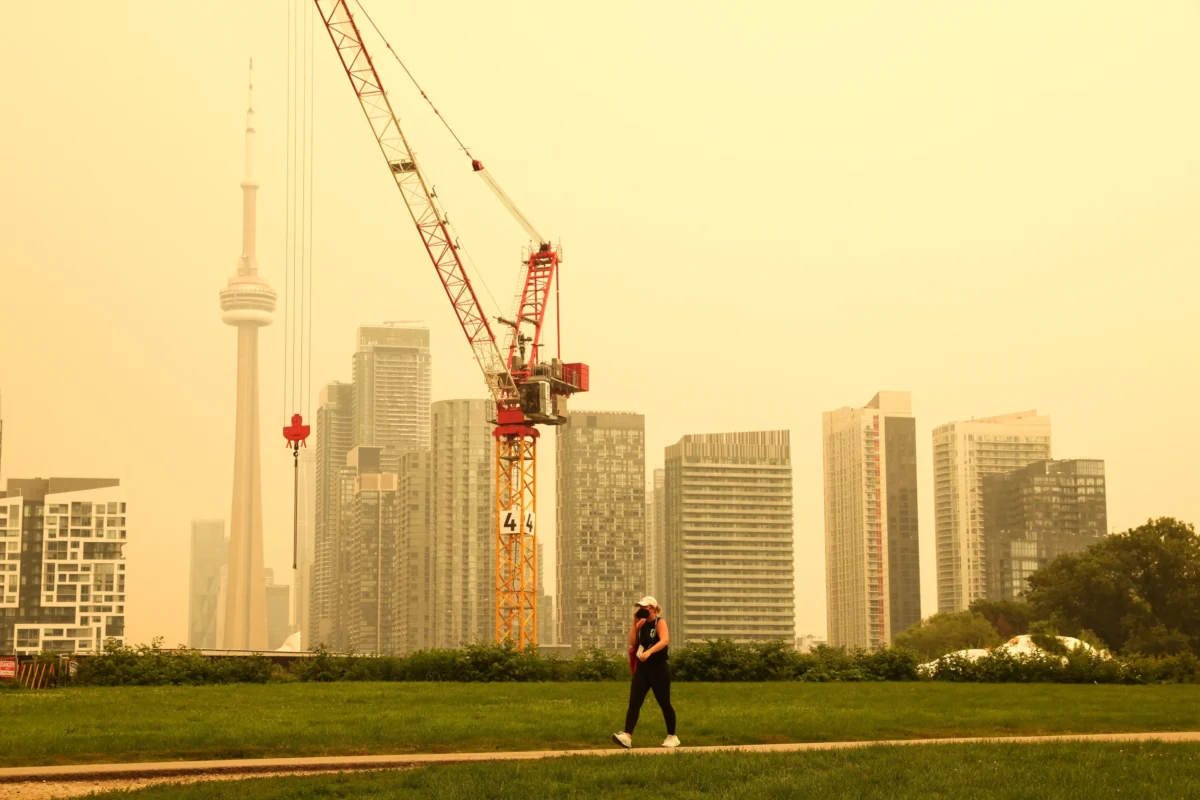
"Hazardous wildfire smoke, originating from Canada’s ongoing infernos, has once again rendered air quality perilous across vast swathes of Canada and the United States, compelling authorities to issue urgent advisories and urging millions to curtail outdoor activities."
The pervasive and dangerous wildfire smoke billowing from Canada’s unprecedented wildfire season has once again elevated air quality to hazardous levels across significant portions of both Canada and the United States. This alarming environmental situation has compelled public health officials to issue widespread air quality alerts, strongly advising millions of residents to limit their time spent outdoors. The smoke, which has traversed hundreds of miles from the active fire zones, is laden with fine particulate matter, scientifically classified as PM2.5. These microscopic particles possess the insidious ability to penetrate deep into the delicate tissues of the lungs, thereby escalating the risk of respiratory distress and exacerbating existing pulmonary conditions, even in individuals who are otherwise in robust health.
Canada is currently grappling with an exceptionally active and challenging wildfire season, characterized by dozens of blazes raging across multiple provinces. The persistent and often powerful winds have served as conduits, transporting dense plumes of smoke far beyond the immediate vicinity of the fires, drastically reducing visibility and causing air pollution to surge to unhealthy, and in many areas, hazardous thresholds. Communities situated hundreds of miles from the epicenters of these infernos are now experiencing the tangible consequences of this widespread environmental degradation. Health authorities are issuing stern warnings, emphasizing that prolonged and even moderate exposure to wildfire smoke can inflict significant irritation upon the respiratory system, critically worsen pre-existing cardiovascular and pulmonary diseases, and substantially increase the likelihood of severe health complications, particularly among vulnerable demographic groups.
The Expanding Reach of Smoke and Its Human Impact
The current wildfire season has generated smoke plumes of such immense scale that they are readily discernible from space. Satellite imagery captured by NASA vividly illustrates the eastward trajectory of this smoke, blanketing extensive regions of North America. While the physical fires remain concentrated in specific Canadian provinces, the resultant air pollution knows no geographical or political boundaries. It has relentlessly crossed provincial and international borders, impacting the health and well-being of millions of residents across a vast continental expanse.
In direct response to these escalating air quality concerns, local governments and public health agencies have proactively issued stringent air quality advisories, prominently featuring designations such as "Code Purple" and other high-level alerts in the most affected areas. These critical advisories are designed to provide clear guidance to the public, recommending a significant reduction in outdoor physical activities, with a particular emphasis on strenuous exercise. Residents are strongly encouraged to remain indoors whenever feasible to minimize their exposure to the noxious air. In some severely impacted communities, proactive measures have included the establishment of designated clean-air shelters, the distribution of protective respiratory masks, and the intensification of public awareness campaigns aimed at equipping residents with the knowledge and tools to effectively reduce their exposure to wildfire smoke.
Dissecting the Respiratory Impact: How Burning Smoke Affects the Lungs
Wildfire smoke is an intricate and dangerous amalgamation of gases, water vapor, and an array of microscopic particulate matter, all generated by the combustion of vegetation, structures, and a myriad of other combustible materials. According to authoritative sources such as the Cleveland Clinic, one of the paramount health concerns associated with wildfire smoke is exposure to fine particulate matter, specifically categorized as PM2.5. These particles are exceptionally small, measuring approximately 2.5 micrometers in diameter, which is about 30 times smaller than the width of a human hair. Their minuscule size allows them to easily bypass the body’s natural defense mechanisms, including the filtering capabilities of the nasal passages and upper airways, and penetrate deep into the alveolar sacs of the lungs. In some instances, these insidious particles can even translocate from the lungs into the bloodstream, triggering systemic inflammation and contributing to a cascade of adverse health effects throughout the body.
The act of breathing wildfire smoke can initiate immediate physiological responses, leading to irritation of the airways within minutes to hours of exposure. Common symptoms that individuals may experience include a persistent cough, a scratchy throat, discomfort or burning sensations in the eyes, and a general feeling of irritation in the nasal passages. For many, these initial symptoms can manifest as a mild inconvenience. However, for individuals with pre-existing respiratory or cardiovascular conditions, the consequences can be far more severe.
The Centers for Disease Control and Prevention (CDC) highlights that certain populations are at a significantly elevated risk of developing more serious health complications due to wildfire smoke exposure. These vulnerable groups include individuals diagnosed with asthma, chronic obstructive pulmonary disease (COPD), and various forms of heart disease. Furthermore, children, whose respiratory systems are still developing, older adults, whose immune systems may be compromised, and pregnant women are also considered to be at higher risk. The CDC elaborates that repeated or prolonged exposure to wildfire smoke can lead to a worsening of chronic lung diseases, precipitate severe asthma attacks, and increase the susceptibility to respiratory infections, such as bronchitis and pneumonia. In addition, it can elevate the risk of cardiovascular events, including heart attacks and strokes, particularly among those with underlying cardiac vulnerabilities.
While many healthy individuals may experience a recovery once air quality conditions improve and the smoke dissipates, the long-term implications of repeated exposure are a growing concern. Chronic inflammation and a progressive reduction in lung function are potential outcomes, especially for those with pre-existing respiratory conditions who may experience a cumulative burden on their pulmonary health over time.
The management and treatment of wildfire smoke-induced symptoms are contingent upon the severity of the health effects experienced. For mild respiratory irritation, the most effective immediate intervention typically involves relocating to an area with cleaner air, ensuring adequate hydration by drinking plenty of fluids, and conscientiously limiting any further exposure to the smoky environment. More severe cases, however, may necessitate medical intervention. This can include the prescription of medications such as inhalers, which are vital for managing asthma or COPD exacerbations, the administration of supplemental oxygen to aid breathing, or, in critical situations, emergency medical care if breathing becomes severely compromised and life-threatening.
To mitigate the risks associated with wildfire smoke, health experts strongly recommend a series of preventative strategies. These include closely monitoring local air quality reports and adhering to official advisories. When air quality reaches hazardous levels, it is imperative to stay indoors in well-ventilated areas, ideally with air conditioning that recirculates air. Utilizing high-efficiency particulate air (HEPA) filters in indoor air purifiers can significantly improve indoor air quality by trapping fine particulate matter. For essential outdoor activities, wearing a well-fitting N95 respirator mask is highly recommended, as these masks are designed to filter out at least 95% of airborne particles, including PM2.5. Minimizing strenuous outdoor activities and avoiding areas with visible smoke are also crucial steps in protecting respiratory health.
Broader Implications of Air Quality Alerts
The current phenomenon of smoke drifting from Canada’s devastating wildfire crisis serves as a stark and potent reminder that the adverse impacts of poor air quality are not confined solely to communities situated in close proximity to active fire zones. The complex dynamics of atmospheric weather patterns possess the capacity to transport harmful pollutants across vast geographical regions, thereby exposing millions of individuals to significant health risks, even when they are located hundreds of miles away from the original source of the pollution. This underscores the interconnectedness of environmental issues and their far-reaching consequences.
This ongoing situation also powerfully illustrates the critical importance of vigilant monitoring of air quality by public health officials and the timely issuance of public alerts, such as the aforementioned Code Purple designations. These vital warnings are meticulously designed to empower individuals to take proactive measures to reduce their exposure to harmful pollutants before smoke inhalation can lead to serious or irreversible health problems. This is particularly crucial for safeguarding the health of those who are most vulnerable to the deleterious effects of respiratory illness.
For the general populace, the persistent threat posed by the ongoing wildfires should serve as a compelling call to action to pay close attention to local air quality reports with the same diligence and regularity with which they would monitor weather forecasts. Implementing simple yet effective precautions can make a substantial difference in protecting lung health and mitigating the health risks associated with wildfire smoke. This includes prioritizing staying indoors during periods of hazardous smoke conditions, investing in and utilizing indoor air filtration systems, and donning an N95 respirator when venturing outdoors for essential activities. These measures collectively contribute to a more robust defense of respiratory well-being.
As Canada’s wildfire season continues its destructive course, maintaining good and breathable air quality remains a paramount objective for safeguarding public respiratory health. This is especially true as the pervasive smoke continues its relentless spread, reaching far beyond the geographical confines of the fires themselves and impacting communities and individuals across the continent. The long-term implications for public health necessitate continued vigilance, proactive measures, and a comprehensive understanding of the environmental challenges at hand.
