
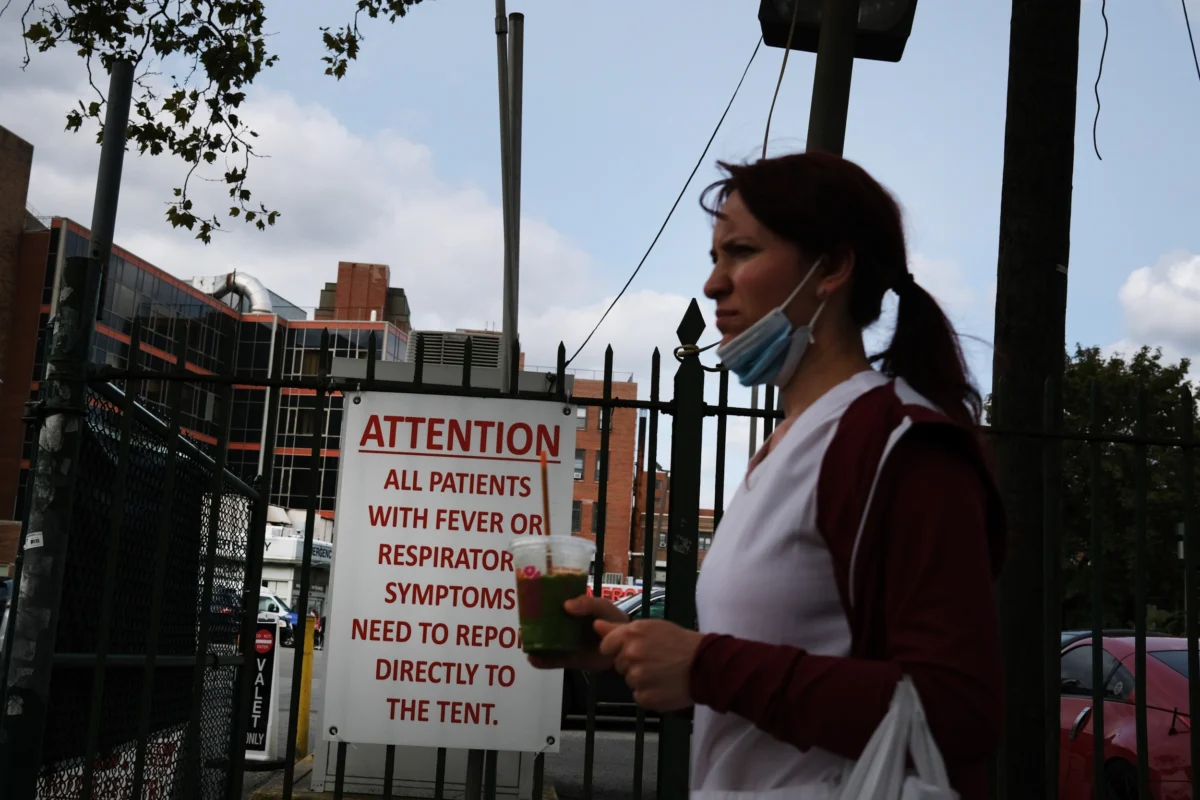
"While national respiratory illness activity remains low, the CDC’s latest modeling indicates a significant uptick in COVID-19 infections across 43 states, signaling a need for proactive awareness and targeted precautions, especially for vulnerable populations."
The U.S. Centers for Disease Control and Prevention (CDC) has issued a stark update on the trajectory of COVID-19, revealing that modeling as of August 5 estimates infections are growing or likely growing in 43 states. This broad national trend, with no states reporting declining cases and only seven showing stability, marks a wider geographical footprint of transmission than observed earlier in the summer. Crucially, this rise in infection direction is occurring against a backdrop of generally low national respiratory illness activity. This dichotomy, where transmission is increasing but overall disease burden and strain on healthcare systems are not yet significantly elevated, requires a nuanced understanding. The CDC emphasizes that these infection growth signals are indicative of trends in transmission rates, not necessarily an immediate surge in hospitalizations or emergency department overcrowding. For the general population, this situation calls for informed awareness rather than widespread panic. However, for specific demographic groups—namely adults aged 65 and older, individuals who are immunocompromised, and those managing multiple chronic health conditions—this early August growth signal serves as a critical reminder to proactively assess their current vaccination status and establish a clear plan for rapid access to antiviral treatments should symptoms arise.
The CDC’s Center for Forecasting and Outbreak Analytics is the source of this 43-state estimate, utilizing sophisticated modeling techniques that track the time-varying reproductive number (Rt). This Rt value is derived from emergency department (ED) visit data collected through the National Syndromic Surveillance Program. When the Rt consistently remains above one, it signifies that each infected individual is, on average, transmitting the virus to more than one other person, leading to an expansion of infections within the population. The CDC’s epidemic trend page explicitly clarifies that these Rt estimates are designed to indicate the direction of transmission and do not reflect the overall burden of disease. Therefore, the agency strongly advises that this data be interpreted in conjunction with other epidemiological metrics, rather than in isolation. The trend categories themselves are based on probability thresholds rather than absolute case counts, a methodology detailed in the agency’s explanatory notes.
Despite the emphasis on transmission direction, there are seasonal and epidemiological reasons to take these growth signals seriously. A recurring pattern of increased COVID-19 activity during the summer months has been observed in the United States since 2020. These summer surges are often attributed to increased indoor congregation during hot weather, heightened travel associated with vacations, and larger social gatherings.
It is also important to note a structural aspect that influences how the current respiratory virus landscape is perceived. The CDC’s epidemic trend estimates for influenza and Respiratory Syncytial Virus (RSV) concluded for the 2025-2026 season on June 5 and will not resume until the 2026-2027 season. In contrast, COVID-19 trend data continues to be updated throughout the summer. Consequently, the current absence of flu and RSV signals on these trend pages reflects, in part, a seasonal reporting pause alongside genuinely low activity levels for those specific viruses. This means that the COVID-19 growth signal is currently more visible and actionable due to ongoing surveillance.
Wastewater surveillance offers a valuable, often leading, indicator of viral circulation, as it captures virus shed by individuals who may not seek clinical care or who are asymptomatic. Earlier this summer, reports indicated that wastewater levels were primarily concentrated in the Southern and Western regions of the United States. This observation was consistent with the CDC’s earlier summer outlook, which identified these regions as having the highest likelihood of experiencing early transmission. The recent 43-state growth estimate suggests that this pattern of increased transmission has not only persisted but has also widened its geographical reach across the country, rather than simply shifting to new areas.
Individuals can monitor the respiratory virus activity in their specific state through the CDC’s respiratory virus activity page. This resource provides a consolidated view of wastewater surveillance data, emergency department visit percentages for respiratory illnesses, and state-level activity categories. Furthermore, many state health departments offer more granular local data through their own public health dashboards, providing a finer-grained picture of community-level trends.
When assessing the current situation, it is crucial to distinguish between indicators of transmission and indicators of severity. The CDC’s COVID forecast ensemble projects that COVID-19 will account for approximately 0.3 percent of emergency department visits for the week ending August 8. This represents an increase from the 0.21 percent reported for the week ending July 25. Similarly, projected new hospital admissions for COVID-19 are estimated at around 1,900 for the week of August 8, compared to 1,400 reported admissions for the earlier week. While these numbers are modest in absolute terms, their upward trend warrants attention.
The distribution of risk associated with COVID-19 is not uniform across the population, and acknowledging this disparity is essential for accurate data interpretation. Historically, emergency department visits for COVID-19 have been highest among infants and adults aged 65 and older, with hospitalization rates showing a particular concentration within the oldest age demographic. For adults aged 65 and older, individuals with compromised immune systems, and those managing multiple concurrent chronic health conditions, a COVID-19 infection carries significantly higher stakes compared to a healthy younger adult. Therefore, households that include older relatives or individuals with underlying health vulnerabilities are the primary audience for whom this current growth signal should translate into concrete action and heightened vigilance.
Two critical questions should be addressed within these at-risk households before any member experiences symptoms. The first pertains to the current vaccination status. It is vital to confirm whether individuals are up-to-date on their COVID-19 vaccinations according to the latest recommendations. This often involves a conversation with a clinician or pharmacist who can provide personalized guidance based on individual health profiles and the most recent vaccine guidance. The second crucial question is whether there is a readily accessible and rapid pathway to obtaining antiviral treatment. Oral antiviral medications are most effective when initiated early in the course of illness. Establishing in advance which clinic, telehealth service, or pharmacy can prescribe these medications on short notice can eliminate crucial delays that might otherwise lead to missing the optimal treatment window.
For individuals who are uninsured, local health departments or federally qualified health centers can provide information and assistance regarding low-cost vaccination and testing services. Patients who encounter coverage denials for antiviral medications should consult with their healthcare provider about the possibility of filing appeals or exploring available patient assistance programs.
The current data does not support a return to broad public health restrictions or widespread mandates. Instead, the observed trends advocate for a strategy of proportionate and targeted caution. Simple, low-cost measures can significantly mitigate risk. For instance, testing for COVID-19 before visiting an older or immunocompromised relative is a practical step that directly addresses a primary route of potential exposure. Similarly, staying home when experiencing symptoms is a fundamental practice that protects those most vulnerable to severe outcomes. Enhancing ventilation in indoor gathering spaces and opting for outdoor settings when weather permits are effective strategies for reducing transmission with minimal inconvenience.
For individuals at high risk, or those closely associated with them, masking in crowded indoor settings remains a reasonable personal choice, particularly during travel. Anyone experiencing symptoms should consider testing, especially if they belong to a higher-risk group or will be in close proximity to someone who is. Urgent medical evaluation is warranted for individuals experiencing difficulty breathing, chest pain, confusion, or a rapidly worsening condition, regardless of their test results.
The CDC updates its respiratory illness data on a weekly basis. Trend reporting for influenza and RSV is scheduled to resume in the fall, coinciding with the typical start of their respective seasons. The composition and recommendations for the upcoming season’s vaccines will be finalized prior to this resumption. MedicalDaily will provide updates as hospitalization data, rather than solely transmission estimates, begin to show more substantial shifts. The current epidemiological landscape can be accurately summarized as a period of broadly increasing transmission alongside persistently low severity indicators, with the understanding that these two aspects can evolve independently. Households with a vulnerable member have the most compelling reason to act on the rising transmission signals without waiting for an increase in severe outcomes.
Key Questions Answered
What did the CDC actually report?
Modeling estimates from the CDC indicate that COVID-19 infections are growing or likely growing in 43 states, with no states reporting declines and seven states showing no significant change, based on data current as of August 5.
Does that mean a wave is coming?
Not necessarily. The CDC’s estimate specifically measures the direction of transmission, not the overall burden of disease. National respiratory illness activity remains at low levels, and the CDC advises interpreting these transmission trends alongside other metrics such as hospitalization rates and emergency department visit data.
Why are flu and RSV not showing activity?
While the activity for flu and RSV is genuinely low at present, the CDC’s epidemic trend reporting for these viruses concluded for the 2025-2026 season on June 5 and will not resume until the 2026-2027 season. This reporting pause contributes to their current absence from trend monitoring.
Who should take extra precautions now?
Extra precautions are particularly recommended for adults aged 65 and older, individuals who are immunocompromised, those managing multiple chronic health conditions, and households that include or care for someone in these high-risk groups.
What is the single most useful step for a high-risk household?
The single most useful proactive step for a high-risk household is to confirm current vaccination status with a clinician or pharmacist and to pre-identify where antiviral treatment can be obtained quickly, as these treatments are most effective when started early in the illness.
Should healthy adults change their plans?
Most healthy adults do not need to alter their plans significantly. However, testing for COVID-19 before visiting vulnerable relatives and practicing good hygiene by staying home when symptomatic are highly recommended measures that address the most critical exposure routes.
Where can I check my state?
You can check the respiratory virus activity in your state on the CDC’s respiratory virus activity page, which provides data on wastewater levels, emergency department visits, and state-level activity categories. Many state health departments also publish more detailed local data.
