
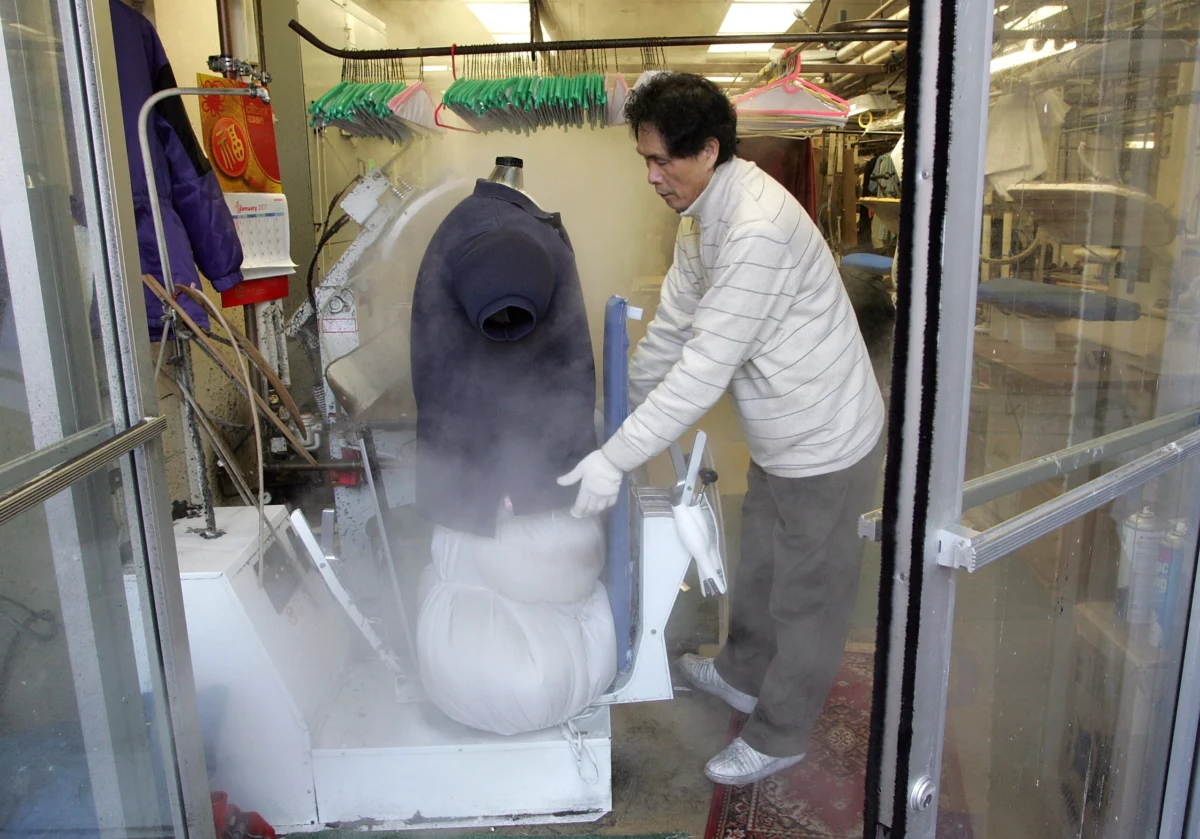
"A nationwide study reveals that individuals living closer to dry cleaning establishments face a statistically significant elevated risk of Parkinson’s disease, highlighting potential environmental contributors to this neurodegenerative condition."
A groundbreaking nationwide analysis of Medicare records has uncovered a compelling association between residential proximity to dry cleaners and an increased likelihood of Parkinson’s disease diagnosis. The study, published in the esteemed journal npj Parkinson’s Disease, found that individuals residing within 500 feet of a dry cleaner exhibited a 14 percent higher probability of being diagnosed with Parkinson’s compared to those living four to five miles away. This "distance gradient," where the risk diminishes steadily with increasing distance from these businesses, strongly suggests a real environmental influence rather than mere statistical anomaly. The research, encompassing a substantial cohort of over 180,000 individuals newly diagnosed with Parkinson’s and more than 18.8 million control participants, underscores the potential role of environmental exposures in the development of this complex neurological disorder. While the study establishes a robust association, it is crucial to note that it cannot definitively prove causation, emphasizing the need for further investigation into the underlying mechanisms.
The research meticulously examined Medicare data spanning from 2014 to 2018, focusing on beneficiaries aged 67 and older who received a new Parkinson’s disease diagnosis. The study identified 32,723 dry-cleaning establishments across the nation and calculated the distance between each participant’s residence and the nearest facility, using residential addresses recorded two years prior to their diagnosis or a matched reference date. This temporal separation was designed to account for potential exposures leading up to the onset of symptoms.
To ensure the robustness of its findings, the analysis incorporated a comprehensive suite of statistical adjustments. These controls accounted for a wide range of potential confounding factors, including age, sex, race, smoking habits, healthcare utilization patterns, neighborhood socioeconomic status (indicated by income), and the classification of residential areas as rural or urban. Crucially, the study also adjusted for area-level fine particulate air pollution, a known environmental factor that can impact health and is often associated with commercial and industrial areas.
The researchers further observed that the strength of the association between dry cleaner proximity and Parkinson’s risk varied across specific clinical presentations documented in Medicare claims. For individuals living within a tenth of a mile of a dry cleaner, the odds of a Parkinson’s diagnosis were notably higher for those with prior records of gait disturbance (23 percent higher), dementia or cognitive decline (25 percent higher), and falls (19 percent higher). These clinical markers are often indicative of advanced or specific subtypes of Parkinson’s disease. Interestingly, no significant association was found for Parkinson’s cases defined by tremor codes within the administrative billing data. The authors cautiously noted that tremor, a hallmark symptom of Parkinson’s, may be under- or misreported in administrative claims data, potentially obscuring a true link. It is also important to understand that these clinical groups were not mutually exclusive, meaning individuals could have had multiple documented conditions.
The observed relationship demonstrated a compelling gender-based difference. While the association was present in both men and women, it was more pronounced and extended over greater distances in men. In women, significant associations were largely confined to the closest proximity categories. Geographic mapping of the study data revealed that the pattern was not localized to a single region, with stronger associations identified in and around major metropolitan areas such as Dallas-Fort Worth and Detroit, as well as in specific regions like southern Illinois, the Tennessee-Kentucky border area, central Pennsylvania, north-central Indiana, parts of southern California, and the New York City and New Jersey metropolitan area. This broad geographical distribution further supports the hypothesis of a widespread environmental exposure.
The scientific impetus for investigating dry cleaning solvents stems from a growing understanding that genetic predispositions account for less than 10 percent of Parkinson’s disease cases. This realization has directed considerable research focus towards identifying and quantifying environmental factors that may contribute to the disease’s development.
Two specific chlorinated solvents, trichloroethylene (TCE) and perchloroethylene (also known as PCE or perc), have long been recognized as potential neurotoxicants and have been historically employed in dry-cleaning operations. These volatile organic compounds (VOCs) are characterized by their small molecular size, which allows them to readily penetrate biological barriers, including the blood-brain barrier, and distribute within the brain. Laboratory studies, particularly in animal models, have established a connection between TCE exposure and the loss of dopamine-producing neurons, a critical pathological hallmark of Parkinson’s disease. Furthermore, both TCE and PCE are known for their persistence in the environment, readily contaminating soil and groundwater for extended periods. This environmental persistence means that exposure risks can extend far beyond the immediate vicinity of dry-cleaning facilities, impacting surrounding communities through contaminated water sources or volatilization into indoor air.
Regulatory bodies have acknowledged the hazards posed by these chemicals. The U.S. Environmental Protection Agency (EPA) finalized a rule in December 2024 to prohibit certain uses of TCE, implementing staggered phase-out timelines. However, the practical implementation of this regulation has encountered complexities. The EPA has since revised several compliance deadlines, and in May, it postponed the effective date for conditions attached to certain exempted uses pending the resolution of federal litigation concerning the rule. A parallel rule for perchloroethylene, finalized in the same month, also experienced several compliance date extensions in July, indicating an ongoing and evolving regulatory landscape.
This current study builds upon previous research by the same investigative team. They had previously reported a distinct association between living in proximity to golf courses and an increased risk of Parkinson’s disease, a finding that had also garnered media attention. This prior research further solidifies the group’s focus on environmental factors and their potential impact on neurological health.
Despite the significant findings, the authors of the study were commendably direct in outlining the inherent limitations of their research, and it is imperative that readers understand these constraints. This investigation employed a case-control study design based on administrative claims data, which is adept at identifying associations but fundamentally incapable of establishing definitive causation. The distance to a dry cleaner served as a proxy for potential exposure, as the researchers did not directly measure individual levels of TCE or PCE exposure. Moreover, the classification of "dry cleaner" might include establishments that primarily function as drop-off and pick-up points, potentially not performing any on-site cleaning or solvent use, thereby introducing variability in actual exposure levels.
The study utilized dry-cleaner location data from 2013 and residential addresses assessed two years prior to diagnosis. This temporal framework necessitates the assumption of long-term residential stability for participants, an assumption that may not hold true for all individuals. The researchers were unable to fully rule out the influence of unmeasured neighborhood characteristics or co-exposures that might be correlated with living near commercial areas. Additionally, the findings, derived from Medicare beneficiaries aged 67 and older, may not be generalizable to younger populations, who may have different exposure histories and health profiles.
Living near a dry cleaner can also be correlated with residing in denser commercial areas, which inherently present a broader spectrum of potential environmental exposures. While the study’s adjustment for fine particulate air pollution addresses some of these concerns, it cannot account for all potential co-exposures.
Crucially, the findings of this study do not warrant immediate changes to clinical practice. There are currently no established screening tests for Parkinson’s risk based on residential proximity, nor have any medical organizations issued specific guidance in response to this research.
For individuals who reside near a dry cleaner, the most appropriate response to this finding is one of informed interest rather than alarm. A 14 percent relative increase in odds, when applied to a condition that remains relatively uncommon, translates to a small absolute difference in risk for any single individual. There is no recommendation for individuals to relocate their homes based on this study. Similarly, the emergence of a new tremor should not be immediately interpreted as a diagnosis of Parkinson’s disease.
Parkinson’s disease symptoms, which can include resting tremor, slowed movement (bradykinesia), muscle stiffness (rigidity), and balance problems, warrant a comprehensive medical evaluation by a qualified clinician, preferably a neurologist. These symptoms can arise from a multitude of causes, many of which are treatable and unrelated to Parkinson’s disease.
Individuals with a specific concern about potential contamination from a known or historical dry-cleaning site near their residence can proactively seek information from their state environmental agency. Many agencies maintain databases of contaminated sites and provide resources for public inquiry. Furthermore, households relying on private wells in proximity to former industrial or dry-cleaning operations can inquire with their county health department about testing for volatile organic compounds (VOCs), as some health departments offer this service, sometimes at a reduced cost.
The path forward for this line of research involves replication. Studies of this nature gain significant scientific weight when independent research groups reproduce their findings using different populations and, ideally, employ measured exposure data rather than relying solely on distance proxies. The future regulatory landscape for TCE and perc also remains an open question, contingent on the outcomes of ongoing federal litigation and the adherence to current EPA timelines for solvent restrictions. MedicalDaily will continue to monitor and report on further research in this area, as well as on significant regulatory developments concerning TCE and perchloroethylene.
Key Questions Answered
What did the study find?
People living within a tenth of a mile of a dry cleaner had 14 percent higher odds of a new Parkinson’s diagnosis than people living four to five miles away, with the association weakening as distance increased.
Does this prove dry cleaning chemicals cause Parkinson’s?
No. This was a case-control study using Medicare claims. It identified an association and cannot establish causation. Researchers did not measure any individual’s actual solvent exposure.
Why are dry cleaning solvents studied at all?
Trichloroethylene and perchloroethylene are neurotoxicants that distribute in the brain and persist in soil and groundwater. Laboratory research has linked TCE to loss of dopamine-producing neurons in animal models.
Should someone move away from a dry cleaner?
No. The absolute risk difference for any individual is small, and the study cannot show that proximity itself causes disease. Nothing in current medical guidance changes.
Which findings were strongest?
Associations were larger for Parkinson’s cases with prior gait disturbance, dementia or cognitive decline, and falls. No significant association was found for the claims-defined tremor group.
What symptoms should prompt a medical visit?
Tremor at rest, slowed movement, muscle stiffness, changes in handwriting, or balance problems should be evaluated by a clinician. These symptoms have many possible causes, some treatable.
Are these chemicals still regulated?
The EPA finalized rules restricting TCE and perchloroethylene in December 2024. Compliance deadlines have been extended several times since, and parts of the TCE rule are on hold pending federal litigation.
