
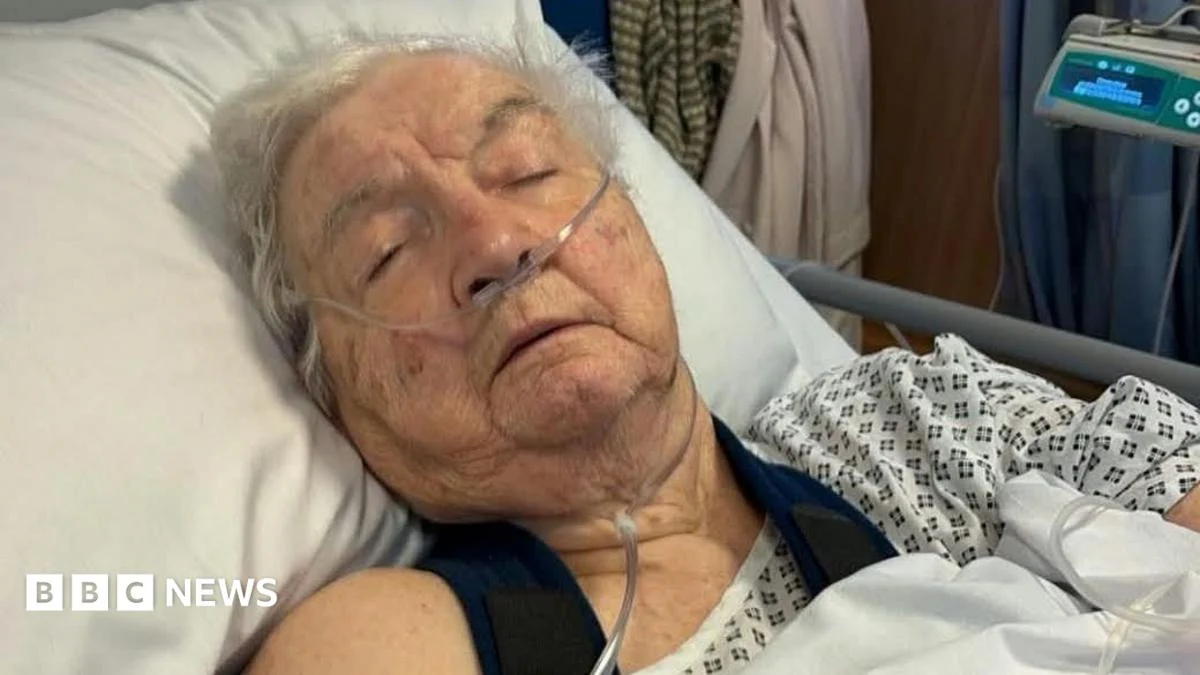
"The harrowing 10-hour ordeal of a 93-year-old woman left on the floor with broken bones underscores a deeply rooted systemic crisis in emergency healthcare, eroding public trust and demanding immediate, comprehensive solutions for vulnerable patients."
This distressing incident, involving Margaret Owen, highlights the severe pressures currently overwhelming ambulance services and the broader healthcare system, particularly in Wales. Her son, Graham Anthony, voiced a profound sense of hopelessness and a significant loss of confidence in the health service’s ability to provide timely and adequate care, echoing the sentiments of many across the nation. The incident serves as a stark illustration of the human cost of delayed emergency responses, prompting urgent calls for reform and greater accountability.
The ordeal began on October 4th when 93-year-old Margaret Owen suffered a fall in her Abercynon home, fracturing her femur and shoulder. Her lifeline alarm activated at 6:15 AM, prompting her son, Graham Anthony, to rush to her side. Upon discovering his mother in clear distress with an immobilised leg and complaining of arm pain, Anthony immediately called for an ambulance at 7:35 AM. What followed was an agonizing wait of ten and a half hours, during which Margaret, who also lives with dementia, lay on the cold floor, repeatedly crying out in pain and confusion.
The first medical professional, a St John Ambulance worker, arrived at 3:30 PM, nearly eight hours after the initial call, dispatched only at the request of the Welsh Ambulance Service. It took another 90 minutes for an ambulance to finally reach Margaret, transporting her to Royal Glamorgan Hospital for much-needed surgery. Her son’s profound anguish, listening to her screams for help, painted a grim picture of helplessness and the emotional toll such delays inflict on families. He lamented, "It’s just not good enough, is it?" a sentiment that resonated with hundreds of others who shared similar stories of their elderly relatives facing prolonged waits for medical attention.
Margaret’s injuries, a fractured femur and shoulder, are particularly severe for a person of her age, especially considering her pre-existing dementia. Such fractures in the elderly carry significant risks, including surgical complications, prolonged recovery, increased susceptibility to infections, and a potential decline in overall mobility and independence. Timely intervention is crucial not only for pain management but also to prevent further complications like pressure sores, dehydration, and the psychological trauma of being left immobilised for an extended period. The delay in her case not only exacerbated her physical suffering but also compounded the psychological distress for both Margaret and her son. Despite the exceptional professionalism of the ambulance crew who eventually arrived, Anthony’s confidence in the health service has been profoundly shaken.
This incident is not an isolated one but symptomatic of a broader, systemic issue plaguing emergency services across Wales and the wider UK. The latest published figures reveal a worrying trend: in August alone, 10,977 patients waited 12 hours or more for an ambulance. While this represented a slight decrease of 733 patients (6.3%) compared to the previous month, the sheer volume of extended waits remains a significant cause for concern. These statistics underscore the immense pressure on the system, leading to potentially critical delays for patients requiring urgent medical attention.
The Welsh Ambulance Service’s Chief Operating Officer, Lee Brooks, expressed his sincere apologies to Margaret and her family, acknowledging that "Waiting almost eight hours for help is not the standard of service we want to provide." He confirmed that a preliminary review of the incident had identified "aspects" of call management requiring further investigation, with staff carefully examining what transpired to identify opportunities for a more effective response in the future.
Part of the challenge lies within the complex categorisation system for ambulance calls, which underwent significant changes earlier this year. In July, NHS Wales re-categorised ambulance calls, introducing ‘purple’ for cardiac or respiratory arrest and ‘red’ for major trauma and other emergencies where patients face an immediate risk of cardiac or respiratory arrest. Further refinements in December saw the introduction of three additional categories: ‘orange’ for serious conditions, ‘yellow’ for individuals requiring assessment, and ‘green’ for less urgent situations.
The performance data for these categories paints a stark picture of escalating delays. For ‘red’ calls, the median ambulance response time over the past two months stood at nine minutes and 32 seconds, missing the target range of six to eight minutes. ‘Purple’ calls, indicative of the most critical life-threatening situations, fared better, with a median response time of seven minutes and 31 seconds, falling within target. However, it is the ‘orange’ category, encompassing serious but not immediately life-threatening conditions like Margaret’s fractures, where delays have become particularly pronounced. The median response time for ‘orange’ calls increased to nearly one hour and 30 minutes, up from approximately one hour. The longest recorded response time for this category since records began last December was an alarming one hour and 53 minutes in January. Data on response times for ‘yellow’ and ‘green’ calls, and the specific target for ‘orange’ calls, are not publicly disclosed, making a full assessment of the system’s performance challenging. In September, the ambulance service received 11,868 ‘orange’ calls, 5,492 ‘yellow’ calls, and 1,414 ‘green’ calls, illustrating the significant demand across all categories.
The Welsh government has acknowledged the distress caused by such waits, affirming that improving access to care is a "key priority." In response to the ongoing challenges, a new emergency and acute care policy framework is set to be published this autumn. This framework aims to outline plans for enhancing emergency community response and improving hospital flow, both critical factors in reducing ambulance handover delays and ensuring ambulances are available to respond to calls more swiftly.
However, for Graham Anthony, these assurances ring hollow in the face of his mother’s suffering. He views the problem as a "huge systemic problem," not merely an isolated service failure. "It’s a terrible indictment on the health service and nobody seems to be getting to grips with it," he stated, highlighting the perceived lack of effective action despite repeated similar incidents. His formal complaint to both the Welsh Ambulance Service and the Welsh government reflects a broader public frustration and a desperate plea for accountability and tangible improvements.
The widespread public reaction to Anthony’s Facebook post, with hundreds sharing comparable experiences, underscores the scale of the crisis. It suggests that Margaret’s case is not an anomaly but rather a poignant example of a systemic failing affecting countless families across Wales. The implications extend beyond individual patient outcomes, impacting public trust in the fundamental promise of a responsive healthcare system. When a 93-year-old with broken bones and dementia must endure such a prolonged wait, it signals a critical point of failure that demands urgent and sustained attention from policymakers and healthcare leaders. Addressing this systemic challenge will require not only increased investment but also fundamental reforms in how emergency care is managed, delivered, and integrated with community services to ensure that no one, especially the most vulnerable, is left waiting in pain and distress.
