
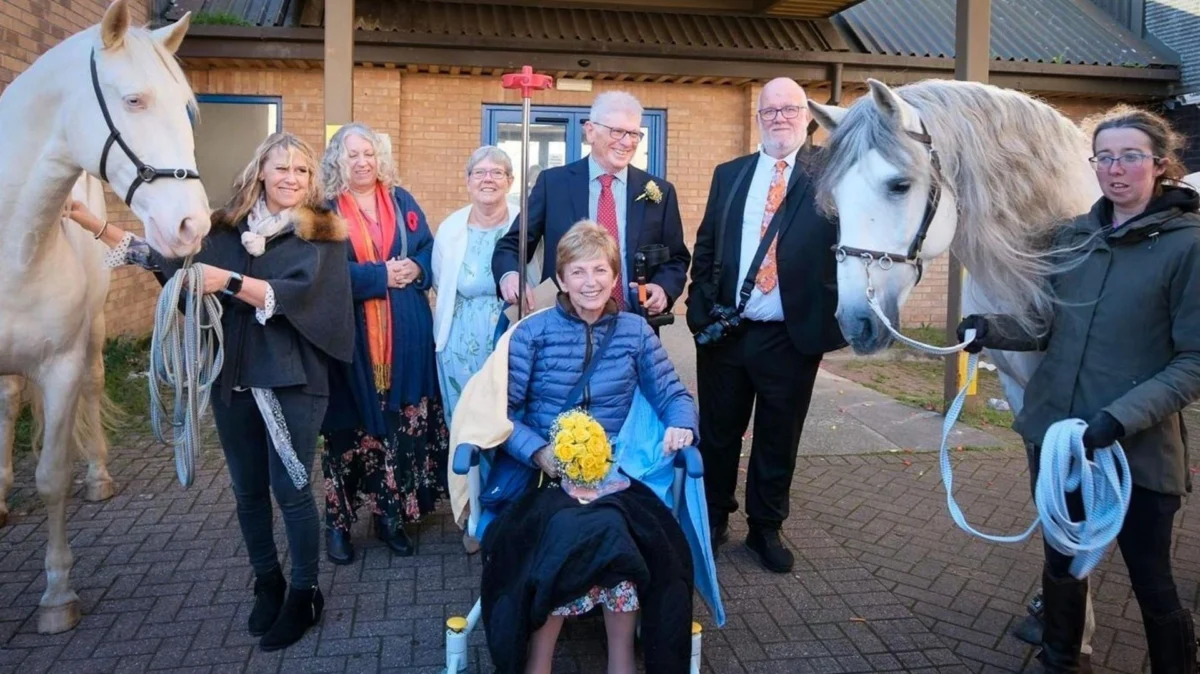
"In a heartwarming display of dedication, staff at Ysbyty Gwynedd went above and beyond medical duties, orchestrating a spontaneous wedding for a terminal cancer patient, complete with her beloved horses, demonstrating the profound impact of personalized care in end-of-life journeys."
In a poignant testament to the power of human connection and unwavering compassion, a hospital ward in Bangor, Wales, was transformed into an intimate wedding chapel, fulfilling a dying wish for a patient with terminal cancer. Maggie Heginbothom, 68, battling advanced liver cancer, married her partner of 15 years, Mark, in an extraordinary ceremony orchestrated by the dedicated staff of Ysbyty Gwynedd, part of the Betsi Cadwaladr Health Board. The event, which included flowers, music, a celebratory meal, and the unforgettable presence of Maggie’s two cherished horses, serves as a powerful example of how healthcare can extend far beyond clinical treatment to embrace the holistic well-being and deepest desires of patients during their most vulnerable moments.

The narrative unfolded with remarkable speed and heartfelt commitment. Just two days prior to the Monday ceremony, Mark proposed to Maggie from her hospital bedside. Faced with Maggie’s terminal diagnosis and her ardent wish to marry the man she had loved for a decade and a half, the staff on Tegid Ward sprang into action. This was not merely a logistical challenge but an emotional undertaking, reflecting a profound understanding of palliative care’s true essence: not just managing symptoms, but enhancing the quality of life and honouring the personal wishes of patients in their final chapter.
Maggie Heginbothom, a former clinical scientist with Public Health Wales, had been admitted to Ysbyty Gwynedd nearly three weeks before the wedding. Her hospitalization followed an incident where she became unwell while indulging in her lifelong passion: horse riding. This background underscored the immense significance of her equine companions, Ozzy and Quiosque, whose presence at the ceremony was perhaps the most remarkable and moving detail. For Maggie, a dedicated horse lover who had ridden and competed for many years at Pen Llŷn Stud and Riding School, seeing her horses was an integral part of her dream wedding, a symbolic embrace of her life’s passions even amidst her illness.
The transformation of Maggie’s hospital room into a wedding venue was a meticulous act of love and coordination. Ward Manager Rachel Parry recounted the team’s determination to create a flawless experience. "On the morning of the wedding, we transformed Maggie’s room with white sheets and fairy lights to create a beautiful space for the ceremony, while the relatives’ room became a reception area," Parry explained. This attention to detail extended to securing a harpist to provide a serene musical backdrop, arranging for flowers, decorations, a wedding cake, and a celebratory meal. The collective effort was immense, with some colleagues even volunteering their time on days off to ensure every element was perfect.

The presence of Ozzy and Quiosque was facilitated by Pen Llŷn Stud and Riding School, the very place where Maggie had spent countless hours pursuing her equestrian passion. Their arrival at the hospital, majestically standing outside, created an unforgettable scene, bringing a piece of Maggie’s outdoor world into the clinical environment. For Maggie, this was an overwhelming moment. "It was so beautiful and I honestly never thought it was going to be possible, especially seeing both my horses there as well," she expressed, her gratitude palpable. The therapeutic power of animals, particularly beloved pets, is well-documented, offering comfort, reducing stress, and fostering a sense of normalcy and joy in challenging circumstances. For Maggie, their presence was a profound affirmation of her identity and a deeply emotional connection to her past life.
The entire event was imbued with an emotional intensity that touched everyone involved. Maggie described the hospital staff as being "like family to me," a testament to the deep bonds forged during her time on the ward. The celebration was not confined to Maggie, Mark, and their immediate circle; other patients on the ward, who had come to know Maggie, were also able to join in the festivities, creating a shared moment of joy and humanity within the healthcare setting. "There wasn’t a dry eye in the room," Rachel Parry recalled, highlighting the profound impact of the occasion on both staff and patients.
Matron Ceri Newell eloquently articulated the broader significance of the team’s actions, emphasizing that "nursing is about so much more than treating illness." Her words resonated with the core principles of compassionate care: "It is about compassion, kindness, humanity and recognising that sometimes the most important thing we can do is help make someone’s wishes come true." This perspective underscores a fundamental shift in modern healthcare, particularly in palliative care, where the patient’s individual narrative, dignity, and personal desires are prioritized alongside medical intervention. The Tegid Ward team’s initiative exemplified this holistic approach, demonstrating that truly patient-centered care involves understanding and responding to the emotional, spiritual, and social needs of individuals, not just their physical ailments.

The logistical feat of organizing a wedding, complete with such unique requests, within a mere 48 hours, speaks volumes about the dedication and resourcefulness of the NHS staff. It reflects an organizational culture that empowers its employees to go "above and beyond" for patient well-being. Matron Newell expressed immense pride in her team, stating, "What the team achieved for Maggie and Mark in such a short space of time was truly remarkable, and I could not be prouder of every single person involved. Everyone went above and beyond, working together to create something incredibly special for a couple going through such a difficult time."
This extraordinary event at Ysbyty Gwynedd serves as an inspiring beacon for healthcare providers worldwide. It highlights the immense value of empathy and human connection in the medical field, particularly in the context of terminal illness and palliative care. While medical advancements are crucial, stories like Maggie and Mark’s wedding remind us that the human touch – the willingness to understand, connect, and fulfill a profound wish – can offer solace, dignity, and immeasurable joy during life’s most challenging moments. It underscores the vital role of compassion in nursing and medicine, proving that sometimes, the greatest healing comes not from a prescription, but from an act of selfless kindness that transforms the ordinary into the truly unforgettable.
